Skip to content

Performance

Experiencing update statistics on a big table with circuitous ways

This is my first blog of this new year and since a while by the way. Indeed, last year, I put all my energy to realign my Linux skills with the new Microsoft’s strategy that opens SQL Server to Open Source world. But at the same time, I did a lot of interesting stuff at customers shops and I decided… 

SQL Server 2016: distributed availability groups and cascaded replicas

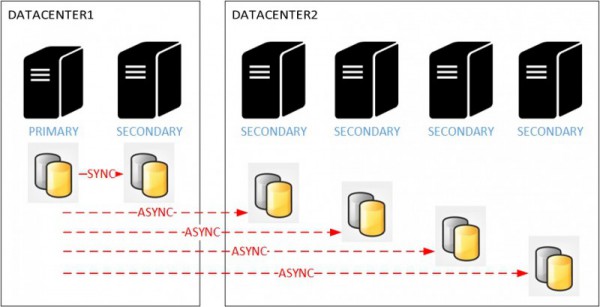
During the last MVP summit, we had some interesting discussions about availability groups with the SQL Server team and I remember someone asked for managing scenarios like Oracle cascaded destinations and the good news is that SQL Server 2016 already addresses this kind of scenario with distributed availability groups. For example, let’s say you have to manage heavily reporting activity… 

SQL Server AlwaysOn availability groups and statistic issues on secondaries

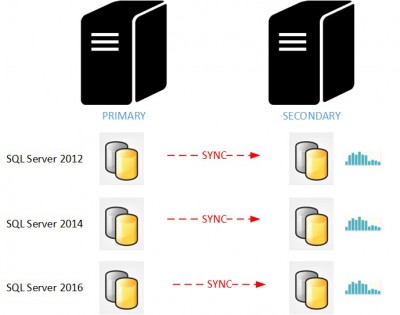
I would like to share with you an interesting issue you may face while using SQL Server AlwaysOn availability groups and secondary read-only replicas. For those who use secondary read-only replicas as reporting servers, keep reading this blog post because it is about update statistics behavior on the secondary replicas and as you may know cardinality estimation accuracy is an… 

Partitioning – When data movement is not performed as expected

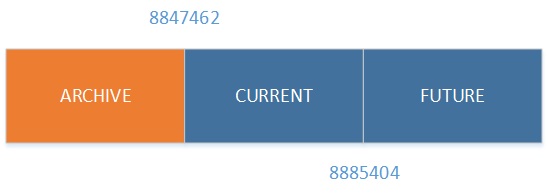
This blog is about an interesting partitioning story and curious data movements during merge operation. I was at my one of my customer uses intensively partitioning for various reasons including archiving and manageability. A couple of days ago, we decided to test the new fresh developed script, which will carry out the automatic archiving stuff against the concerned database in… 

When an index seek operator is not always your friend

Did you ever consider an index seek as an issue? . Well, let’s talk about a story with one of my customers where the context is pretty simple: a particular query that is out of the range of the application’s performance requirements (roughly 200ms of execution time in average). The execution plan of the query was similar to what you… 

SQL Server AlwaysOn: troubleshooting improvements with new service packs

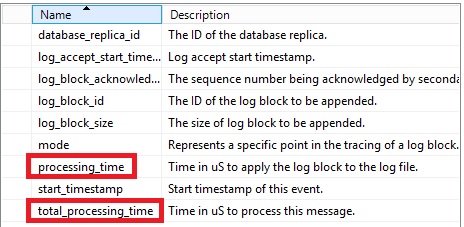
As promised in my latest blog, I will talk about improvements in the detection of the availability group replication latency. As a reminder, replication latency between high available replicas may be monitored in different manners so far. Firstly, in my experience I had the opportunity to use different performance counters as “Database Replica:Transaction Delay” and “Databas Replica:Mirrored Write Transactions/sec” in… 

SQL Server 2016 AlwaysOn: Direct seeding and performance considerations

This blog post follows the previous one about new direct seeding feature shipped with SQL Server 2016. As a reminder, I had some doubts about using direct seeding with large databases because log stream is not compressed by default but I forgot the performance improvements described into the Microsoft BOL. I also remembered to talk about it a couple of months… 

A look at PostgreSQL 9.6 – The wait interface

For a long time there was no real wait interface in PostgreSQL core. Now, with the upcoming 9.6, pg_stat_activity was extended to provide more meaningful information for what a session is currently waiting on. If you are interested in reading through the history: It all started here. Lets have a look at it by doing same simple tests. When I… 

SQL Server 2016: new database-scoped configuration parameters part 2

In this blog post, let’s continue with other database-scoped options shipped with the SQL Server 2016 RC0. We will first begin with the first one and my preferred option: setting the MAXDOP value for an individual database. I really hope that applications like SharePoint that requires to limit the MAXDOP to 1 at the server level will use this kind… 

SQL Server 2016 : nonclustered columnstore index and aggregate pushdown

Did you miss aggregate pushdown capability shipped with columnstore index? Well, I remember the first time I heard about it is was when I read the very interesting blog post of Niko Neugebauer here with a very good covering of the topic (principle, advantages and limitations). So why to write a new blog post here? Well because since the last… 

Sudden drop of the page life expectandy but don’t panic yet!

A couple of weeks ago, I had an interesting discussion with one of my customer about the page life expectancy (aka PLE). He asked me if monitoring the metric value is a best practice because he often noticed a big drop of the PLE under the recommended threshold during the night or sometimes during the business hours. In addition, he… 

Changing an existing partition configuration … Well, not so easy!

This time let’s talk about an interesting customer scenario where table partitioning was implemented on a table with 100 GB of data on SQL Server 2014. Partitioning in this context aimed to save disk space  (archive data were compressed) , help to reduce maintenance time and consumed resources as well (by using index and statistic maintenance operations on the active partition).  Finally,…