Skip to content

Performance

NOLOCK is definitely not what you may expect …

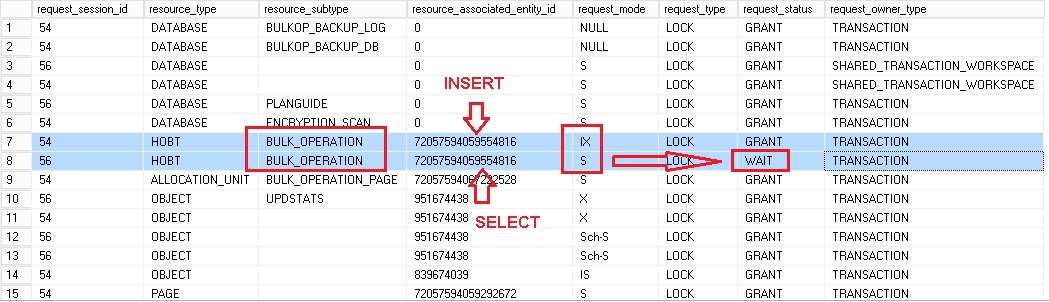
For those who still believe that using nolock hint is a lock-free process, keep reading this blog post. I wrote a previous blog post 3 years ago, when I was at one of my customer and we had an interesting discussion about the nolock hint with reporting queries. I convinced him that nolock continues to generate locks even if the… 
Enable 10046 Tracing for a specific SQL

Available methods to enable 10046 trace are described in My Oracle Support Note 376442.1. You can enable 10046-tracing – on session level (alter session) – for other sessions (e.g. with oradebug, the package DBMS_MONITOR or DBMS_SYSTEM) What is not covered with the methods above is the possibility to trace a specific SQL-statement, which runs “somewhen” in the future on the… 

SQL Server AlwaysOn and availability groups : session timeout parameter

Have you ever faced to timeout issues with SQL Server availability groups? If you take a look at the timeout parameters for an availability group, you will find a plenty of configuration settings. Indeed, you have timeout parameters for the availability group itself, for the replicas and for cluster itself as well. Well …a lot of parameters in order to… 

SQL Server Extended Event: Eine Deadlock-Event aus der “system_health” Überwachung

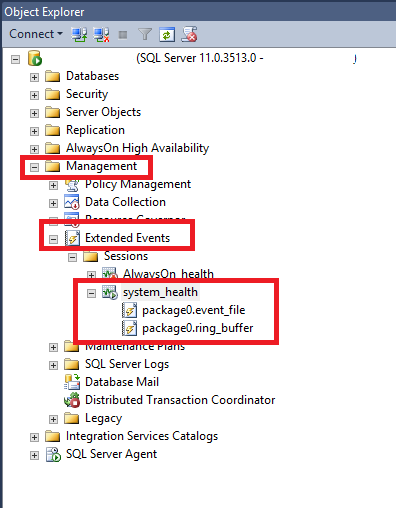
Wie Sie vielleicht wissen, gibt es eine Überwachung über Extended Events: system_health. Kürzlich fragt mich ein Kunde an, um ein zufälliges Deadlock-Problem zu analysieren… Ich hatte im September in Lausanne einen Vortrag zum Thema Performance-Monitoring und Extended Events präsentiert… Viele Leute kennen das nicht, dass in den system_health des SQL Servers die Informationen zu den Deadlock-Events abgelegt sind. Wo sind… 

SQL Server Collation for System Center Products

A customer asks me, what is the collation for System Center products? Do we have a general collation for all products? And what is the BP for Tempdb? And how work the licencing for SQL Server in System Center (is SQL Server included)??? I answer just “OK, OK, I understand, I wil check those points…” I  search those information on… 

SQL Server 2016 query store

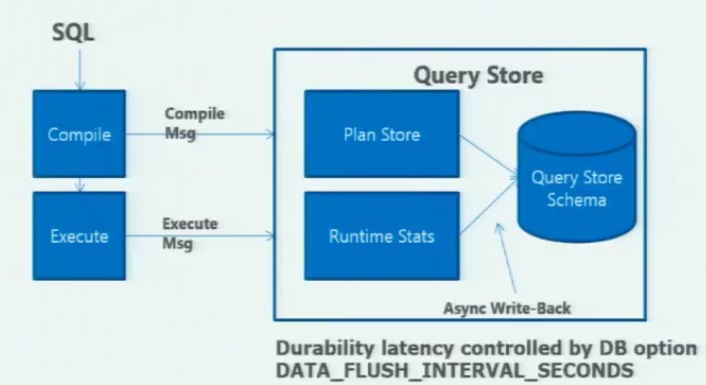
One of the most new interesting features that will be introduced by SQL Server 2016 is certainly the query store that will complete the performance tuning toolbox of database administrators. Basically, the query store will track queries, their query plans and runtime statistics as well. It will be a great tool to detect regressing queries. I remember a real customer… 

Want to benchmark your storage? It’s time to switch to DiskSpd tool!

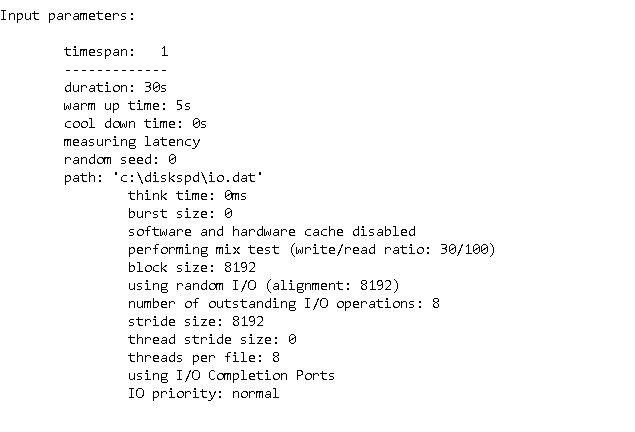
As you certainly know, the well-known tool SQLIO is officially deprecated since few months. From my part, I had the opportunity (maybe the last) to use SQLIO for a customer project in order to benchmark the storage for SQL Server AlwaysOn and availability groups. Now it’s time to change for a new benchmark tool : DiskSpd. First of all, DiskSpd… 

SQL Server AlwaysOn: number of databases and the hadr worker pool

Often, when I’m in charge to implement an SQL Server AlwaysOn infrastructure with availability groups, customers ask me if it exists some best practices and recommendations about the maximum number of databases in an availability group planning. In fact, we have to keep in mind the relation between databases and the SQL Server worker pool in this architecture. Remember that… 

Join transitive closure and query simplification considerations

Yesterday, I had a discussion with one of my friend who works with Oracle about some different behaviours between each query optimizer against one particular query. You can read his blog post and get the repro script here. I decided to write a blog post because our discussion has introduced some interesting concepts and I wanted to explain more things… 

DataBase Cloud Service performance – CPU

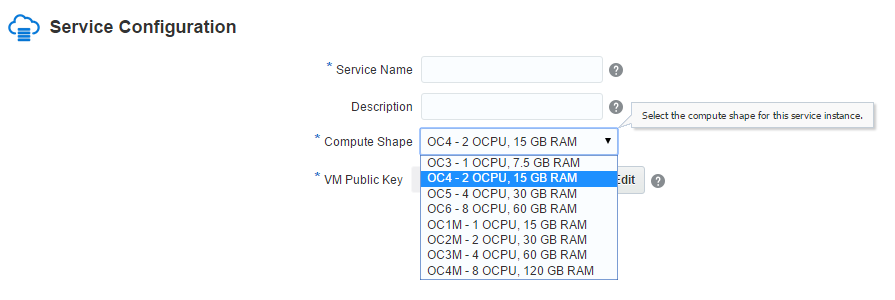
By Franck Pachot . In the previous blog post I’ve measured the physical i/o performance, with SLOB. We can run the same with a small size of data and a large buffer cache in order to measure logical reads (LIOs) and CPU performance. What is an OCPU? Except if you are licensed in NUP, you are already used to pay… 

DataBase Cloud Service performance – IOPS

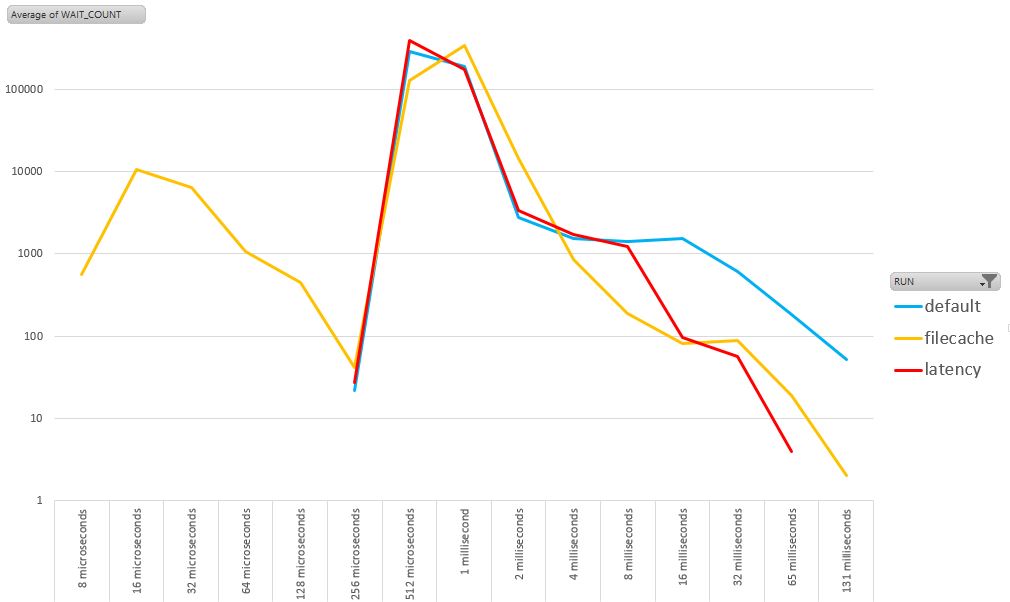
By Franck Pachot . Having a database in the cloud is very nice. You add storage with a few clicks. You don’t have to think about the storage type (DAS, SAN, NAS), size of disks, stripe size, SSD, etc. But do you have the performance you expect? I’ve tested I/O in the Cloud that just opened for Europe, so that…