Skip to content

DevOps

How we automate infrastructure and databases so that deployments become boring: Ansible, Docker, Kubernetes, CI/CD pipelines, infrastructure as code, GitOps, Control-M scheduling and our own YaK deployment framework.

Creating your private cloud using OpenStack – (2) – Preparing the nodes

In the introduction post we’ve briefly looked at some options you have available when you want to build your own private cloud. In this post we’re going to start our journey into OpenStack by preparing the two nodes we’re going to use for this setup: The controller node, and one compute node. Maybe you remember from the last post, this… 

Creating your private cloud using OpenStack – (1) – Introduction

While public clouds are a trend since several years now, some companies are also looking into self hosted solutions to build a private cloud. Some do this because of costs, others do this because they don’t want to be dependent on one ore multiple public cloud providers, others do it because they want to keep their data locally. There are… 

Introducing YaK 2.0: The future of effortless PaaS deployments across Clouds and On-Premises

Hello, dear tech enthusiasts and cloud aficionados! We’ve got some news that’s about to make your life —or your deployments, at least— a whole lot easier. Meet YaK 2.0, the latest game-changer in the world of automated multi-cloud PaaS deployment. After months of development, testing, troubleshooting, a fair share of meetings and way too much coffee, YaK is officially launching… 

Building multi-architecture images with GitLab CI/CD

Building multi-architecture images become more and more useful. Indeed, many recent computers use ARM processors architecture. Examples include MacBooks using M(x) processors, and Amazon EC2 instances using AWS Graviton processors. However, the diversification of processor architectures adds a new level of complexity to the creation of container images. Indeed, the construction has to cope with different instruction sets. Docker buildx,… 

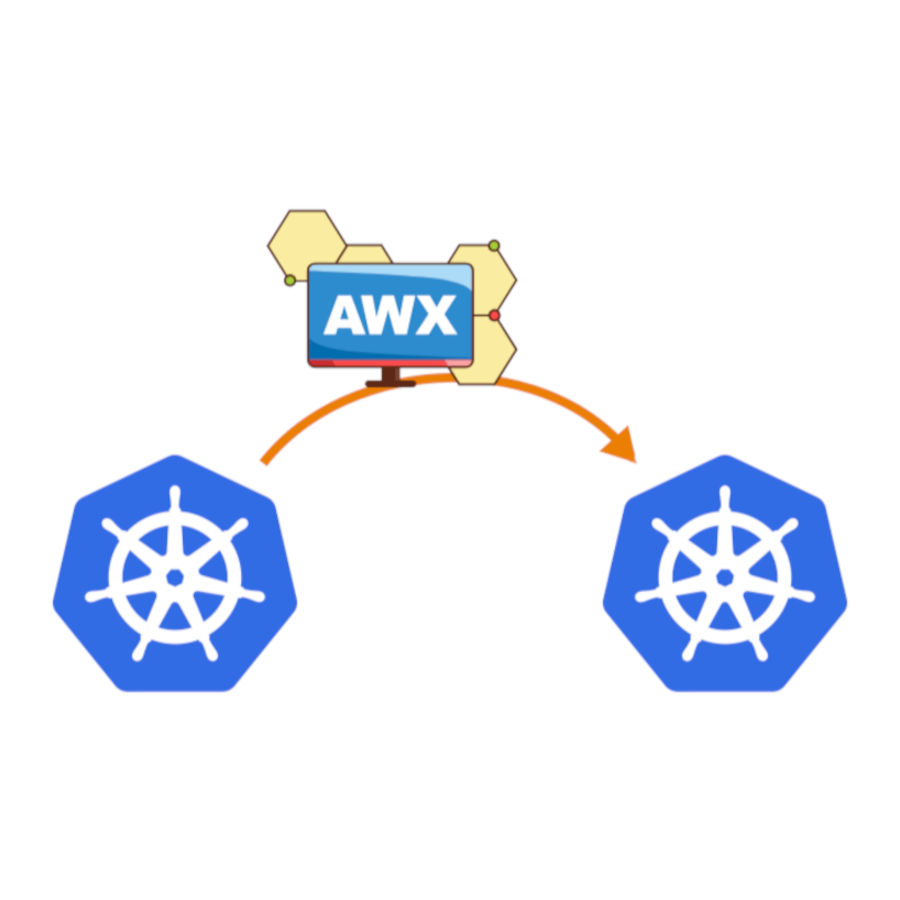
Migrating AWX from one Kubernetes cluster to another: A custom approach

In this guide, we’ll walk through migrating an AWX instance from one Kubernetes infrastructure to another, with two important considerations. First, both AWX instances are on completely different networks, meaning there’s no direct connectivity between them. Second, we aim to replicate the credentials (including passwords) stored in AWX, which requires careful handling. This approach differs from the official documentation due… 

Control-M for Kubernetes – Installation

After showing you an overview and the preparation of Control-M for Kubernetes, it is time to deep in with the installation of this solution. In fact, without the installation of Control-M for Kubernetes you can’t modernize your batch! In this blog, I will share with you how to do the installation of this solution step by step. Let’s remember the… 

Control-M for Kubernetes – Preparation

As promised in the first blog of this series, here we are with the second blog to show you how to prepare the Control-M for Kubernetes solution, this solution allow to create and start Kubernetes pods using Control-M jobs. To implement Control-M for Kubernetes you will need to verify and prepare some prerequisites, like check access, compatibility with OS, persistent… 

Control-M for Kubernetes – Overview

At a customer, I implemented Control-M for Kubernetes/OpenShift, as the customer has a hybrid environment between VM, on-premise/Cloud Kubernetes/OpenShift. This is the first blog of a series, in which I will share with you from A to Z how to implement Control-M for Kubernetes and OpenShift. Control-M for Kubernetes enables you to execute Control-M job(s) to run one or more… 

Kubernetes Traffic Control: Ingress vs. Gateway API

In the evolving landscape of Kubernetes, efficient and flexible management of network traffic is essential for deploying, scaling, and securing modern applications. As organizations adopt more complex microservices architectures, the need for robust traffic control mechanisms becomes increasingly critical. This is where the Gateway API comes into play. Gateway API is a relatively new and powerful extension to Kubernetes designed… 

CloudNativePG – Connecting external applications

Now that we know how we can benchmark a CloudNativePG deployment, it is time to look at how we can connect external applications to the PostgreSQL cluster. Usually, applications run in the same Kubernetes cluster and can directly talk to our PostgreSQL deployment, but sometimes it is required to also connect with external applications or services. By default, this does… 

CloudNativePG – Benchmarking

Now that we’ve configured our storage in the last post, it is time to benchmark the system. One popular tool when it comes to benchmarking PostgreSQL is pgbench. This can be used in our setup as well, and if you have installed the CloudNativePG kubectl plugin this is quite easy to use. Of course the cluster needs to be already… 

Data Masking with Delphix Continuous Compliance

Solution Overview The DevOps Data Platform Continuous Compliance solution of Delphix provides a comprehensive approach to data masking. It meets enterprise-class performance, scalability, and security requirements. Delphix enables businesses to successfully protect sensitive data through these key steps: Discover: Sensitive Data Identify sensitive information such as names, email addresses, and payment information to provide an enterprise-wide view of risk and…