Skip to content

DevOps

How we automate infrastructure and databases so that deployments become boring: Ansible, Docker, Kubernetes, CI/CD pipelines, infrastructure as code, GitOps, Control-M scheduling and our own YaK deployment framework.

Two days at the KCD Suisse Romande

The 4th and 5th december, I attended KCD Suisse Romande in Geneva. It was a great event in a great place with great people. I really enjoyed the talks and the workshops. First Day: the workshops After a meeting at the entrance of the CERN, we went to attend the workshops: 20000 issues sous les mers – Moving Like a… 

Errorhandling in Ansible

Errors in tasks – abort or ignore? Per default, if a task in a playbook fails, then the execution of the playbook is stopped for that host. As you can see, the 2nd task is not executed. If you want to continue in such a case, the ignore_errors parameter is your friend Custom error conditions Per default, Ansible evaluates the… 

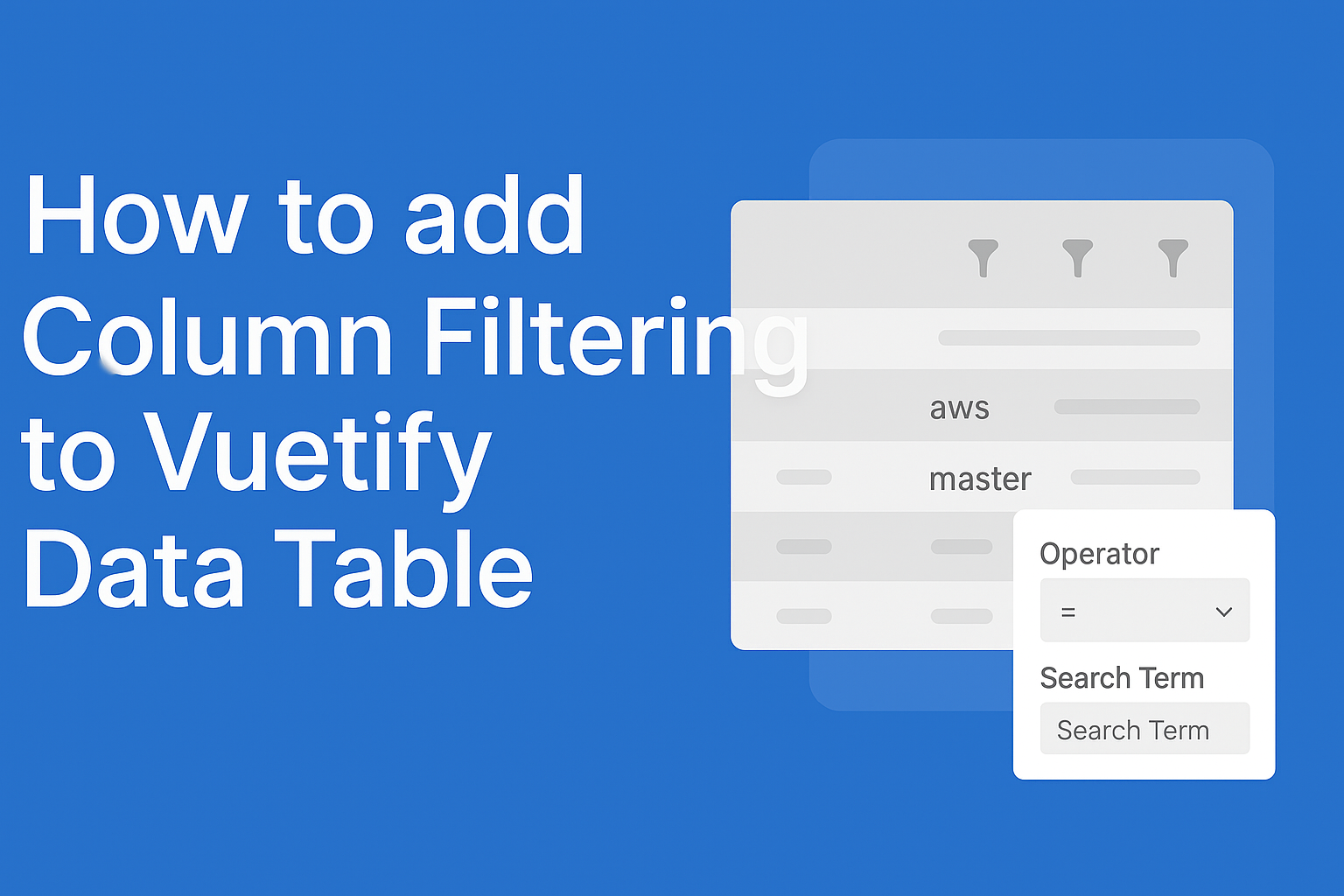
How to add Column Filtering to Vuetify Data Table

For a long time, my v-data-table-server implementation in the YaK only supported global search through a simple text input. While it was good enough for basic queries, I needed something more powerful—the ability to filter by individual columns using custom operators. Here’s a walkthrough of how I added column filters with v-select and v-text-field embedded in v-menu components right inside… 

How to add Column Filtering to Vuetify Data Table

Monitor your ISP’s performance with Speedtest Tracker

I recently changed ISP, and I wanted to monitor its performance and make sure I get what I’m paying for. I initially started writing a bash script that I was running in a crontab, then writing the results in an md file. But that’s not very sexy. I wanted something graphical with a nice UI. It turns out that there… 

Try YaK for free with YaK Demo

dbi services makes free demo environments available to all, so that you can play with the YaK and deploy instances and components to Azure and AWS. The YaK Demo environment is hosted on one of dbi services AWS tenants and is automatically destroyed after 4 hours. The demo environment is not supposed to be used for production purpose (it’s just… 

SQL Server 2025: Local SQL Server Container – Schema design preview

After my blogs about “SQL Server 2025: Local SQL Server Container without Docker Command” and “SQL Server 2025: Local SQL Server Container – Schema compare preview”, I continue to play & test it. One new feature in preview is the “Schema Design compare” in this last MSSQL extension for Visual Studio Code: Let’s start and see on a database (db2… 

SQL Server 2025: Local SQL Server Container – Schema compare preview

After my blog about “SQL Server 2025: Local SQL Server Container without Docker Command”, I continue to play & test it. One new feature in preview is the “schema compare” in this last extension for Visual Code: I like new feature and now let’s go for a test! 😉 I create 2 identically databases db1 & db2 with 2 tables… 

How to Contribute to the YaK Project: Adding a New Infrastructure Provider (e.g., OpenShift Virtualization)

YaK is a platform-agnostic framework designed to streamline and automate the deployment of infrastructure and middleware components (database, K8S,etc..) across various environments. With its open-source core, YaK enables developers, DevOps teams, and IT professionals to manage infrastructure provisioning and component deployment efficiently, without being tied to a specific vendor. Whether you’re working with AWS, Azure, Oracle Cloud Infrastructure (OCI), or on-premises servers, YaK… 

SQL Server 2025: Local SQL Server Container without Docker Command

The last version of” MSSQL extension for Visual Studio Code” has in Preview “the Local SqlServer Containers” based on SQL Server 2025 with the following keys: See all Preview Features here First Step: Download and install Visual Studio Code here Second Step: Download and install MSSQL extension for Visual Studio Code here You can also directly from Visual Code, download… 

Parallel execution of Ansible roles

Introduction You can run a playbook for specific host(s), a group of hosts, or “all” (all hosts of the inventory). Ansible will then run the tasks in parallel on the specified hosts. To avoid an overload, the parallelism – called “forks” – is limited to 5 per default. A task with a loop (e.g. with_items:) will be executed serially per… 

Ansible: reduce output in loops – or replace loops

Reduce the output If you do a loop in Ansible, it always prints the item variable for each loop. “item” is the current list element. If you are looping over a list with small values, then the output is OK. But if the loop variable is a list of dict, especially with many or big values, then the log-output of…