Skip to content

High Availability

Dealing with WSFC 2016 quarantine state and availability groups

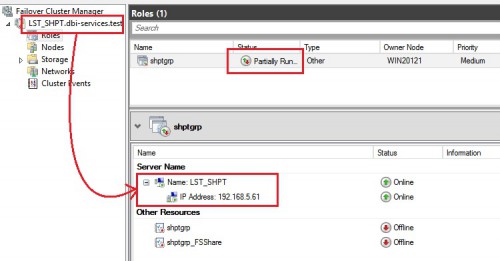
I was playing with my lab environment which includes Windows 2016 and SQL Server 2016 and I noticed an interesting scenario while testing cluster node failures. After simulating some network outage scenarios, I was not able to bring back my cluster node online immediately by using traditional way. A quick look at the cluster manager led me to notice something… 

MS Cloud Summit Paris 2017

Une nouvelle année commence et 2017 devrait être un bon cru dans le domaine de la base donnée notamment en prédiction des effets d’annonces faites par Microsoft cette fin d’année 2016. En effet, il a été notamment été question de la prochaine vNext de SQL Server qui sera porté sous Linux ainsi que des nouvelles fonctionnalités prometteuses. A l’habitude, l’équipe dbi services tentera couvrir… 

Migrating your existing availability group infrastructure to 2016

Have you already a plan to migrate your old SQL Server 2012 availability group infrastructure to windows 2016 and SQL Server 2016? In a previous post, I talked about distributed availability groups and cross-cluster migration scenarios but this time the game is not the same because we want to achieve an in-place upgrade of the existing AG infrastructure. This question… 

SQL Server 2016: distributed availability groups and cascaded replicas

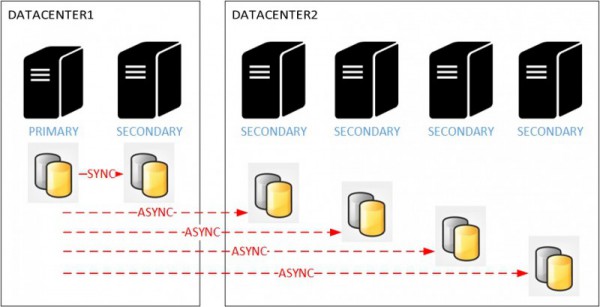
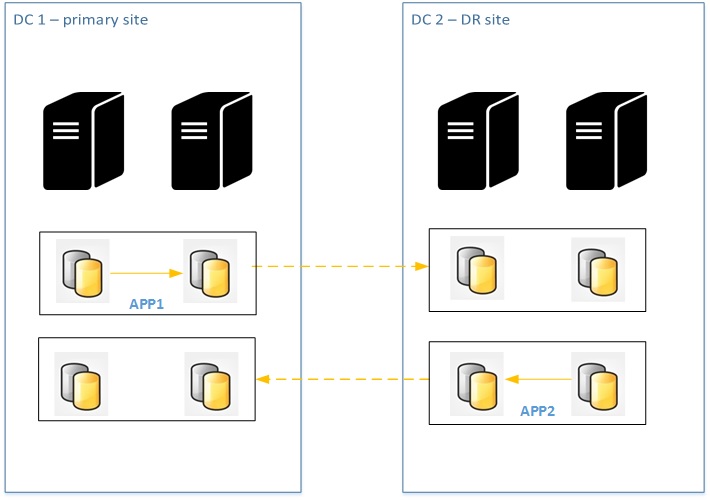
During the last MVP summit, we had some interesting discussions about availability groups with the SQL Server team and I remember someone asked for managing scenarios like Oracle cascaded destinations and the good news is that SQL Server 2016 already addresses this kind of scenario with distributed availability groups. For example, let’s say you have to manage heavily reporting activity… 

SQL Server AlwaysOn availability groups and statistic issues on secondaries

I would like to share with you an interesting issue you may face while using SQL Server AlwaysOn availability groups and secondary read-only replicas. For those who use secondary read-only replicas as reporting servers, keep reading this blog post because it is about update statistics behavior on the secondary replicas and as you may know cardinality estimation accuracy is an… 

SQL Server 2016: Distributed availability groups and Cross Cluster migration

How to migrate an environment that includes availability groups from one Windows Failover Cluster to another one? This scenario is definitely uncommon and requires a good preparation. How to achieve this task depends mainly of your context. Indeed, we may use a plenty of scenarios according to the architecture in-place as well as the customer constraints in terms of maximum… 

SQL Server AlwaysOn: troubleshooting improvements with new service packs

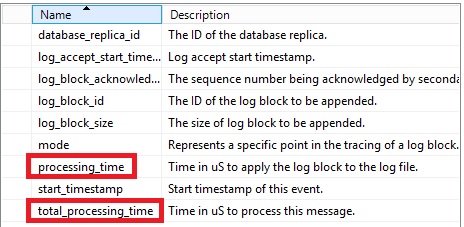
As promised in my latest blog, I will talk about improvements in the detection of the availability group replication latency. As a reminder, replication latency between high available replicas may be monitored in different manners so far. Firstly, in my experience I had the opportunity to use different performance counters as “Database Replica:Transaction Delay” and “Databas Replica:Mirrored Write Transactions/sec” in… 

SQL Server 2016 AlwaysOn: distributed availability groups

This time, I will talk about distributed availability groups. What’s that? In short, a group of availability groups. Sounds good right? But in which cases may we need such architecture? Firstly, let’s say that distributed availability groups will run on the top of two distinct availability groups meaning that they reside on two distinct WSFCs with their own quorum and… 

SQL Server AlwaysOn: is my database ready for failover?

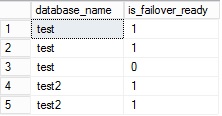
In this blog post I just want to clarify values that we may find from the is_failover_ready column of the sys.dm_hadr_database_replica_cluster_states DMV. A couple of days ago, I had an interesting discussion with one of my customers during which he explained he was not confident about the availability group state after facing some unavailability issues. The main source of uncertainty… 

Windows Failover Cluster : Introduction to paxos tag

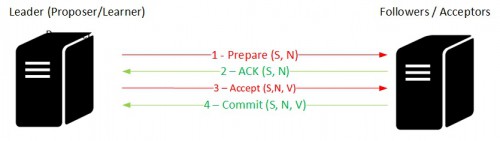
A couple of days ago, I was in charge to install a new SQL Server AlwaysOn and availability group with one of my colleague Nathan Courtine. During the installation, we talked about testing a disaster recovery scenario where we have to restart the Windows Failover cluster in forced quorum mode. Restarting a WSFC in such mode implies some internal stuff… 

Windows Server 2016: Introducing stretch cluster functionality

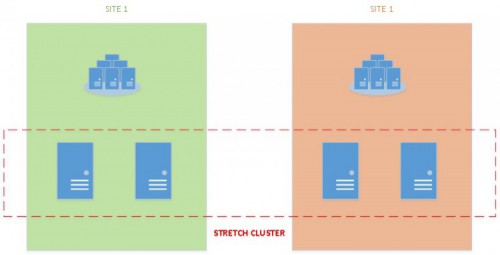
Let’s continue with the new high available functionality shipped with the next Windows version. In my previous blog, I talked about the new site awareness feature that provides more flexibility to configure failover resources priorities and more granular heartbeat threshold as well by introducing the new site concept. This time, we’ll talk about stretch cluster. What’s that? Let’s introduce the… 

SQL Server AlwaysOn: when a listener becomes the cluster and vice versa

Let’s talk about a funny story that concerns an interesting issue that I faced a couple of months ago at one of my customers. Initially, the problem concerned only the creation of an availability group listener but after deleting the related availability group, he noticed quickly that the deletion failed but even more strange, he noticed that the virtual network…