Skip to content

High Availability

SQL Server AlwaysOn : the registry is also important for availability groups

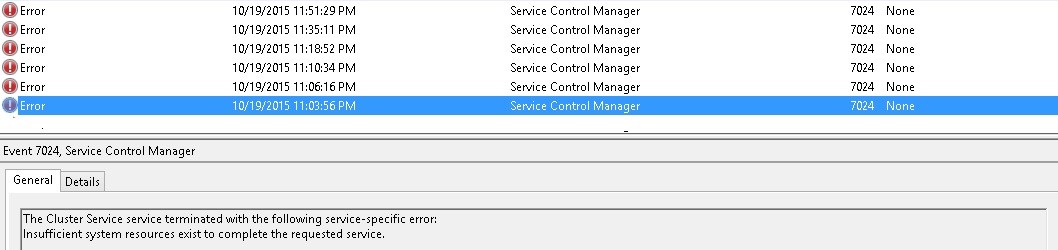
A couple of months ago, we experienced with my colleague Nathan Courtine a weird issue at one of our customers. This issue concerned an AlwaysOn availability group and more precisely to the WSFC cluster layout. I can’t say strongly enough that the AlwaysOn availability group runs on the top of the WSFC and having a good understanding of the internal… 

Windows failover cluster 2016 : new site awareness feature

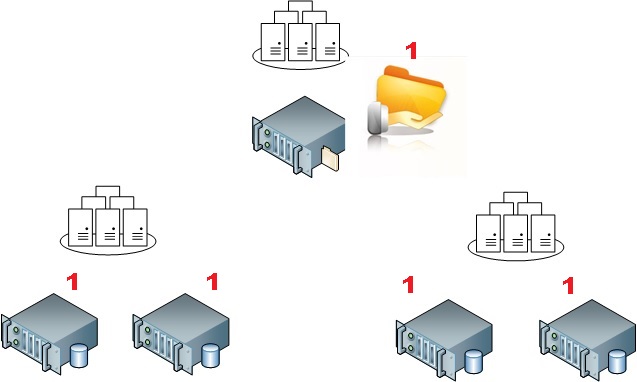
After my first two blogs about cloud witness and domain-less dependencies features shipped with Windows Server 2016, it’s time to talk about another pretty cool feature of the WSFC : site awareness that will also benefit to our SQL Server FCIs and availability groups. But before to talk further about the potential benefits of this new feature, let’s go back… 

SQL Server AlwaysOn and availability groups : session timeout parameter

Have you ever faced to timeout issues with SQL Server availability groups? If you take a look at the timeout parameters for an availability group, you will find a plenty of configuration settings. Indeed, you have timeout parameters for the availability group itself, for the replicas and for cluster itself as well. Well …a lot of parameters in order to… 

SQL Server 2016 – availability groups and gMSAs

This blog post will probably not concern customers where either password policy change rules are not defined for service accounts or Kerberos authentication is not used. But I’m sure that the number of these customers has decreased over at least the last decade. By the way, this is what I can notice at different customer places. But before beginning with… 

SQL Server 2016 : availability groups with no domain dependencies

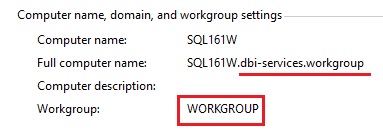
Are you aware about the new features of the next Windows version? Currently we’re in TP3 and during my investigation, I was very happy to see the new features for Windows clustering (cf. this blog post from Microsoft). By reading this article we can see: Workgroup Clusters: Clusters with nodes which are member servers / workgroup (not domain joined) If… 

SQL Server AlwaysOn : readable secondary replicas and index rebuild online vs offline

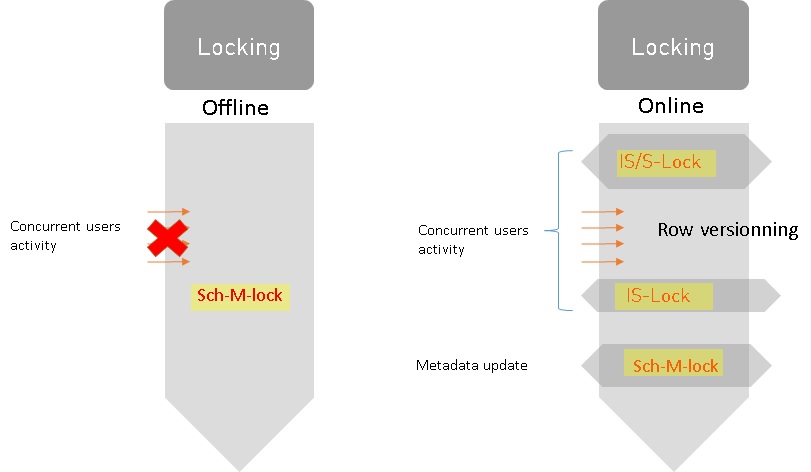
A couple of weeks ago, I was involved in a discussion on the French forum developpez.com about SQL Server AlwaysOn and availability groups, index strategies and the impact on the readable secondary replicas. During this discussion, one of the forum member stated that rebuilding an index online had less impact than rebuilding an index offline on a readable secondary replica… 

SQL Server AlwaysOn: number of databases and the hadr worker pool

Often, when I’m in charge to implement an SQL Server AlwaysOn infrastructure with availability groups, customers ask me if it exists some best practices and recommendations about the maximum number of databases in an availability group planning. In fact, we have to keep in mind the relation between databases and the SQL Server worker pool in this architecture. Remember that… 

ACFS 12.1.0.2 on Oracle Linux 7.1

Recently we wanted to create an ACFS filesystem on a brand new 12.1.0.2 GI installation on Oracle Linux 7.1. According to the documentation this should not be an issue as “Oracle Linux 7 with the Unbreakable Enterprise kernel: 3.8.13-33.el7uek.x86_64 or later” is supported. The “or later” is the important point. In our case: uname -a Linux racp1vm1 3.8.13-55.1.6.el7uek.x86_64 #2 SMP… 

SQL Server 2016 : availability groups and the new SSISDB support

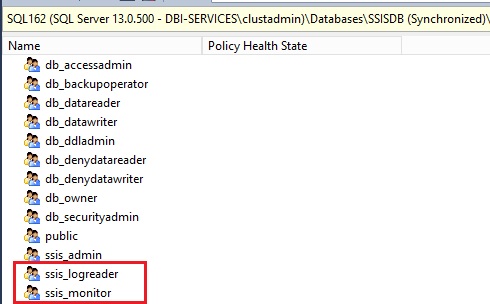
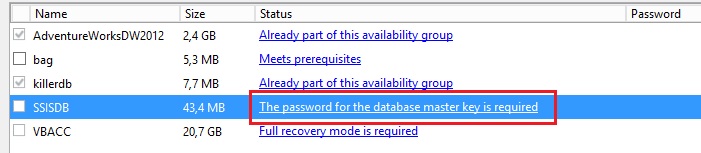
This blog post is focused on the new supportability of SSIDB catalog on AlwaysOn architecture. Others studies are available here: New database issue level detection for automatic failover Potential features in standard edition Automatic failover enhancements New load balancing features with read-only replicas New clustered columnstore index support A couple of weeks ago, I was involved in an SSIS infrastructure…