
Skip to content

Middleware Team

Posts published under the Middleware Team account are collective contributions by the dbi services middleware and enterprise content management consultants. The practice covers ECM platforms such as OpenText Documentum, Alfresco, and M-Files, as well as application servers and integration technologies including WebLogic, JBoss, Tomcat, and the Elastic Stack, from architecture and deployment to operations under service level agreements.

322 posts since February 2013

Monitoring Short Living Processes with Prometheus

With the way Prometheus is gathering metrics, pull, it is not possible to get metrics from short living processes like batch jobs as: In this blog, I will explain how to bypass this limitation with two possibles solutions: The Textfile Collector and push gateway. Textfile Collector Promotheus node_exporter can parse files and expose results on export page. For that, we… 
Redis: Connect your Redis data on Dbeaver

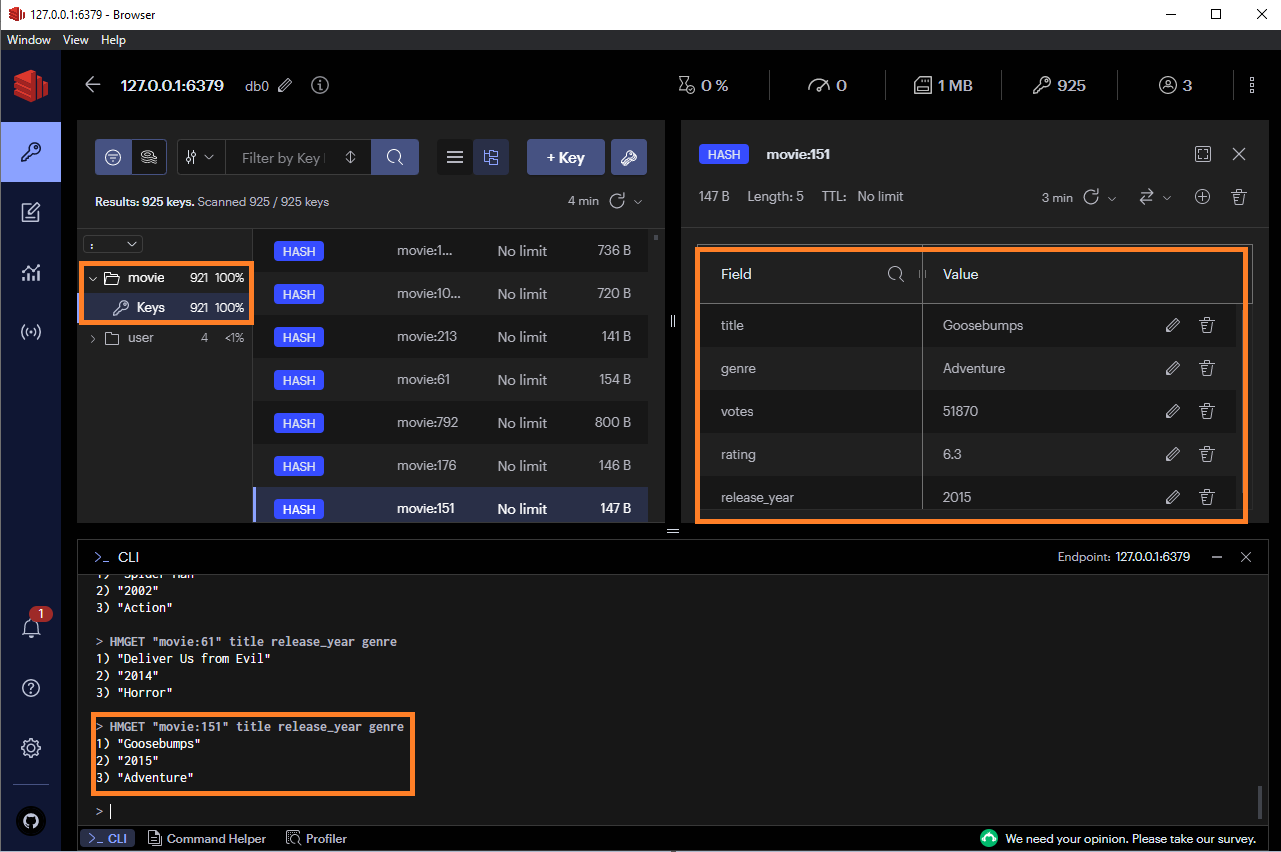
Introduction During a previous post, we saw how to browse in your Redis data using it’s official tool Redis insight 🙂 As per a customer request we want to centralize all data types and tool in one tool. How to proceed?For this topic we will use a database manager named DBeaver Unfortunately this tool is not supporting Redis, unless we… 

Predict the Future with Prometheus

As I am focusing on monitoring subject, I was wondering if it is possible to set alarm based on prediction instead of simple thresholds. Dynatrace has predictive anomaly detection feature, but in this blog, I want to test if on-premises solution could help on this. We will see what Prometheus is capable of. Alarm and Threshold When we set up… 

Grail and Dynatrace Query Language

In my last dynatrace blog, I presented how to go from logs to dashboard. This could look like a complex process for such a simple task. Moreover, this does not work on historical data as metric will be only populated at the time of the definition even if it was present in the log before. Recently, dynatrace introduced Grail. Grail… 

Redis : The different Key Type Part2

Introduction: Here is the second part of the Redis keys and features, we will see how to use, with a description from the official Redis site and some example for : So open your Redis-server and let’s check what is behind these different data types, and test some great features like: The different Data type Description: HyperLogLog is a data… 

WildFly: From Log to Dashboard with dynatrace

In my previous dynatrace blog, I explained how to deploy OneAgent on a Virtual Machine which hosts WildFly. In this one, I will tell you: Before that, to be able to track time taken by each request in access log, we must enable “record-request-start-time” in WildFly. With jboss-cli.sh, command to achieve that is: Then, we are ready for next steps.… 

Redis: The different Key Type Part1

Introduction: Hi team , we have seen during previous posts, how is working Redis , how to browse into data using Redis Insight and how to backup your database. This time , in this first part ,we will go deeper by checking the different key type ,how to use it and their limitation. So let’s go! About Redis As a… 

dynatrace First Steps

In this blog, I will tell you how I setup my first agent, on a YaK deployed server. Of course, I will use YaK to deploy it. What is dynatrace? dynatrace is an observability platform which covers from infrastructure monitoring up to Real User Monitoring (RUM), including application and microservices, application security and business analytics. My First Experience My first… 

Redis : Backup and restore your database

Introduction: Redis is a nosql database , a high performance key-value database management system that stores information in memory for fast access. It can be used to manage your users’ sessions or your site’s cache, for example. In a previous a blog we have seen how to import a dataset or create one from you own . To perform this… 

Redis : How to import data using redis-cli utility

Introduction: As you may know Redis is a nosql database. It uses key-value pairs to store data whereas SQL database works as a table-based relational database structure. We ever seen how to create entries in Redis using typical commands like HSET , SET ,ZADD and so on ( I will prepare a reminder of these commands with explanations in an…