Skip to content

Microsoft

SQL Server 2016: patching CU with R Services

As a good DBA, I begin to be up to date with all Cumulative Update (CU) by my customers. It is the first time that I run an update for SQL Server 2016 with the CU 3. I download the CU on Microsoft website and I begin my patching campaign on all SQL server 2016 instances. The first one is… 
SQL Server 2017: Python server

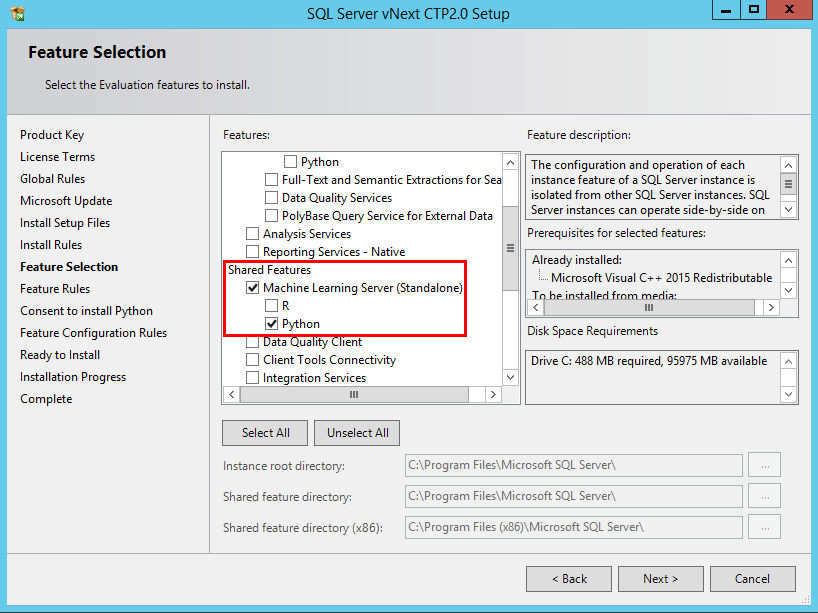
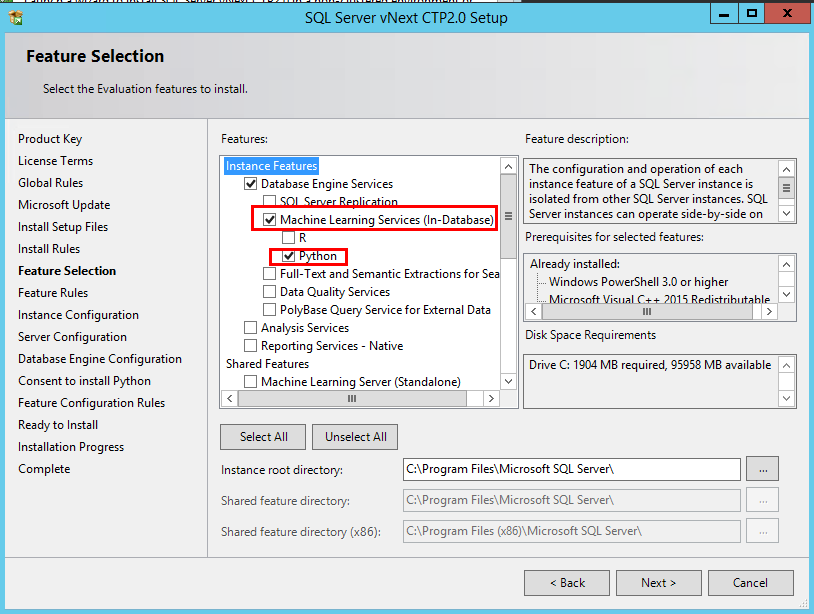
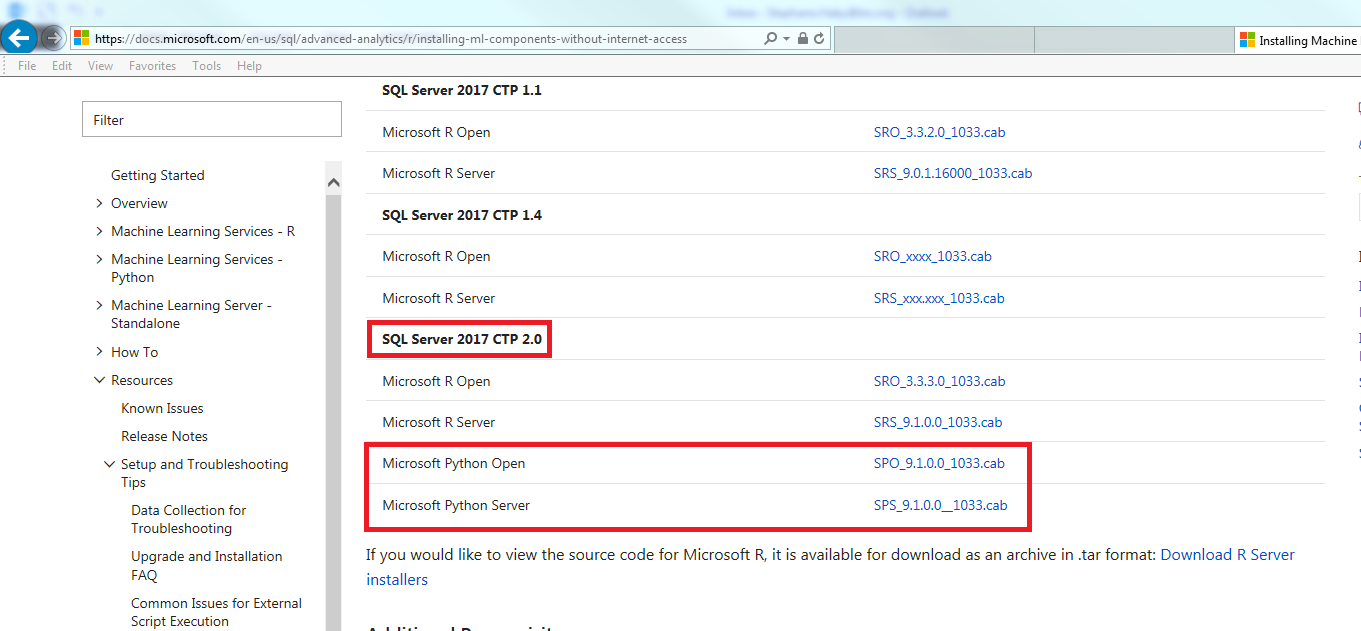
After my article SQL Server 2017: first steps with Python Service, I write this article about my first test with the Python Server feature in SQL Server 2017. The installation is very simple, in the features Selection window, you have in the Shared Features, you have a Machine Learning Server (Standalone) with R and Python. I check Python to install… 

SQL Server 2017: first steps with Python Service

Last year, I written blogs about SQL Server 2016 and his integration from the R language. Just for information, you can find these blogs about SQL Server 2016 R Services here: SQL Server 2016: R Services SQL Server 2016 – R Services Tips: How to find installed packages using T-SQL? Now, the next version of SQL Server, named officially SQL… 

SQL Server 2016: Does Dynamic Data Masking works with INSERT INTO and SELECT INTO commands?

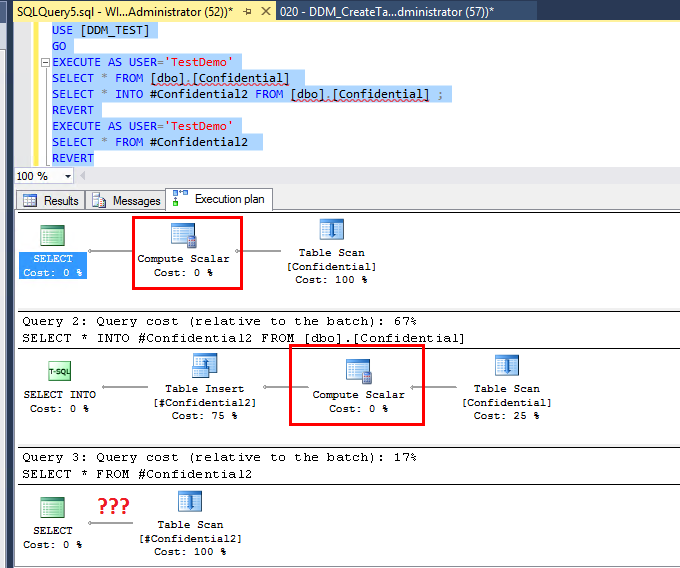
I wonder how works Dynamic Data Masking (DDM) with these two commands INSERT INTO  and SELECT INTO. First, I create a table and add some “sensitive data”: USE [DDM_TEST] GO CREATE TABLE [dbo].[Confidential]( [ID] [int] IDENTITY(1,1) NOT NULL PRIMARY KEY CLUSTERED, [Name] [nvarchar](70)NULL, [CreditCard] [nvarchar](16)NULL, [Salary] [int] NULL, [Email] [nvarchar](60)NULL) insert into [dbo].[Confidential]([Name],[CreditCard],[Salary],[Email]) values (N’Stephane’,N’3546748598467584′,113459,N’[email protected]’) insert into [dbo].[Confidential]([Name],[CreditCard],[Salary],[Email]) values (N’David’,N’3546746598450989′,143576,’[email protected]’)… 

SQL Server 2016: Does Dynamic Data Masking work with Temporal Table?

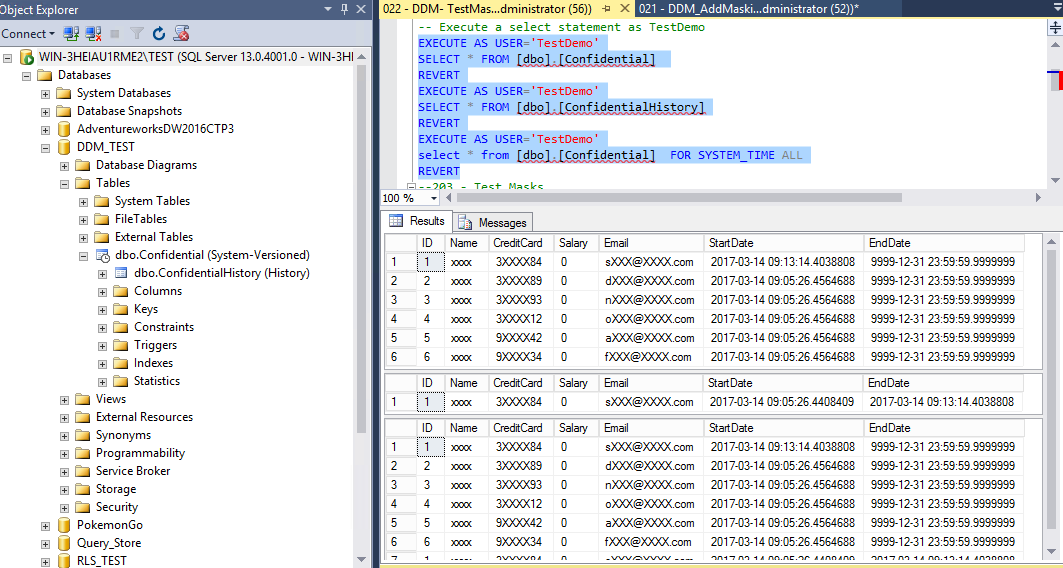
In the last IT Tagen 2016, I presented the Dynamic Data Masking (DDM) and how it worked. To add a little fun, I applied the DDM to a temporal table to see if the history table inherits also from DDM’s rules. In this blog, I explain all the different steps to reproduce my last demo. Step 1: Create the table… 

IT-Tage 2016 Informatik aktuell: feedback

Today, to finish the year, I post a brief personal impression of the IT-Tage 2016 in Frankfurt at the Hotel Maritim, where I was also be a speaker. I presented 2 sessions on SQL Server: “SQL Server Errorlog Entmystifizierung” & “SQL Server 2016: Neue Sicherheitsfunktionen”. I wasn’t the only one from dbi services who spoke at that conference: David Barbarin… 

SQL Server on Linux in Azure

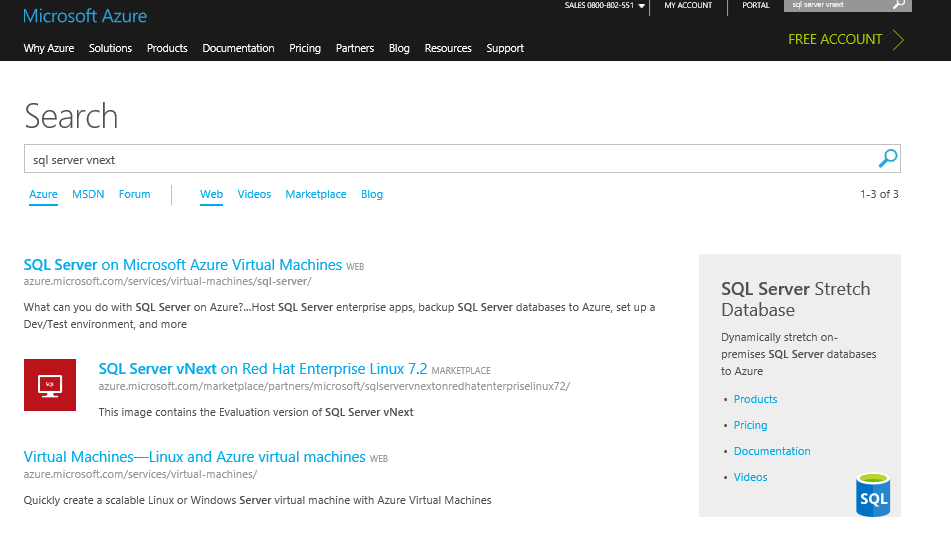
I’m pleased to announce that Microsoft gives now the opportunity to choose Linux as a new operating system for SQL Server. To try this new version, you can find in the Cloud Azure a new template in the marketplace. In the search bar, tape “SQL Server vnext” and you’ll find the “SQL Server vNext on Red Hat Enterprise Linux 7.2”.… 

SQL Server 2016 – R Services Tips: How to find installed packages using T-SQL?

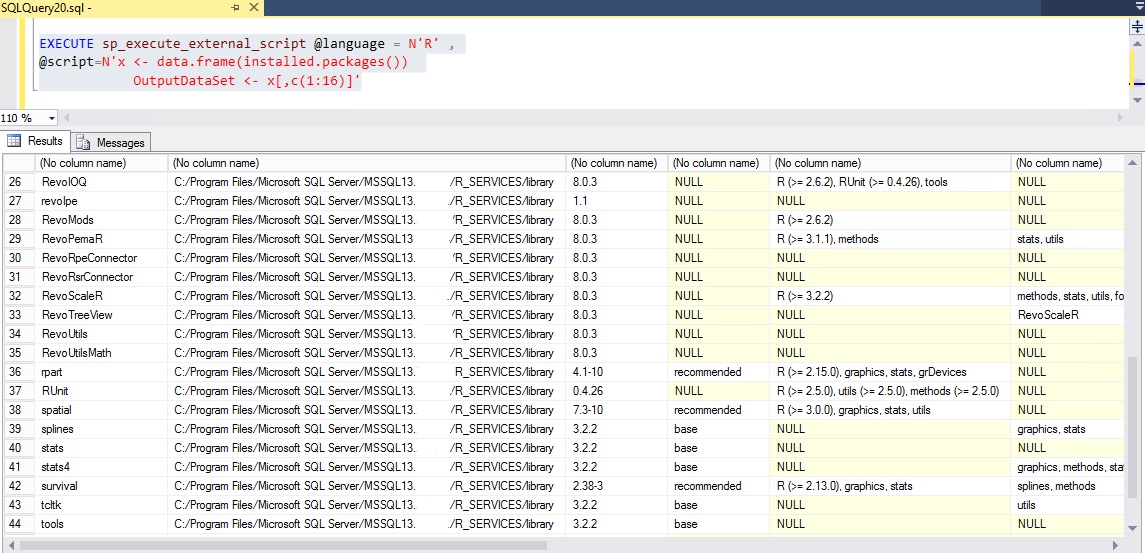
If you have restricted access to the server and you do not know if your packages are installed on the SQL Server with the R Services, you have the possibility to do it by T-SQL. The R command/function to use is “installed.packages()”. As you can read in the R Documentation for installed.packages(),  this function scans the description of each package.… 

SQL Server 2016: New useful function STRING_SPLIT()

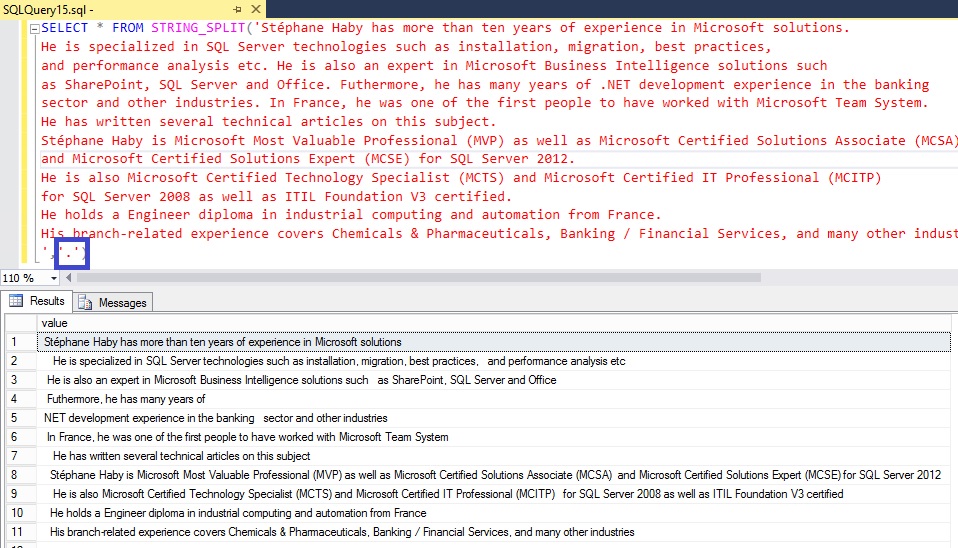
Now, in the latest version of SQL Server, you have one of the most expected function as well as for developers as for administrators, splitting a string natively in T-SQL: STRING_SPLIT(<character expression>,<separator>) This function has 2 parameters: The character expression with a data type of nvarchar,varchar,nchar or char The separator with a data type of nvarchar(1), varchar(1), nchar(1) or char(1)… 

Manage Azure in PowerShell (RM)

Azure offers two deployment models for cloud components: Resource Manager (RM) and Classic deployment model. Newer and more easier to manage, Microsoft recommends to use the Resource Manager. Even if these two models can exist at the same time in Azure, they are different and managed differently: in PowerShell cmdlets are specific to RM. In order to be able to… 

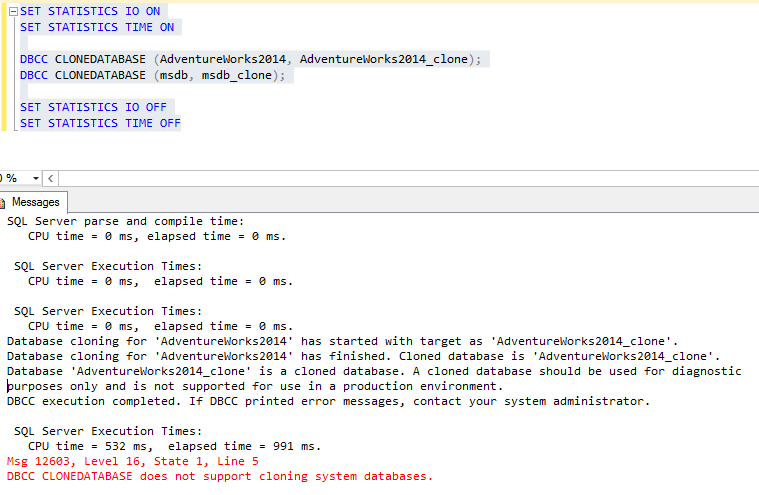
Neue Datenbank Konsole Befehle (DBCC) CLONEDATABASE

Sie haben es vielleicht noch nicht gesehen, aber mit den Service Pack 2 von SQL Server 2014 gibt es einen neuen DBCC Befehl: CLONEDATABASE. „DBCC CLONEDATABASE sollte Kopien eines Schemas und den Statistiken einer Produktionsdatenbank erstellen, um bei Leistungsproblemen Abfragen zu untersuchen.“ MSDN Quelle finden wir hier. Dieser Befehl kann nur Benutzedatenbanken klonen. Wie Sie sehen, für die Systemdatenbanken ist… 

SQL Server 2016: New SQL PowerShell CMDLETs for ErrorLog

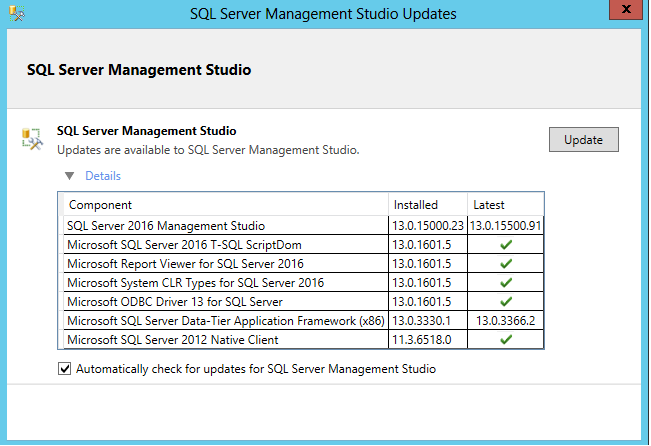
With the latest release of SQL Server Management Studio(SSMS) 2016 (13.0.15500.91), downloadable here, was introduced new CMDLETs for Always Encrypted, SQL Agent and the  ErrorLog. In this article, I will present you the 2 new CMDLETs for the Error Logs: Get-SqlErrorLog: Retrieves the SQL Server Logs. Set-SqlErrorLog: Sets or resets the maximum number of error log files before recycling. My…