Skip to content

Python

GoldenGate REST API basics with Python

Oracle GoldenGate REST API has been around for quite some time now, but I’ve yet to see it used in practice at customers. Every time I tried to introduce it, it was some sort of novelty. Mainly because DBAs tend to dislike automation, but also for technical reasons. Even though the REST API was introduced in GoldenGate 12c with the… 

Extend session timeout in GoldenGate Microservices Web UI

If you start using the GoldenGate web UI after installing it, you might end up thinking that extending the session timeout would be nice. Since there is no clear Oracle documentation on that matter, here are multiple ways of doing it. Modifying the configuration files: quick but with downtime The first way of doing it is to modify the deploymentConfiguration.dat… 

SQL-Server 2025: Building a RAG Shopping Assistant with T-SQL

In this post, we continue our AI journey with SQL Server 2025 (Preview). In previous articles, I already showed how to call the GPT-4o chat-completion model in Azure directly from SQL Server to generate product descriptions, how to create and store embeddings for semantic search, and how to use the (preview) acceleration features for semantic search workloads. If you want… 

Optimize materialization of Exadata PDB sparse clones

Well, this blog is unfortunately reserved to DBA folk running Oracle engineered systems #Exadata, #ExaCC, #ExaCS and Oracle Multitenant database (aka. CDB) architecture. One of our #ExaCC customer has a strong DevOps focused business and heavily relies on Exadata sparse clones to quickly provision “lightweight” database clones for their development teams. As part of the move of an mission critical… 

pgvector, a guide for DBA – Part3 AI agent and workflows

Introduction Nowadays, everyone in IT is well versed in using ChatGPT and other LLM-powered Chat to retrieve information like Google or try to learn something with it. The problem with those models is their accuracy. Current AI models only know what information they have been fed and expose it to you in a format you understand (which is already surprisingly… 

Future Data Driven 2024 – introduction to vector databases

I had the opportunity to participate in the Future Data Driven 2024 event (https://datadrivencommunity.com/FutureDataDriven2024.html) with my colleague Stéphane Haby. Many speakers were present, and I was able to attend several sessions covering the following topics: Azure, AI, CosmosDB, Co-Pilot, Database Watcher. In several sessions, when AI was discussed, we talked about vector databases. These were terms I had heard before… 

How the YaK is born

It all began with a challenge In the consulting job, some tasks can be a bit repetitive. They also take up valuable consulting time that the client would be more than happy to use for higher value-added tasks. So, my team and I started thinking about a solution two years ago. Which tasks could be automated to facilitate the work… 

DctmAPI.py revisited

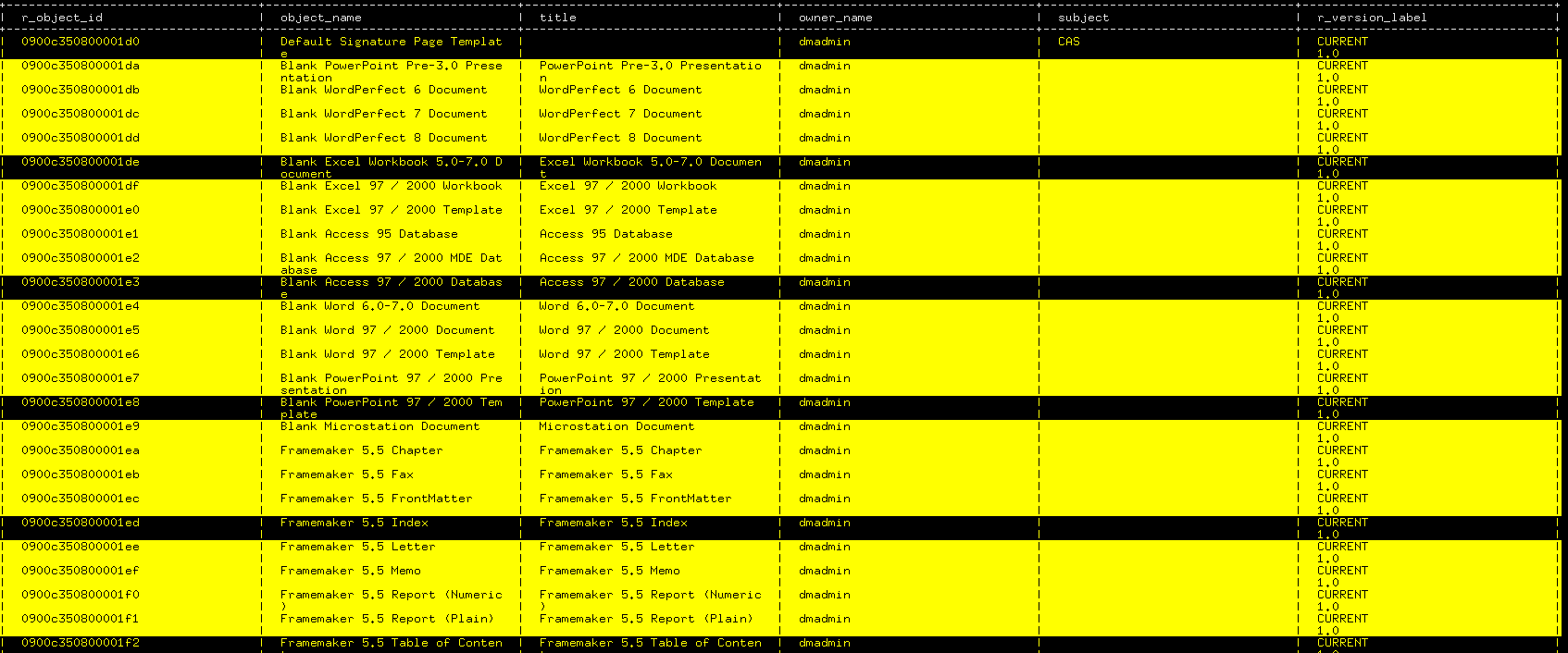
2 years ago, I proposed a ctypes-based Documentum extension for python, DctmAPI.py. While it did the job, it was quite basic. For example, its select2dict() function, as inferred from its name, returned the documents from a dql query into a list of dictionaries, one per document, all in memory. While this is OK for testing and demonstration purpose, it can… 

A Simple Repository Browser Utility

A few weeks ago, as the final steps of a cloning procedure, I wanted to check if the cloned repository was OK. One of the tests was to peek and poke around in the repository and try to access its content. This is typically the kind of task for which you’d use a GUI-based program because it is much quicker… 

Documentum – DFC traces setup & investigation

When working with Documentum, you will most probably have to enable the DFC traces one day or another and then work with these traces to analyze them. The purpose of this blog is simply to show how the DFC traces can be enabled, which tools can be used to quickly process them and what are the limitations of such things.… 

SQL Server 2017: Python server

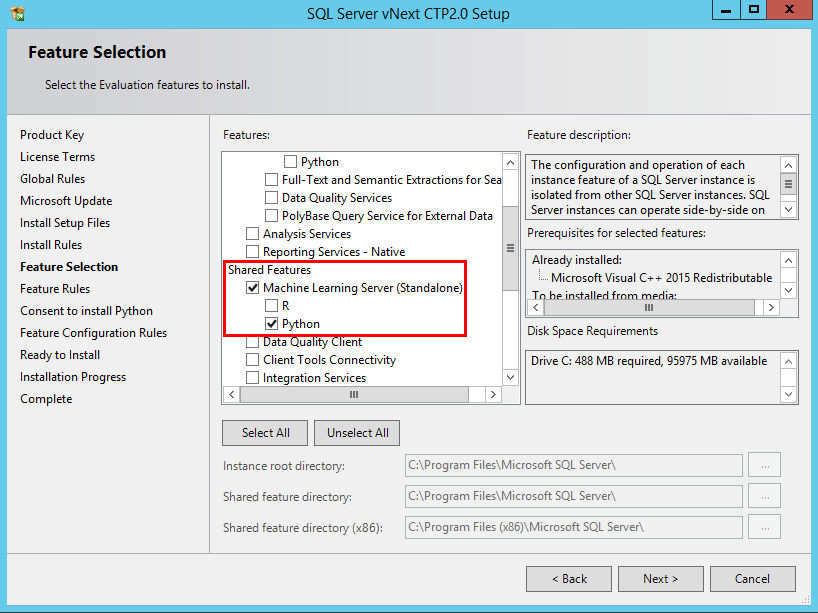
After my article SQL Server 2017: first steps with Python Service, I write this article about my first test with the Python Server feature in SQL Server 2017. The installation is very simple, in the features Selection window, you have in the Shared Features, you have a Machine Learning Server (Standalone) with R and Python. I check Python to install… 

SQL Server 2017: first steps with Python Service

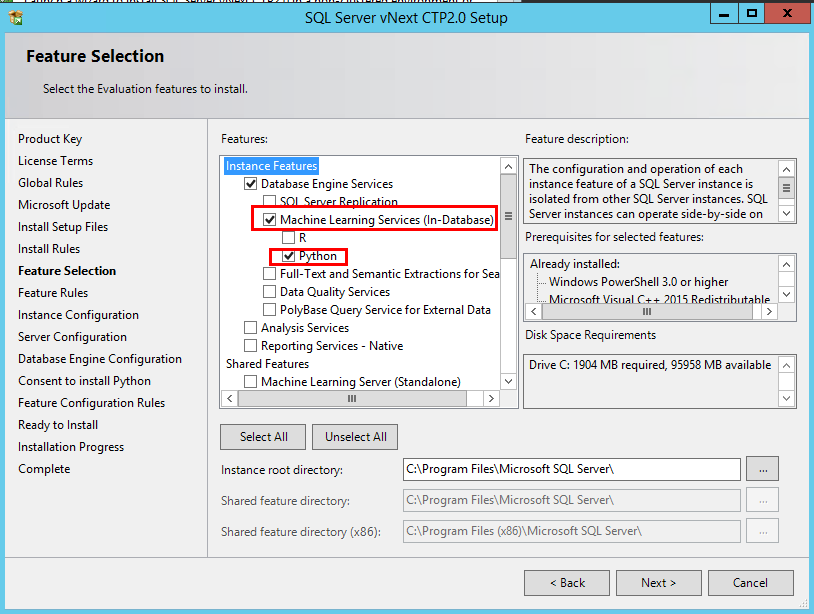
Last year, I written blogs about SQL Server 2016 and his integration from the R language. Just for information, you can find these blogs about SQL Server 2016 R Services here: SQL Server 2016: R Services SQL Server 2016 – R Services Tips: How to find installed packages using T-SQL? Now, the next version of SQL Server, named officially SQL…