Skip to content

Microsoft

SQL Server 2014: buffer pool extension & corruption

I had the opportunity to attend Paul Randal’s session on advanced data recovery techniques at the Pass Summit. During this session one attendee asked Paul if a page that has just been corrupted can remain in the buffer pool extension (BPE). As you probably know, BPE only deals with clean pages. Paul hesitated a lot and asked us to test… 

SQL Server & memory leak: Are you sure?

I have recently come across an issue with one of my customer that told me that their SQL Server 2008 R2 instance had a memory leak. These are strong words! The server has 64 GB of RAM and the concerned SQL Server instance is limited to 54 GB according to the max server memory (GB) server option. However, he noticed… 

SQL Server failover cluster, VSphere, & SCSI-3 reservation nightmares

When I have to install a virtualized SQL Server FCI at a customer place as an SQL Server consultant, the virtualized environment usally is ready. I guess this is the same for most part of the database consulting people. Since we therefore lack practice, I have to admit that we do not always know the good configuration settings to apply… 

Windows 10: The new features

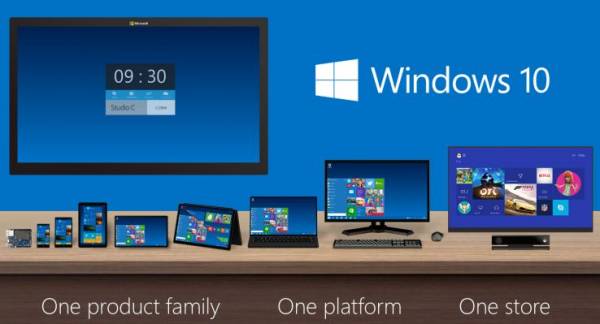
First, it should have been Windows 9, but finally the new Microsoft operating system is named Windows 10! In the same way as for my blog post on Windows 8, I have decided to write a few words about the new features of Windows 10. Why 10? It’s a good question and I have read many articles about it. First,… 

SQL Server: Forced failover with AlwaysOn & Availability Groups

During a workshop at one of my customer about the implementation of SQL Server AlwaysOn and availability groups, I had an interesting discussion. It was about asynchronous replication between 2 replicas and the effect of the forced failover operation with allowed data loss. Does SQL Server resynchronize availability databases if I loose some transactions during the failover process? The quick… 

SQL Server 2014 Tips: Create indexes directly via CREATE TABLE

This week, I discovered a new enhancement which is not hidden but not really visible in SQL Server 2014. Among Hekaton and other new features in SQL Server 2014, a little option appears in table creation.8-O On the msdn website, we can see a new section in the “CREATE TABLE” code:   We can directly create an index in the… 

SQL Server 2014: classic commit vs commit with delayed durability & I/Os

When you learn about SQL Server, you will often hear that a commit transaction is a synchronous operation and that you can trust it. In this blog post, I will provide some details about what we mean by synchronous behavior. The reason is that sometimes, when I talk about the new delayed durability feature provided by SQL Server 2014, there… 

How to find the SQL Server Management Pack in the SCOM database

While working on a customer project, I needed to retrieve the SQL Server SCOM Management Pack version. Unfortunately, the SCOM team took a while to answer and as I am the DBA, I have access to the SCOM databases. So let’s have a look at how we can get this the “hard” way. On 30/06/2014, a new Management Pack was published… 

Deploying a SQL Server database to Azure

Deploying an SQL Server database to a Windows Azure virtual machine is a feature introduced with SQL Server 2014. It can be useful for an organization  that wants to reduce its infrastucture management, simplify the deployment, or have a fast virtual machine generation. Concept This new feature is a wizard which allows either to copy or migrate an On-Premise SQL… 

SQL Server 2014: DBCC CHECKDB and ReFS support

Have you noticed an interesting behavior with SQL Server 2014 when you are running a dbcc checkdb command? If not, you should have a look at this blog post. I discovered it completely by accident during some tests. If you watch carefully, you will see “weird” files appear while the dbcc checkdb command is running. Below is a sample of… 

Backup a SQL Server database from On-Premise to Azure

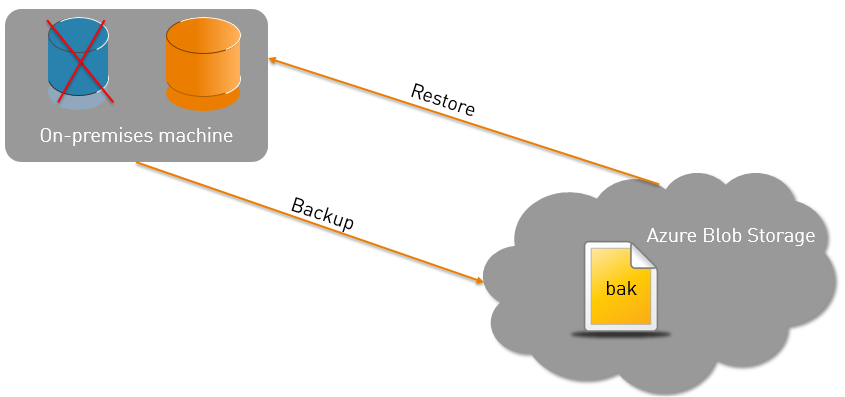
SQL Server database backup & restore from On-Premise to Azure is a feature introduced with SQL Server 2012 SP1 CU2. In the past, it could be used with these three tools: Transact-SQL (T-SQL) PowerShell SQL Server Management Objects (SMO) With SQL Server 2014, backup & restore can also be enabled via SQL Server Management Studio (SSMS). Concept This feature is… 

SQL Server Perfmon does not start automatically

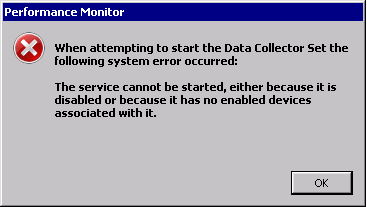
I have recently used perfmon (performance monitor) at a customer site. I created a Data Collector Set to monitor CPU, Memory, Disk, and Network during one day. Then, I ran the monitor and I received a “beautiful” error message… What happened? 😉 Ok, to be sure that it was not a rights or a setting problem in my Data Collector…