Skip to content

Kubernetes

Elastic (ELK) Stack – Get Started

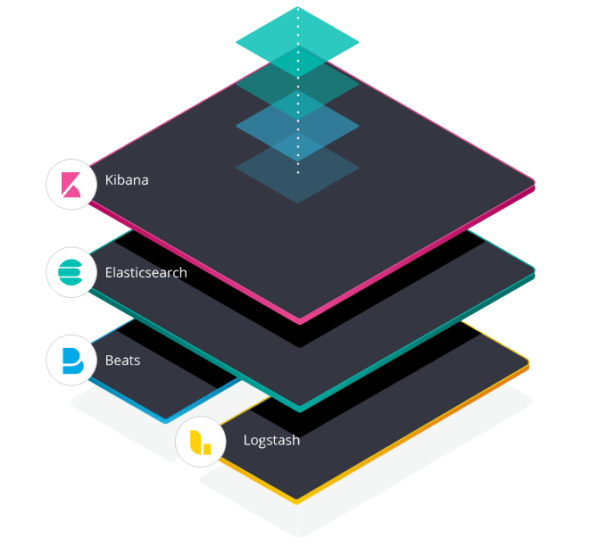
ELK Stack or more recently called Elastic Stack, is a combination of three open-source projects: Elasticsearch, Logstash and Kibana. All these projects have been developed by Elastic and used to store, analyze, discover, and visualize data efficiently! I got the chance to install, configure and maintain Elastic Stack on Kubernetes since more than two years. Today, I would like to… 

Getting started with the Zalando Operator for PostgreSQL

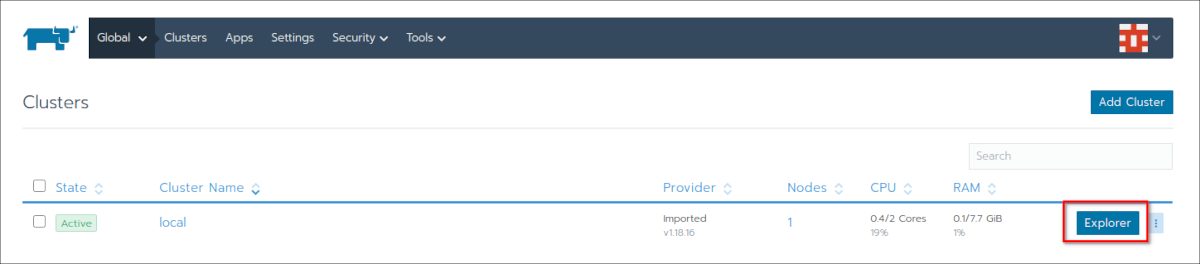
In the previous posts (Rancher, up and running, on EC2 – 1 – One node, Rancher, up and running, on EC2 – 2 – Three nodes, Rancher, up and running, on EC2 – 3 – Rancher setup, Rancher on SLES 15 as a demo environment, and Deploying a Kubernetes cluster on EC2 with Rancher) it was all about deploying a… 

DevOps World Lisbon – Continuous Delivery with Jenkins X

Welcome to the DevOps World – Jenkins World in Lisbon 😀 ! I’m very excited to attend my first DevOps World, thanks to dbi services for allowing me to attend this event. By the way, it’s my first time here in Lisbon and I fell in love with this city. The first day was exclusively book for workshops, and we… 

Documentum – FQDN Validation on RCS/CFS

In a previous blog, I talked about the possible usage of K8s Services in place of the default headless/pod name and the issues that it brings. This one can be seen as a continuation since it is also related to the usage of K8s Services to install Documentum but this time with another issue that is specific to a RCS/CFS.… 

Documentum – Usage of K8s Services to install Documentum?

In the past several months, we have been extensively working on setting up a CI/CD pipeline for Documentum at one of our customer. As part of this project, we are using Kubernetes pods for Documentum components. In this blog, I will talk about an issue caused by what seemed like a good idea but finally, not so much… The goal… 

NFS Storage Configuration for Kubernetes

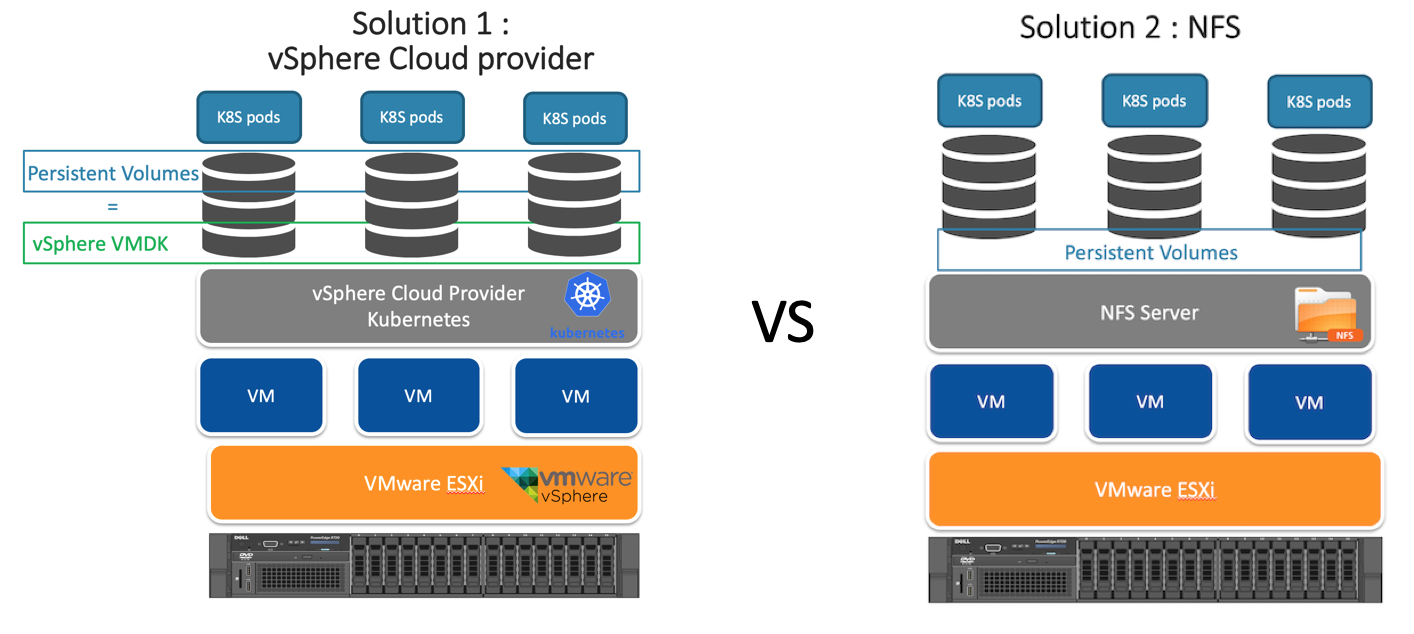
For one of our important customers, we are working on a major project to migrate critical applications to containers. From the implementation of the Kubernetes architecture to the deployment of applications and the administration of the platform, we are responsible for an important technological stack with new challenges for our team. One of the challenges, both important and exciting, is… 

Red Hat Forum Zürich, 2019, some impressions

Currently the Red Hat Forum 2019 in Zürich is ongoing and people just finished lunch before the more technical sessions are starting. As expected a lot is around OpenShift 4 and automation with Ansible. As dbi is a Red Hat advanced business partner we took the opportunity to be present with a booth for getting in touch with our existing… 

Deploying SQL Server on MiniShift / RedHat OpenShift

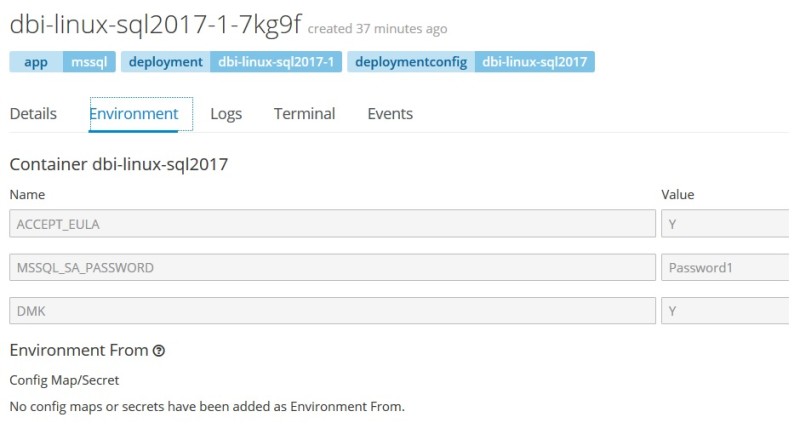
Currently we begin to see customer adopting containerization for SQL Server databases (mainly driven by CI/CD and DevOps trends). A lot of them are using RedHat OpenShift as container management platform. From my side, I didn’t want to setup a complete OpenShift infrastructure on my lab to test only my SQL Server pod deployment on such infrastructure. I rather installed… 

Backing up and restoring EDB containers in MiniShift/OpenShift

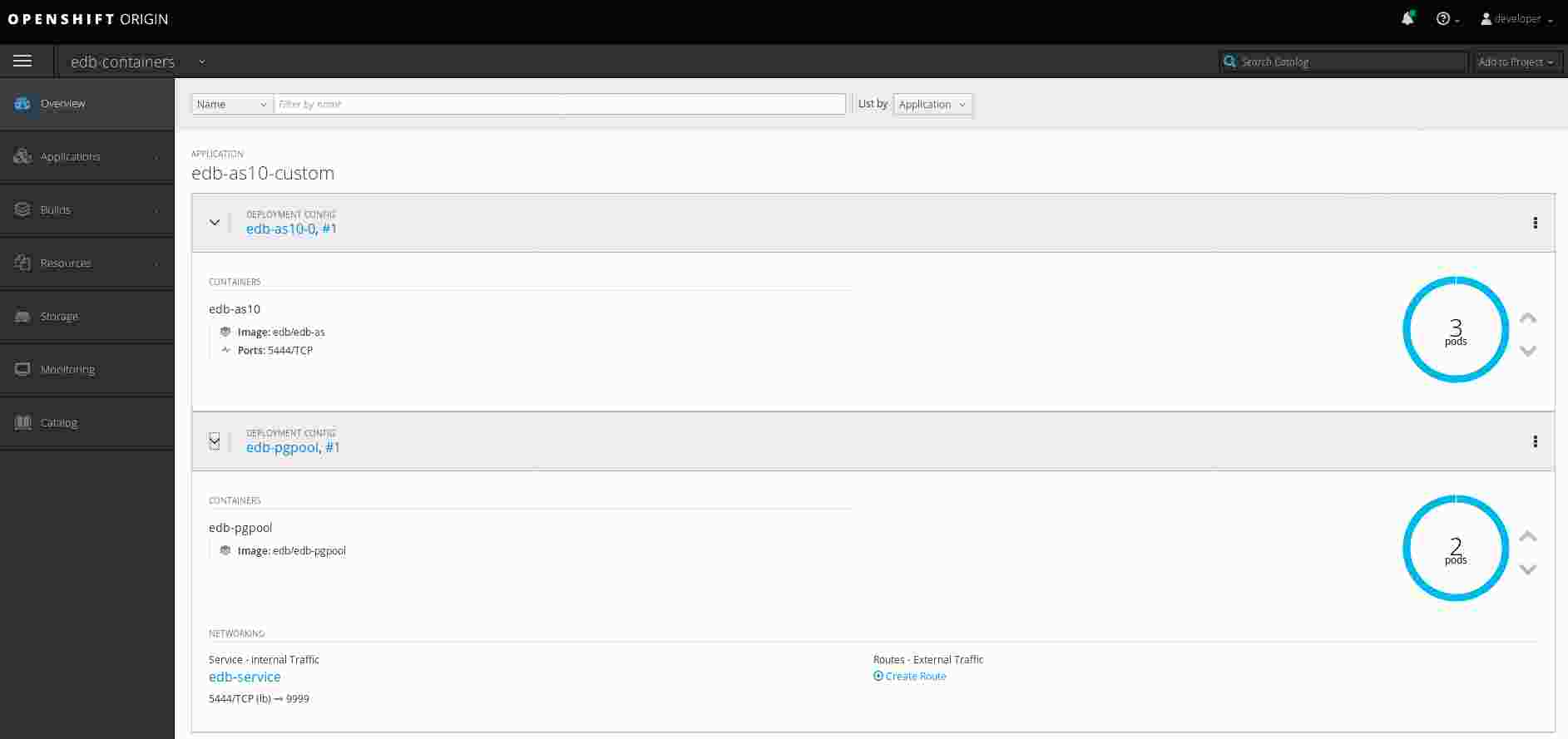
This blog refers to an older version of EDB’s Postgres on Kubernetes offering that is no longer available. The last blogs in the series are already some days old: Setting up MiniShift, Deploying EDB containers in MiniShift/OpenShift, Customizing PostgreSQL parameters in EDB containers in MiniShift/OpenShift, Scaling the EDB containers in MiniShift/OpenShift, EDB Failover Manager in EDB containers in Minishift/OpenShift and… 

Introducing SQL Server on Kubernetes

After spending some times with Docker Swarm let’s introduce SQL Server on Kubernetes (aka K8s). Why another container orchestrator? Well, because Microsoft gives a strong focus on Kubernetes in their documentation and their events and because K8s is probably one of the most popular orchestration tools in the IT industry. By the way, I like to refer to the Portworx…