Skip to content

Open source Team

Posts published under the Open source Team account are collective contributions by the dbi services open infrastructure consultants. The practice covers open-source databases and platforms, PostgreSQL first of all, along with MySQL, MariaDB, and Linux, from architecture, replication, and high availability to performance tuning and operations under service level agreements, and contributes actively to the PostgreSQL community.

721 posts since September 2011

Can I put my temporary tablespaces on a RAM disk with PostgreSQL?

The short answer to the title of this blog post is: yes, of course you can. The more important question is: should you? The PostgreSQL documentation about tablespaces contains an explicit warning: “Placing a tablespace on a temporary file system like a RAM disk risks the reliability of the entire cluster”. This is for sure true for tablespaces containing persistent… 

About temp_tablespaces in PostgreSQL

There often is a discussion if tablespaces should be used in PostgreSQL. People used to work with Oracle are often a bit surprised by this discussion as there is no way around using tablespaces in that technology. PostgreSQL does not force you to use tablespaces at all and I am pretty sure that there are plenty of PostgreSQL installations out… 

Upgrading SUSE Linux Enterprise online

One really good feature from SUSE Linux Enterprise (SLE) is that it allows you to upgrade from your running system to a new service pack online. Let’s say from SLE 12 SP3 to SLE 12 SP4. No new installation is needed. All existing data are kept intact. In the following blog post, I will show you how easy it is.… 

ysql_bench: the YugaByteDB version of pgbench

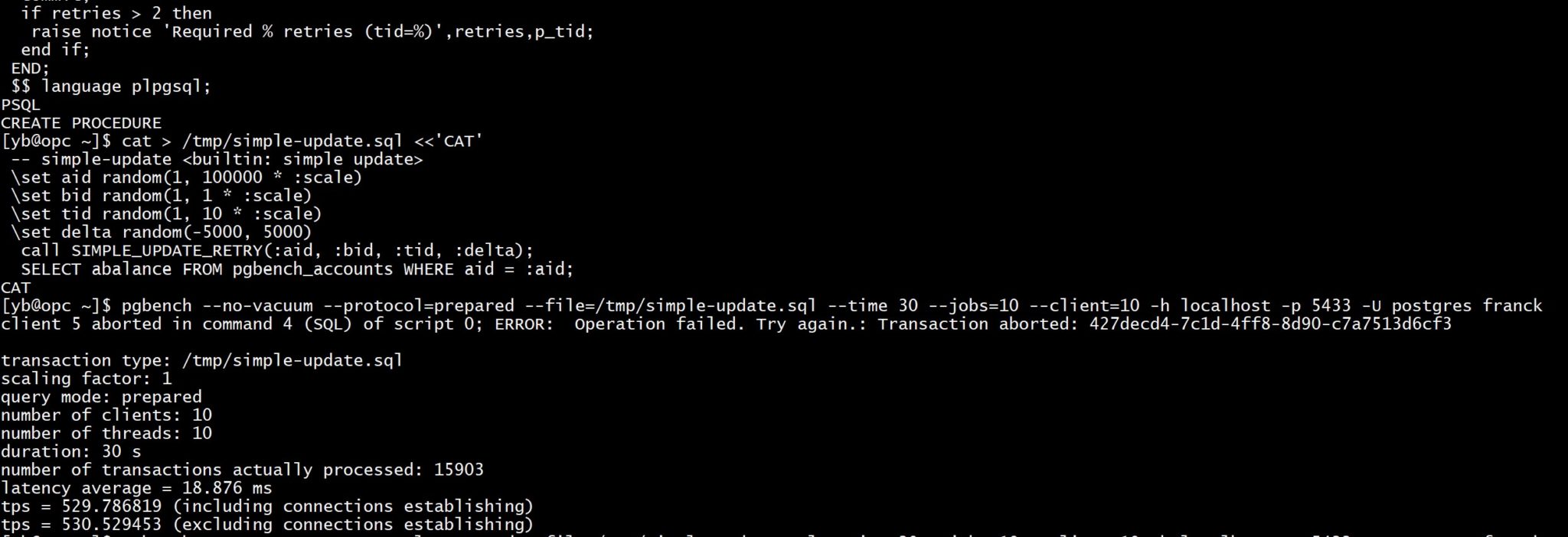
By Franck Pachot . This follows the previous post on testing YugaByteDB 2.1 performance with pgbench: https://www.dbi-services.com/blog/yugabytedb-2-1/ A distributed database needs to reduce inter-node synchronization latency and then replaces two-phase pessimistic locking by optimistic concurrency control in many places. This means more serialization errors where a transaction may have to be re-tried. But the PostgreSQL pgbench does not have this… 

YugaByteDB 2.1: the Open Source multi-region distributed database with PostgreSQL API is in GA with huge performance improvement

By Franck Pachot . 9 months ago I was looking at YugaByteDB which was still in beta version for its ‘YSQL’ API. I published my first test on Medium: https://medium.com/@FranckPachot/running-pgbench-on-yugabytedb-1-3-3a15450dfa42. I have been very enthusiastic about the idea, the architecture, the way they open-sourced it and how all was documented in their blog. I’ve even met them in Sunnyvale when… 

Collations in PostgreSQL – basics

When you work with databases sooner or later you will need to get in touch witch collations. It might be that you never needed to think about it as initdb picked a value that just worked for you and nobody in your database ever tried to use a collation that is not available in your installation. Once someone is trying… 

Refactoring procedural to SQL – an example with MySQL Sakila

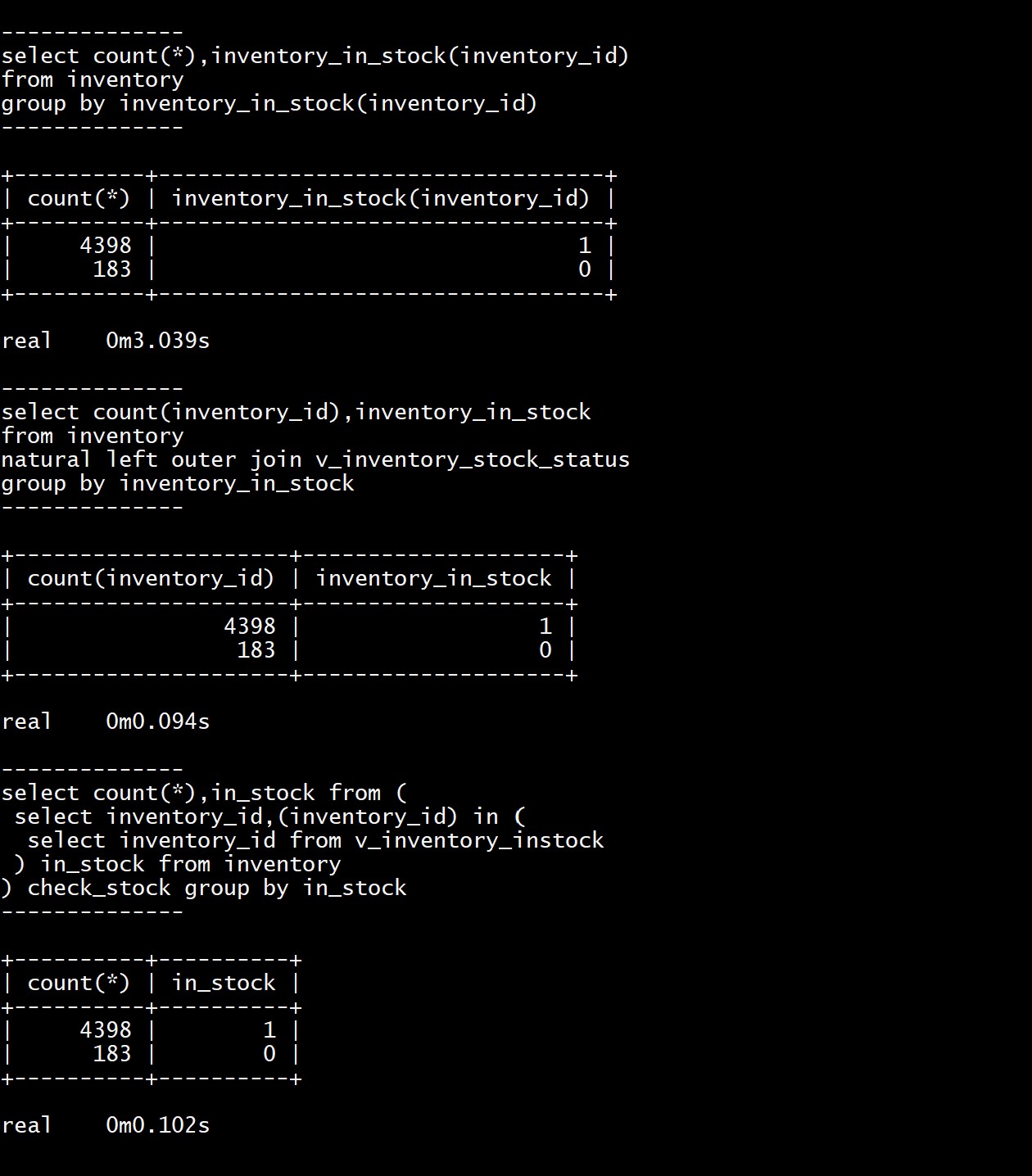
By Franck Pachot What I want to show in this blog post is that, as in mathematics where you have to apply some algebra rules to transform an equation to an equivalent one, the database developer must translate the business specification to an equivalent that is optimized (in performance, reliability and readability) for the data model. I was looking at… 

How can Docker help a MariaDB cluster for Disaster/Recovery

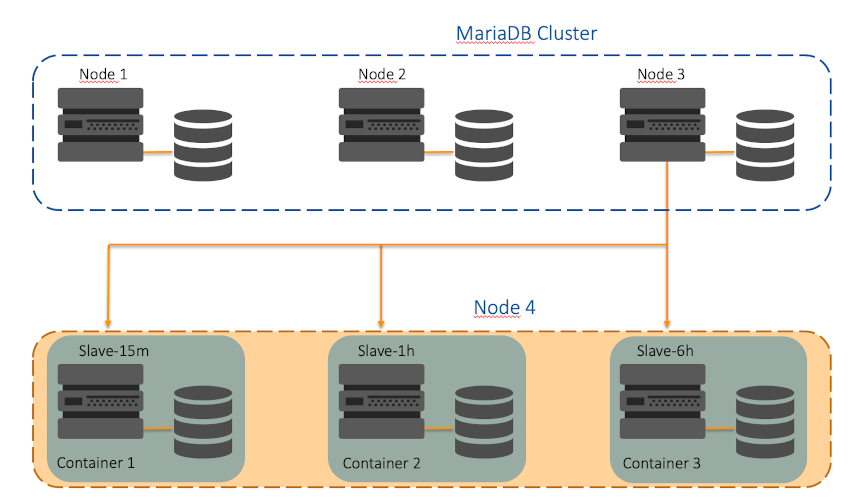
Mistakes or accidental data deletions can sometimes happen on a productive MariaDB Galera Cluster and this can be disastrous. There are so many cases I have heard by customers and hereafter are some of the most common: – dropping one column of a table – dropping one table – updating a big table without a where clause What if it… 

ROLLBACK TO SAVEPOINT;

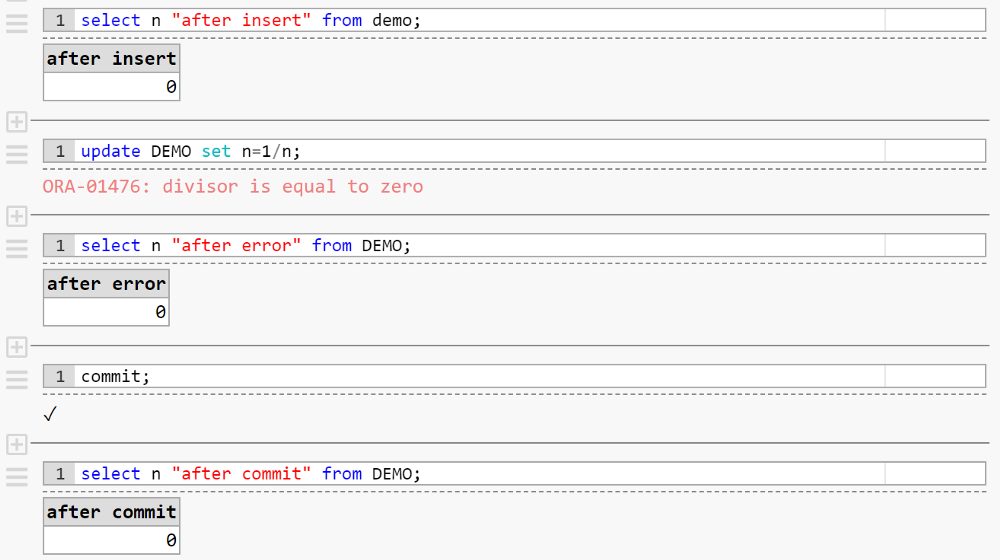
By Franck Pachot . I love databases and, rather than trying to compare and rank them, I like to understand their difference. Sometimes, you make a mistake and encounter an error. Let’s take the following example: create table DEMO (n int); begin transaction; insert into DEMO values (0); select n “after insert” from DEMO; update DEMO set n=1/n; select n…