Skip to content

Microsoft Team

Posts published under the Microsoft Team account are collective contributions by the dbi services Microsoft consultants. The practice covers SQL Server across its lifecycle, from installation, migration, and security to high availability with Always On and performance tuning, together with Azure data services and the Microsoft Business Intelligence stack, including Power BI. The team holds Microsoft certifications up to Expert level and operates customer platforms under service level agreements.

263 posts since October 2011

SQL Server AlwaysOn: is my database ready for failover?

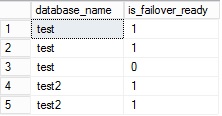
In this blog post I just want to clarify values that we may find from the is_failover_ready column of the sys.dm_hadr_database_replica_cluster_states DMV. A couple of days ago, I had an interesting discussion with one of my customers during which he explained he was not confident about the availability group state after facing some unavailability issues. The main source of uncertainty… 
SQL Server 2016 is available on msdn

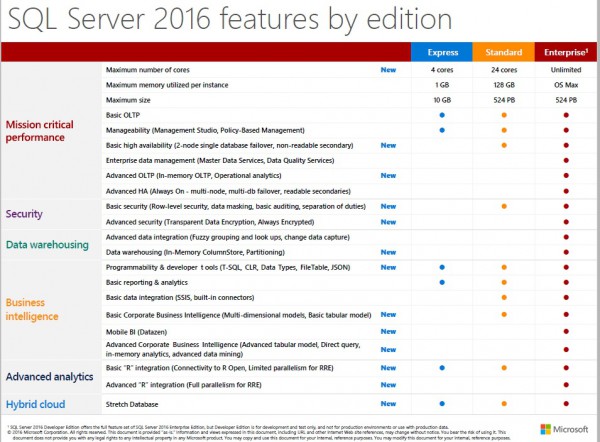
Breaking news lady and gentlemen. In case you missed it, SQL Server 2016 is live from MSDN subscription. As a reminder, this version offers a lot of very interesting new features and enhancements. Here a summary of the new features per edition.   From my part, I’m looking forward to see what it was made of in real customer cases, especially new… 

Windows Failover Cluster : Introduction to paxos tag

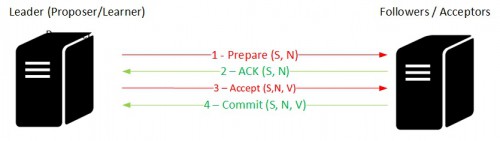
A couple of days ago, I was in charge to install a new SQL Server AlwaysOn and availability group with one of my colleague Nathan Courtine. During the installation, we talked about testing a disaster recovery scenario where we have to restart the Windows Failover cluster in forced quorum mode. Restarting a WSFC in such mode implies some internal stuff… 

Stored procedure execution may fail with nonclustered columnstore indexes

In this blog post, let’s talk about a weird situation where I faced a nonclustered columnstore issue with SQL Server 2012. Let’s say we are in the same context than this previous blog post here. So as a reminder, we decided to benefit from the columnstore index feature after installing a new SQL Server 2012 based infrastructure at my customer… 

SQL Server 2016 RTM – Coming soon!

The first RTM release of SQL Server 2016 will be released soon. It’s official now! Indeed, Microsoft announced here the SQL Server 2016 RTM release being generally available for use the 1st June 2016. What does this mean? Well, customers who have been thinking either to upgrade their SQL Server environments or to install a new architecture can now include… 

SQL Server: switch partition and metadata inconsistency issue

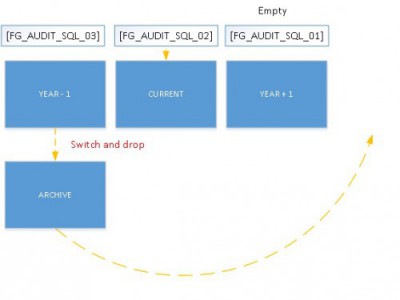
In this blog post, I would like to share with you a weird issue I faced when I implemented a sliding Windows partition scenario on SQL Server 2014 SP1 at one of my customer. The idea was to keep SQL Server audit records from several SQL Server instances into a global archiving table during two years in order to meet… 

Columnstore index rebuild cannot start

A couple of weeks ago, I was charged to migrate an SQL Server datawarehouse environment to a more recent version of SQL Server (from 2005 to 2012 in my case). After discussing with my customer we decided to benefit from the nonclustered columnstore index feature to improve reporting queries performance directly executed against the concerned database. So the implementation was… 

SQL Server 2016 RC3: .NET Framework 3.5 is no longer required during installation

As you may certainly know, the last release candidate of SQL Server 2016 (RC3) has been released by Microsoft a couple of days ago. You may find the announcement here.  As usual, after downloading the binaries from my msdn subscription, I performed a first fresh installation of the underlying operating system (Windows Server 2016 TP4) by using my preferred set… 

Windows Server 2016: Introducing Storage Spaces Direct

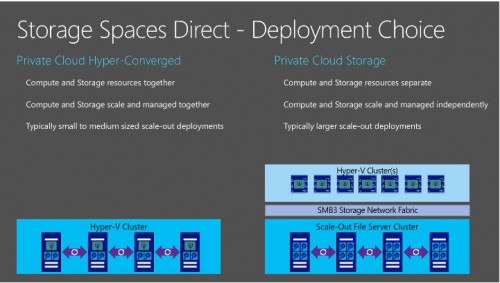
Have you heard about Storage Spaces introduced by Windows Server 2012? Well, this is a very interesting storage feature that allows us to deal with functionalities like storage virtualization, RAID capabilities, thin or thick provisioning, cluster shared volume (CSV), efficiently file repair and so on. In addition, the Windows 2012 R2 version has also introduced some enhancements like storage tiering,… 

Windows Server 2016: Introducing stretch cluster functionality

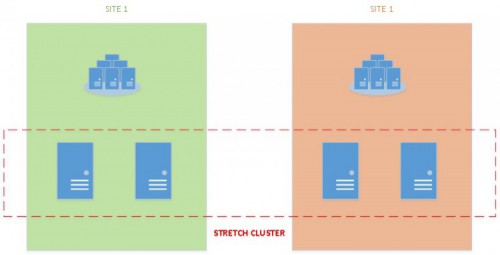
Let’s continue with the new high available functionality shipped with the next Windows version. In my previous blog, I talked about the new site awareness feature that provides more flexibility to configure failover resources priorities and more granular heartbeat threshold as well by introducing the new site concept. This time, we’ll talk about stretch cluster. What’s that? Let’s introduce the… 

SQL Server 2016: new database-scoped configuration parameters part 2

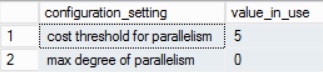
In this blog post, let’s continue with other database-scoped options shipped with the SQL Server 2016 RC0. We will first begin with the first one and my preferred option: setting the MAXDOP value for an individual database. I really hope that applications like SharePoint that requires to limit the MAXDOP to 1 at the server level will use this kind… 

SQL Server 2016: new database-scoped configuration parameters

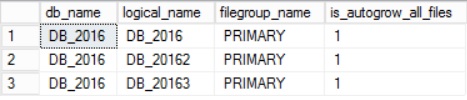
Do you remember new capabilities shipped with SQL Server 2016 CTP2 about tempdb? In this blog post, I talked about well-known trace flags 1117 and 1118 that become useless for tempdb because their related effects are automatically applied to tempdb. Another interesting news that comes from the new SQL Server 2016 RC0 is the use of new database-scoped parameters AUTOGROW_SINGLE_FILE…