Skip to content

Microsoft Team

Posts published under the Microsoft Team account are collective contributions by the dbi services Microsoft consultants. The practice covers SQL Server across its lifecycle, from installation, migration, and security to high availability with Always On and performance tuning, together with Azure data services and the Microsoft Business Intelligence stack, including Power BI. The team holds Microsoft certifications up to Expert level and operates customer platforms under service level agreements.

263 posts since October 2011

SQL Server 2016: Distributed availability groups and Cross Cluster migration

How to migrate an environment that includes availability groups from one Windows Failover Cluster to another one? This scenario is definitely uncommon and requires a good preparation. How to achieve this task depends mainly of your context. Indeed, we may use a plenty of scenarios according to the architecture in-place as well as the customer constraints in terms of maximum… 

Partitioning – When data movement is not performed as expected

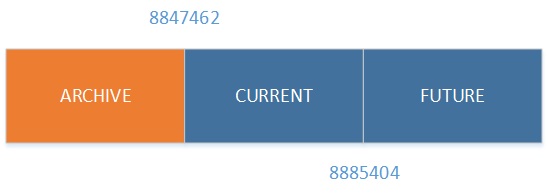
This blog is about an interesting partitioning story and curious data movements during merge operation. I was at my one of my customer uses intensively partitioning for various reasons including archiving and manageability. A couple of days ago, we decided to test the new fresh developed script, which will carry out the automatic archiving stuff against the concerned database in… 

SQL Server 2016: TRUNCATE PARTITIONS with sliding Windows scenarios

Some time ago, I had to deal with a new partitioning scenario that included sliding windows stuff for mainly archiving purpose. Regarding the customer context, I used some management scripts that include this time dropping oldest partition. We didn’t care about data oldest than 2 years. Usually in this case, I use a method that consists in dropping data by switching… 

When an index seek operator is not always your friend

Did you ever consider an index seek as an issue? . Well, let’s talk about a story with one of my customers where the context is pretty simple: a particular query that is out of the range of the application’s performance requirements (roughly 200ms of execution time in average). The execution plan of the query was similar to what you… 

Les 24 heures du PASS (24HOP) – édition francophone

Je n’ai pas encore blogué sur le sujet mais il est temps de le faire. Cette année, aura lieu la première édition francophone des 24h du PASS  les 20 et 21 septembre 2016. L’idée est plutôt simple: proposer une série de 24 webinaires gratuits de 10h jusqu’à 22h (heure française)  pendant 2 jours. C’est l’occasion de recevoir et d’échanger les dernières informations autour… 

SQL Server 2016 : Basic availability groups may fit to your HA needs

In this blog let’s talk about SQL Server and availability groups in standard Edition. I had some customer questions about existing limitations and this is a good opportunity to review them on this blog post. First of all, let’s say that Microsoft has already documented the restrictions here and from my side, I already written a blog post on the… 

SQL Server AlwaysOn: troubleshooting improvements with new service packs

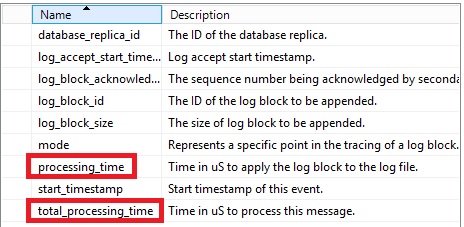
As promised in my latest blog, I will talk about improvements in the detection of the availability group replication latency. As a reminder, replication latency between high available replicas may be monitored in different manners so far. Firstly, in my experience I had the opportunity to use different performance counters as “Database Replica:Transaction Delay” and “Databas Replica:Mirrored Write Transactions/sec” in… 

SQL Server AlwaysOn: new services packs and new diagnostic capabilities

As you certainly know, the SQL Server 2014 SP2 has been released by Microsoft with some interesting improvements that concern SQL Server AlwaysOn and availability groups feature. In fact, all of them are also included into SQL Server 2012 SP3 and SQL Server 2016 (update 24.09.2016: not yet released with SQL Server 2016). Among all fixes and improvements that concern AlwaysOn, I would… 

SQL Server 2016 AlwaysOn: Direct seeding and backup considerations

As promised in my prior blog post, we’ll talk now about direct seeding feature and backups. We found an interesting LIMIT_CONCURRENT_BACKUPS value for current state of the hadr_automatic_seeding_state_transition event. As said last time, this value is meaningful by itself. So let’s try to perform a backup while the database is concerned by an active seeding session. In fact, my backup… 

SQL Server 2016 AlwaysOn: Direct seeding and performance considerations

This blog post follows the previous one about new direct seeding feature shipped with SQL Server 2016. As a reminder, I had some doubts about using direct seeding with large databases because log stream is not compressed by default but I forgot the performance improvements described into the Microsoft BOL. I also remembered to talk about it a couple of months… 

SQL Server 2016 AlwaysOn: distributed availability groups

This time, I will talk about distributed availability groups. What’s that? In short, a group of availability groups. Sounds good right? But in which cases may we need such architecture? Firstly, let’s say that distributed availability groups will run on the top of two distinct availability groups meaning that they reside on two distinct WSFCs with their own quorum and… 

SQL Server 2016 AlwaysOn: Add DBs in AGs with direct seeding

In this blog I would like to talk about two new features shipped with SQL Server 2016 for AlwaysOn availability groups. The first one concerns the new direct seeding capability and the seconde one introduces distributed availability groups (DAG). I will talk about the second one in a next blog post. First of all, let’s talk about direct seeding.  At the first…