Skip to content

Storage

SQL Server Snapshot Backup and Restore with Proxmox ZFS (1/4)

We are currently working with clients on migrations to SQL Server 2022 and SQL Server 2025. During a discussion with one client, we reviewed some of the benefits introduced in the latest SQL Server 2022 and 2025 releases. Among the available features, starting with SQL Server 2022, we have: Starting with SQL Server 2025: The customer’s environment consists of a… 

Rook Ceph: Tips and Tricks for storage using CephFS

In my Rook Ceph series, I’ve given first an introduction of Rook Ceph. Then I’ve shared the procedure on how to do a disk extension. With this blog post, I’d like to share how your files can be accessed in such a cluster. We are using the Ceph File System (CephFS) and if you are new to it, here are… 

Kubernetes: Extension of disk in Rook Ceph

In my previous blog, I’ve introduced the storage solution Rook Ceph for Kubernetes. We saw that in our architecture we had 3 workers dedicated for storage using Ceph file system. Each worker had 2 disks of 100 GB and we saw that from the storage point of view one OSD equals one disk. With these 6 disks we had a… 

Introduction to Rook Ceph for Kubernetes

We have been doing a lot of tests around Rook Ceph lately for one of our customer and it may worth sharing what I’ve learned. If you want a quick overview on that topic before diving into the official documentation (Rook and Ceph), please read on! Ceph cluster overview As the adage says “A picture is worth a thousand words”… 

How to add storage on ODA X8-2M

Recently I had to add some storage on an ODA X8-2M that I deployed early February. At that time the last available release was ODA 18.7. In this post I would like to share my experience and the challenge I could face. ODA X8-2M storage extension As per Oracle datasheet we can see that we have initially 2 NVMe SSDs… 

Oracle Database Appliance: which storage capacity to choose?

Introduction If you’re considering ODA for your next platform, you surely already appreciate the simplicity of the offer. 3 models with few options, this is definitely easy to choose from. One of the other benefit is also the hardware support of 5 years, and combined with software updates generally available for up to 7 years old ODAs, you can keep… 

Red Hat Enterprise Linux 8 – Stratis

The Initial Release (8.0.0) of Red Hat Enterprise Linux 8 is available since May 2019. I’ve already blogged about one of its new feature (AppStream) during the Beta version. In this post I will present Stratis, which is a new local storage-management solution available on RHEL8. Introduction LVM, fdisk, ext*, XFS,… there is plenty of terms, tools and technologies available… 

How to get a big picture of K8s pods and PVs by script

A couple of weeks ago, during an internal dbi services workshop about Docker and K8s, I got an interesting question: is it possible to get a big picture of pods connected to one specific persistent volume (PV) by using kubectl command? It was an interesting question because if we go through the usual kubectl command, it doesn’t provide natively the… 

Windows Server 2016: Introducing Storage Spaces Direct

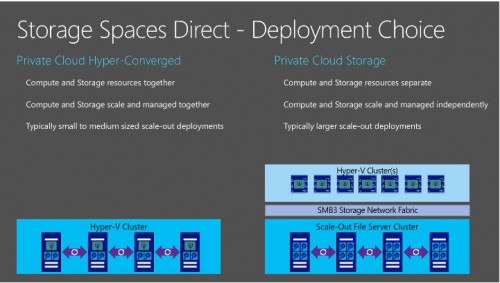
Have you heard about Storage Spaces introduced by Windows Server 2012? Well, this is a very interesting storage feature that allows us to deal with functionalities like storage virtualization, RAID capabilities, thin or thick provisioning, cluster shared volume (CSV), efficiently file repair and so on. In addition, the Windows 2012 R2 version has also introduced some enhancements like storage tiering,… 

Want to benchmark your storage? It’s time to switch to DiskSpd tool!

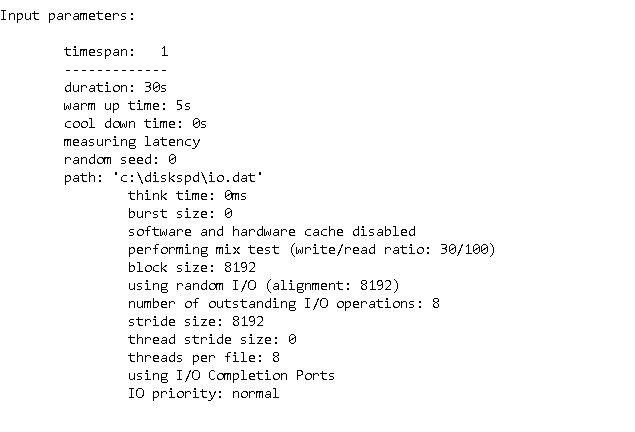
As you certainly know, the well-known tool SQLIO is officially deprecated since few months. From my part, I had the opportunity (maybe the last) to use SQLIO for a customer project in order to benchmark the storage for SQL Server AlwaysOn and availability groups. Now it’s time to change for a new benchmark tool : DiskSpd. First of all, DiskSpd… 

SQL Server 2016 CTP2: Stretch database feature – Part 2

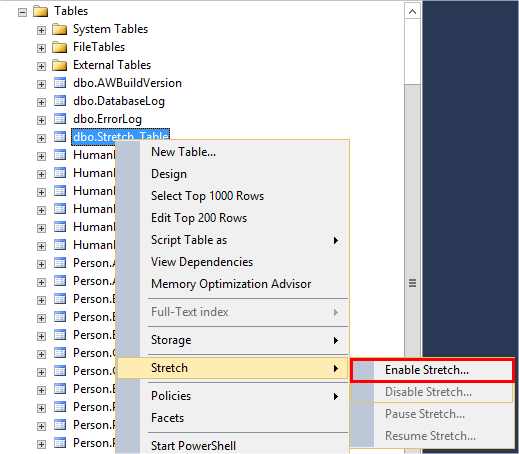
In my previous blog SQL Server 2016 CTP2: Stretch database feature – Part 1, I explained how to prepare your instance and your database to enable the Stretch feature for your table. Now I present you how to enable the feature for your tables! Prerequisites Enabling Stretch Database at the table level requires ALTER permissions on this table.   Limitations… 

SQL Server 2016 CTP2: Stretch database feature – Part 1

SQL Server 2016 CTP 2 has introduced some interesting new features such as Always Encrypted, Stretch database, the configuration of the tempdb in the SQL Server installation, aso… Regarding the configuration of the tempdb in SQL Server 2016 CTP 2, I recommend you a good article called SQL Server 2016 CTP2 : first thoughts about tempdb database from David Barbarin.…