Skip to content

redo

18c: some optimization about redo size

By Franck Pachot . Some years ago, at the time of 12.1 release, I published in the SOUG newsletter some tests to show the amount of redo generated by different operations on a 10000 rows table. I had run it on 12.2 without seeing the differences and now on 18.1 I get the statistics from mystat using a script that… 

Full page logging in Postgres and Oracle

By Franck Pachot . In my opinion, the volume of logging (aka redo log, aka xlog, aka WAL) is the most important factor for OLTP performance, availability and scalability, for several reasons: This is the only structure where disk latency is a mandatory component of response time This is a big part of the total volume of backups This is… 

Redo log block size on ODA X6 all flash

By Franck Pachot . On the Oracle Database Appliance, the redo logs are on Flash storage (and with X6 everything is on Flash storage) so you may wonder if we can benefit from 4k redo blocksize. Here are some tests about it on an ODA X6-2M. I’ll compare the same workload (heavy inserts) with 512 bytes and 4k bytes block… 

SQL Server 2016 AlwaysOn: Direct seeding and performance considerations

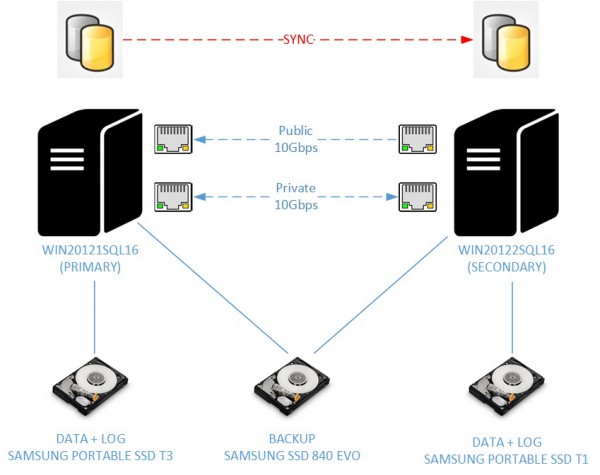
This blog post follows the previous one about new direct seeding feature shipped with SQL Server 2016. As a reminder, I had some doubts about using direct seeding with large databases because log stream is not compressed by default but I forgot the performance improvements described into the Microsoft BOL. I also remembered to talk about it a couple of months…