Skip to content

PowerShell

Get SQL Server database size with PowerShell

Introduction For various reasons, following the evolution of the data size of databases is interesting for a dba or for the application team. Most of the time, this is something built-in for monitoring tools – convenient to follow the evolution over the time.But in certain circumstances, you must turn to another alternative – no access to the monitoring tool, no… 

Automate restore from Rubrik with PowerShell (part 2)

As promised during my last Rubrik blog post I’m writing a second one to explain how to: log your different steps in a file add an integrity check after the restore and also improve my first scripting I will start by the end and improve my first scripts by creating functions for each step of the process. With Rubrik you… 

Automate restore from Rubrik with PowerShell

One of our customer uses Rubrik as a solution to recover, manage, and secure all their data. In this context, Rubrik is used to backup and restore all the SQL Server instances. We need to run restore tests in this validated environment every year. To do so we decide to create a PowerShell script to automate the restore of all… 

Automate CNOs and VCOs for SQL Server AAG

During the installation of a new SQL Server environment in a Project, we wanted to automate the whole process deployment and configuration when installing a new SQL Server Always On Availability Group (AAG). This installation requires to prestage cluster computer objects in Active Directory Domain Services, called Cluster Name Objects (CNOs) and Virutal Computer Objects (VCOs). For more information on… 

Publishing a PowerShell script to AWS Lambda

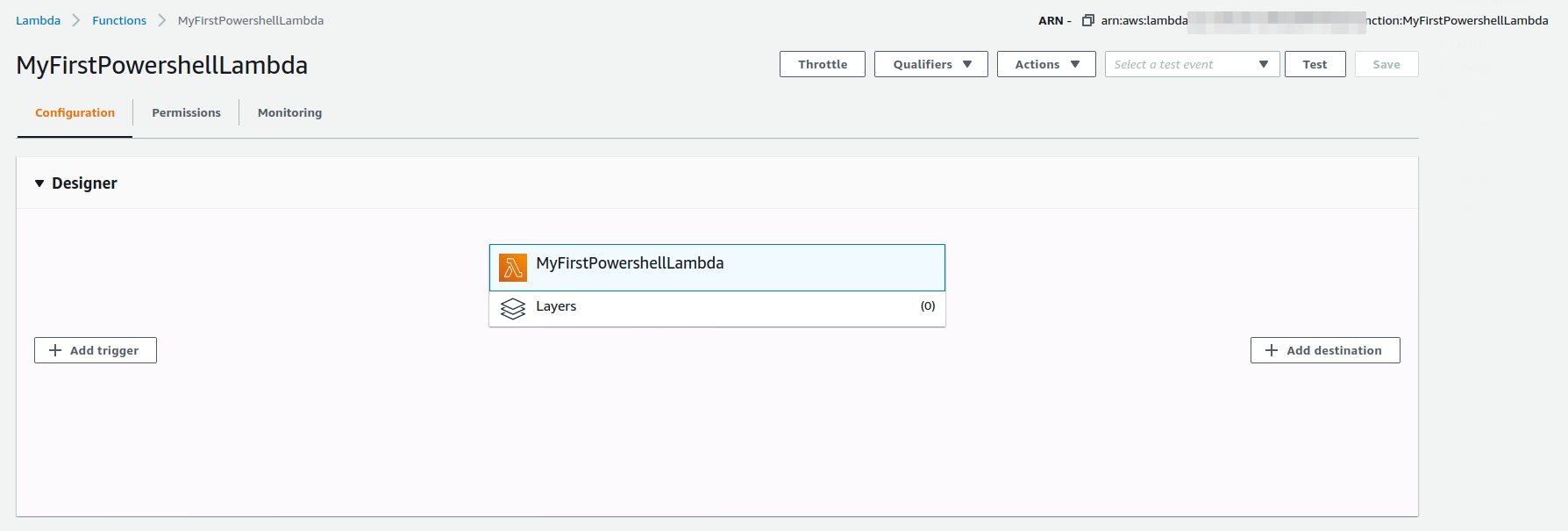
I’ve done some Lambda functions with Python in the past and it was quite easy to publish that to Lambda (by just uploading a zip file with all my code and dependencies). You might ask yourself why I want to do that with PowerShell but the reason is quite simple: There was a requirement at a customer to automatically collect… 

How to run Avamar backup on SQL Agent Job with PowerShell

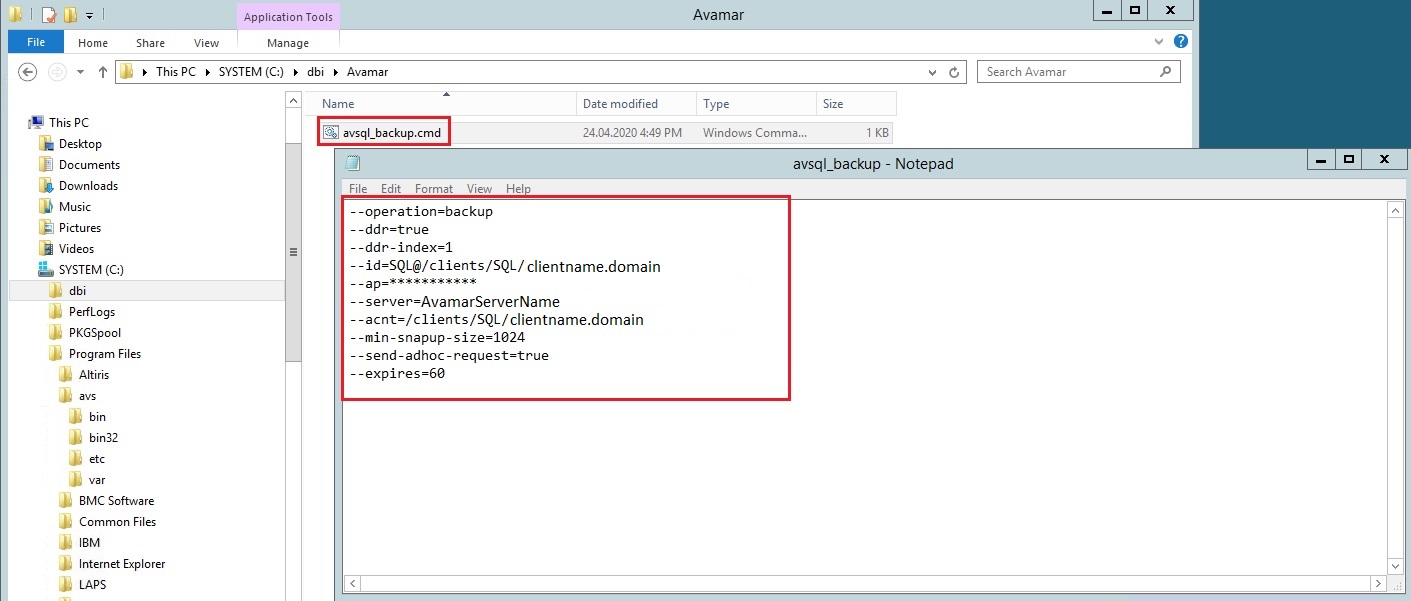
By one of our customer we use Avamar for the backup and restore solution. I was asked by this customer to find a solution to run Avamar backups for a group of databases on a specified instance. In fact, we currently try a database clone solution on some instances and clone’s databases must not be backed up, but the rest… 

Restore S3 Object with AWSPOWERSHELL

AWS S3 offers different Storage Classes, allowing to optimize cost among others. For instance, some classes are used for archiving purposes: S3 Glacier and S3 Glacier Deep Archive. It means the storage cost is the lowest you can obtain, but your data is not available immediately and the access cost is increased. In the case of S3 archive classes, retrieving… 

SQL Server – Collecting last backup information in an AlwaysOn environment

Introduction Sometimes you face interesting challenges with unusual environment. One of my customer needed a automated and flexible backup solution. Said like that nothing very complex you will say. But if I mention that some databases were 60TB big with more than 30 filegroups and around 600 database data files each and moreover synchronized in an AlwayOn availability group, it… 

How To Deploy Office Web Apps Server 2013

The 4 Steps Of Office Web Apps Server 2013 Installation Office Web Apps provides browser-based versions of Excel, One Note, Word and PowerPoint. It also helps users who access files through SharePoint 2013. The objective of this topic is to define the steps to install office web apps 2013, create the farm and the binding so that it can be… 

Pass Summit 2017

Today starts the Pass Summit 2017 taking place in Seattle. After a small fly over the Ocean, more than 10 hours… yesterday, and a nice jet lag which avoid me to sleep later than 4AM this morning, I arrived to the Convention Center in Seattle where the Pass takes place. I start this first day by the session of Itzik… 

Manage Azure in PowerShell (RM)

Azure offers two deployment models for cloud components: Resource Manager (RM) and Classic deployment model. Newer and more easier to manage, Microsoft recommends to use the Resource Manager. Even if these two models can exist at the same time in Azure, they are different and managed differently: in PowerShell cmdlets are specific to RM. In order to be able to…