Skip to content

Linux

Load Balancing with Docker Swarm mode and SQL Server containers

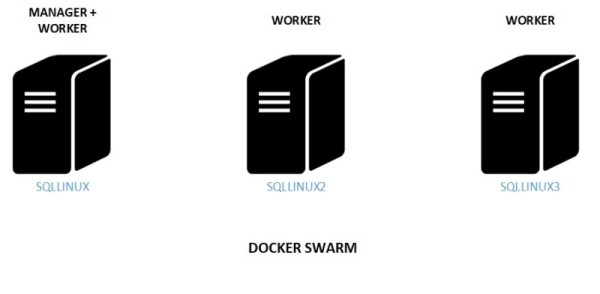
Docker swarm mode provides an easy way to publish ports for services. Indeed, in this mode all nodes participate in an ingress routing mesh and accept connections to any service port published. Thus, all incoming requests are routed to available nodes hosting a service. That’s a pretty cool feature but it has some drawbacks. Let’s say that a node goes… 
Managing SQL Server sa credentials with Docker secrets on Swarm

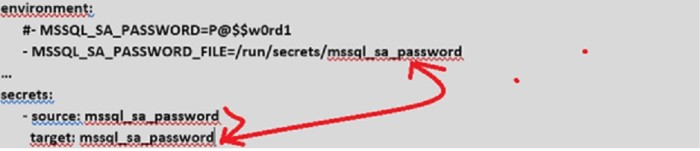
A couple of weeks ago, I was working on a MSSQL Server docker image in a context of Hidora, a swiss cloud provider based on jelastic and for Docker-based applications. When writing my jps manifest file I was agreeably surprised about the section concerning the MSSQL Server credentials information. We may able to define global variables for SQL Server sa… 

The same MAC address for two interfaces on the same host?

Yes, sounds strange, but exactly this is what we faced today. In the end it is clear and not strange anymore but for a moment we really thought we are hitting a bug in the operating system, which was RedHat 7.4. For the little demo for this post I’ll use CentOS 7.4 but this should not really matter. Lets go.… 

ODA migration challenges: Non-OMF to OMF + 11.2.0.3 to 11.2.0.4

To do some application and performances tests, I had to copy a database from a third party Linux server to an ODA X7-2M. Looks pretty simple on the paper, but 2 small challenges came into the game. The first was that of course the source database was in Non-OMF while ODA works fully in OMF. The second was that the… 

ODA 12.2.1.2.0 – VLAN Management

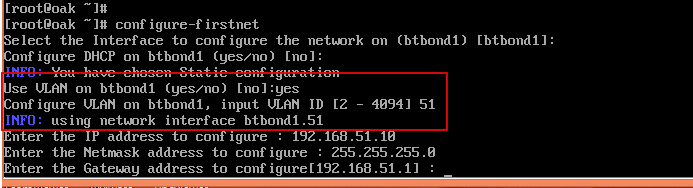
Virtual Local Area Network (VLAN) have become since several years a standard in enterprise class networks. Most enterprises are now segregating their network, especially for security reasons, between server and user or prod and test or applications and backup and aso. In the new release of ODA we finally get the support for VLAN on the bare metal platform. This… 

My personal journey with Linux on the desktop

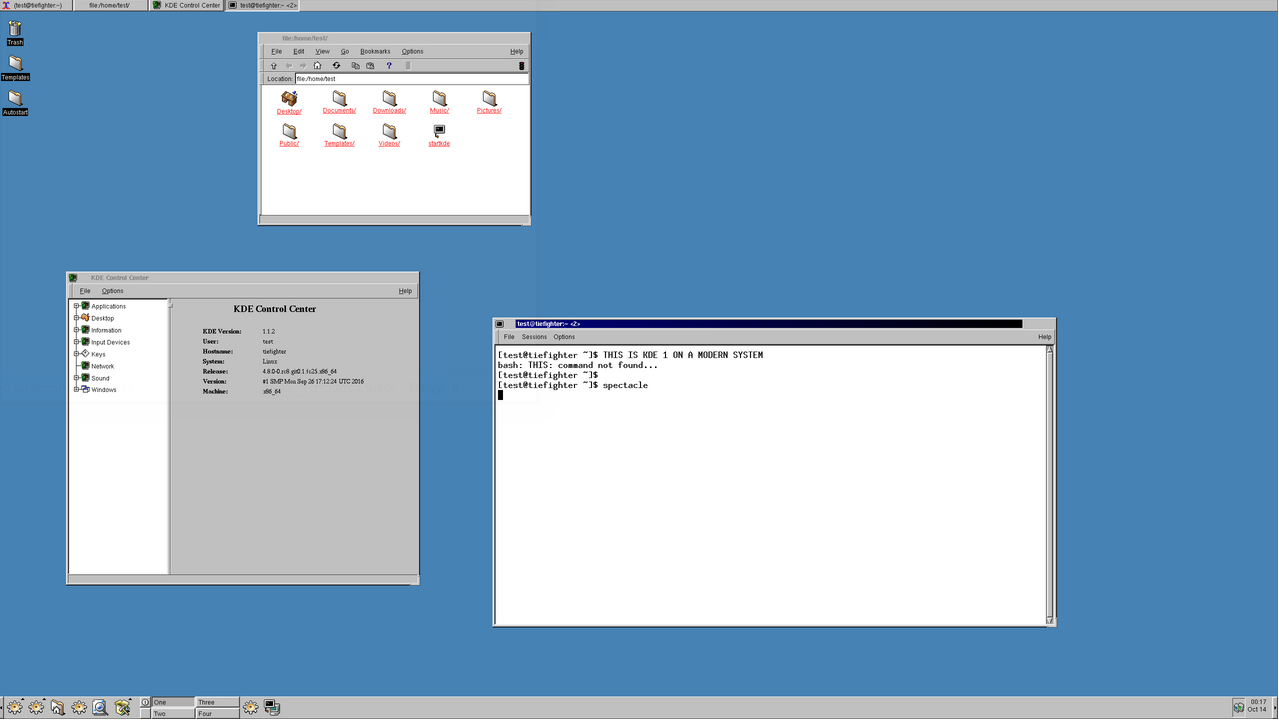
My Linux experience started back in 1999 when we needed a router for our ISDN connection in our shared apartment when we were students. I don’t remember the hardware we used for that but I am sure at that time it was a SUSE operating system. Not sure about the version, but based on this it must have been version… 

SQL Server on Docker and network bridge considerations

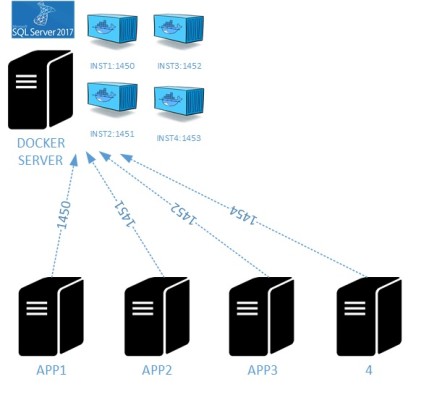
Let’s continue with this blog post series about SQL Server and Docker. A couple of days ago, I was in a customer shop that already implemented SQL Server 2017 on Linux as Docker containers. It was definitely a very interesting day with a lot of customer experience and feedbacks. We discussed with him about lot of architecture scenarios. The interesting… 

Introducing SQL Server on Docker Swarm orchestration

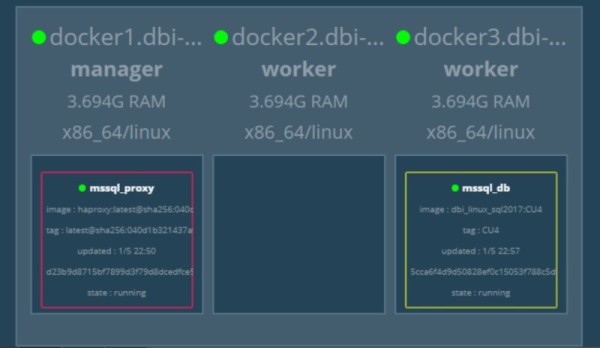
SQL Server 2017 is available on multiple platforms: Windows, Linux and Docker. The latter provides containerization features with no lengthy setup and special prerequisites before running your SQL Server databases which are probably the key success of adoption for developers. It was my case as developer for our DMK management kit which provide to our customers a SQL Server database… 

SQL Server on Linux and logging

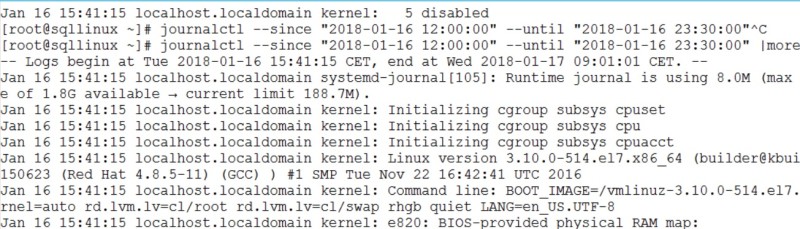
On Windows world, SQL Server logs information both into the SQL Server error log and the Application log. Both automatically timestamp all recorded events. Unlike the SQL Server error log, the Windows application log provides an overall picture of events that occur globally on the Windows operating system. Thus, regarding the encountered issues taking a look at such event logs – by… 

Changing the LOCALE in CentOS/RedHat 7

What I really don’t like is this: Someone wants me to work on a Linux system for whatever purpose and then I get messages like this: postgres@pgbox:/home/postgres/ [pg960final] cat /proc/sysrq-trigger cat: /proc/sysrq-trigger: Permission non accordée or: postgres@pgbox:/home/postgres/ [pg960final] cat /proc/sysrq-trigger cat: /proc/sysrq-trigger: Permiso denegado It is not that I don’t like French or Spanish but usually (well, not in that…