Skip to content

Operating System

The Linux, Unix and Windows layer that every database and application depends on. Our consultants share what they set up and fix in the field: storage and filesystems, networking, virtualization, SUSE, and hardware such as the Oracle Database Appliance.

Windows 10: The new features

First, it should have been Windows 9, but finally the new Microsoft operating system is named Windows 10! In the same way as for my blog post on Windows 8, I have decided to write a few words about the new features of Windows 10. Why 10? It’s a good question and I have read many articles about it. First,… 

SQL Server: Forced failover with AlwaysOn & Availability Groups

During a workshop at one of my customer about the implementation of SQL Server AlwaysOn and availability groups, I had an interesting discussion. It was about asynchronous replication between 2 replicas and the effect of the forced failover operation with allowed data loss. Does SQL Server resynchronize availability databases if I loose some transactions during the failover process? The quick… 

High availability in the Oracle landscape

It’s now several weeks I attended some event about high availability (HA). But what is actually high availability? According to our friend Wikipedia, HA is based on 3 main principals: Elimination of Single Point of Failure (SPoF) Reliable crossover (with minimal or no downtime) Detection of failures when they arrive If those principals are met, end users may never realize… 

Backup a SQL Server database from On-Premise to Azure

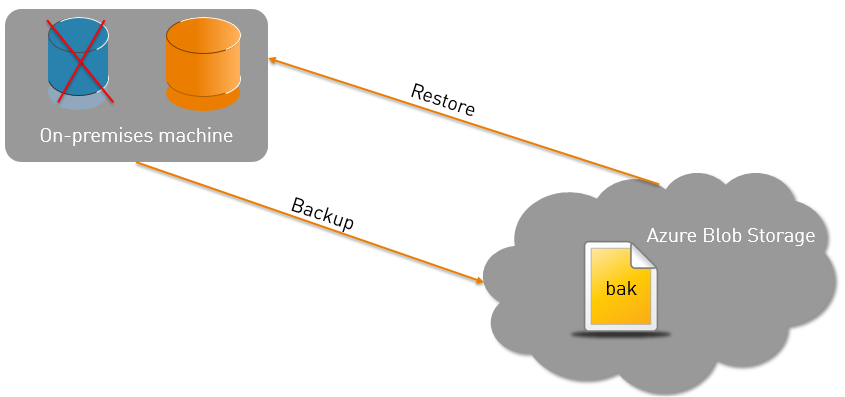
SQL Server database backup & restore from On-Premise to Azure is a feature introduced with SQL Server 2012 SP1 CU2. In the past, it could be used with these three tools: Transact-SQL (T-SQL) PowerShell SQL Server Management Objects (SMO) With SQL Server 2014, backup & restore can also be enabled via SQL Server Management Studio (SSMS). Concept This feature is… 

Linux: how to monitor the nofile limit

By Franck Pachot . In a previous post I explained how to measure the number of processes that are generated when a fork() or clone() call checks the nproc limit. There is another limit in /etc/limits.conf – or in /etc/limits.d – that is displayed by ‘ulimit -n’. It’s the number of open files – ‘nofile’ – and here again we… 

Oracle Grid Infrastructure 12c: Binaries installation

In a previous article, I have shown how to configure two servers in order to deploy a two-nodes 12c cluster. This time, I am going to describe the Grid Infrastructure 12c installation process using Oracle Universal Installer (OUI). We assume that cluvfy tool has returned no errors (see previous blog). Install Grid Infrastructure Connect as grid and launch the Oracle… 

Pgbarman : gestion de sauvegarde et récupération PostgreSQL

Fin 2012, j’ai présenté « pgbarman », une solution de sauvegarde et récupération pour PostgreSQL et décrit son installation. Pgbarman fournit un ensemble de commandes vous permettant la mise en œuvre de sauvegardes vers un serveur dédié. Le principal intérêt est à mon sens la gestion d’un catalogue de vos sauvegardes et la génération de commandes destinées à une reconstruction locale ou sur… 

Oracle Grid Infrastructure 12c: prerequisites for installation

Grid infrastructure 12c has recently been released. In this posting, I will show that the installation prerequisites are quite similar between Grid Infrastructure 11g and 12c. We will see parts of them during a review for the deployment of Grid Infrastructure on a two nodes RAC database cluster. Server hardware requirements Let’s see the hardware part. Grid infrastructure 12.1 Grid…