Skip to content

PostgreSQL

PostgreSQL from installation to production: configuration, streaming replication, high availability with Patroni, backups with pgBackRest, performance tuning, extensions, upgrades and migrations from other database engines.

Drilling down the pgSentinel Active Session History

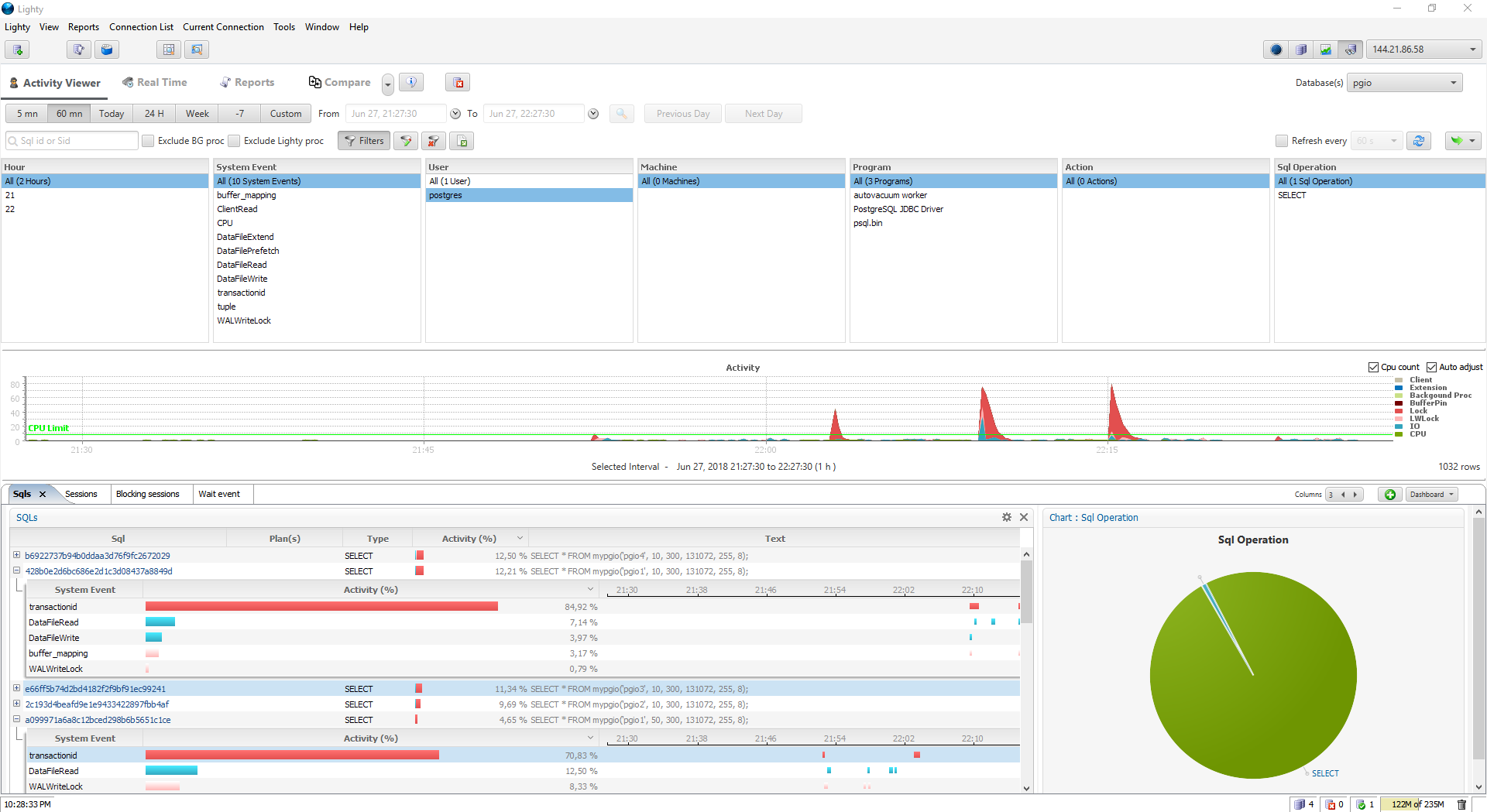
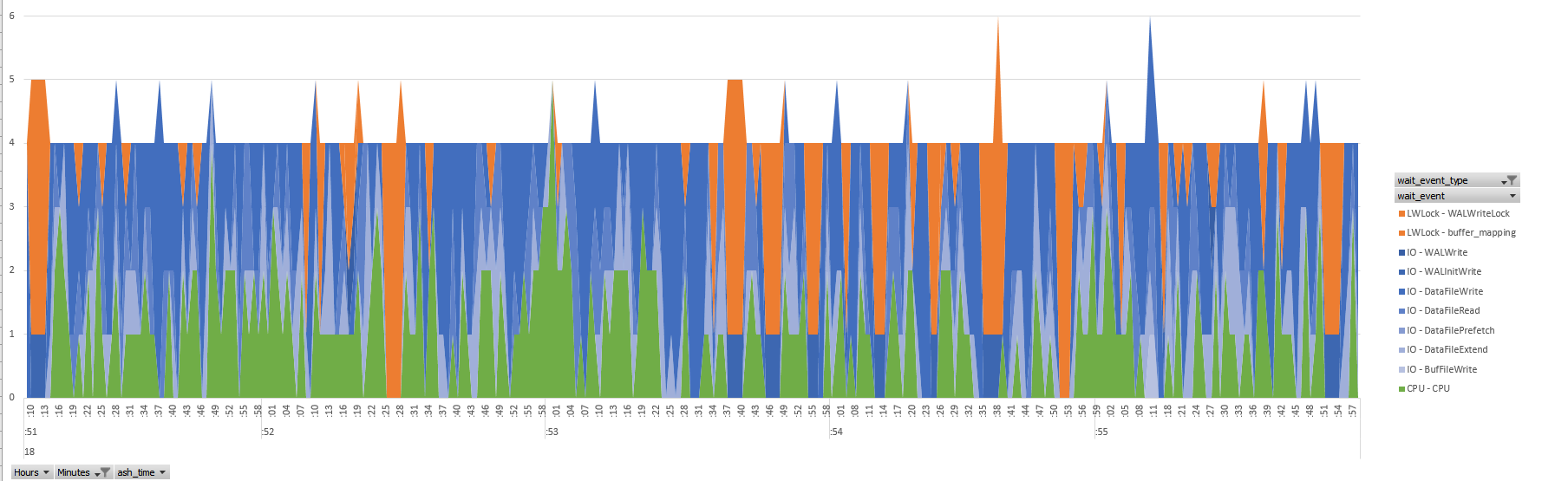
By Franck Pachot . In pgSentinel: the sampling approach for PostgreSQL I mentioned that one of the advantages of the ASH approach is the ability to drill down from an overview of the database activity, down to the details where we can do some tuning. The idea is to always focus on the components which are relevant to our tuning… 
pgSentinel: the sampling approach for PostgreSQL

By Franck Pachot . Here is the first test I did with the beta of pgSentinel. This Active Session History sampling is a new approach to Postgres tuning. For people coming from Oracle, this is something that has made our life a lot easier to optimize database applications. Here is a quick example showing how it links together some information… 

PGIO, PG_STAT_ACTIVITY and PG_STAT_STATEMENTS

By Franck Pachot . For an Oracle DBA, we are used to join active sessions (from V$SESSION where status=’ACTIVE) with active statements (from V$SQL where users_executing>0) on the SQL_ID. V$ACTIVE_SESSION_HISTORY also displays the TOP_LEVEL_SQL_ID to get the entrypoint of the usercall if we need it. With Postgres it is a bit more difficult because it seems that PG_STAT_ACTIVITY do not… 

Lighty for PostgreSQL

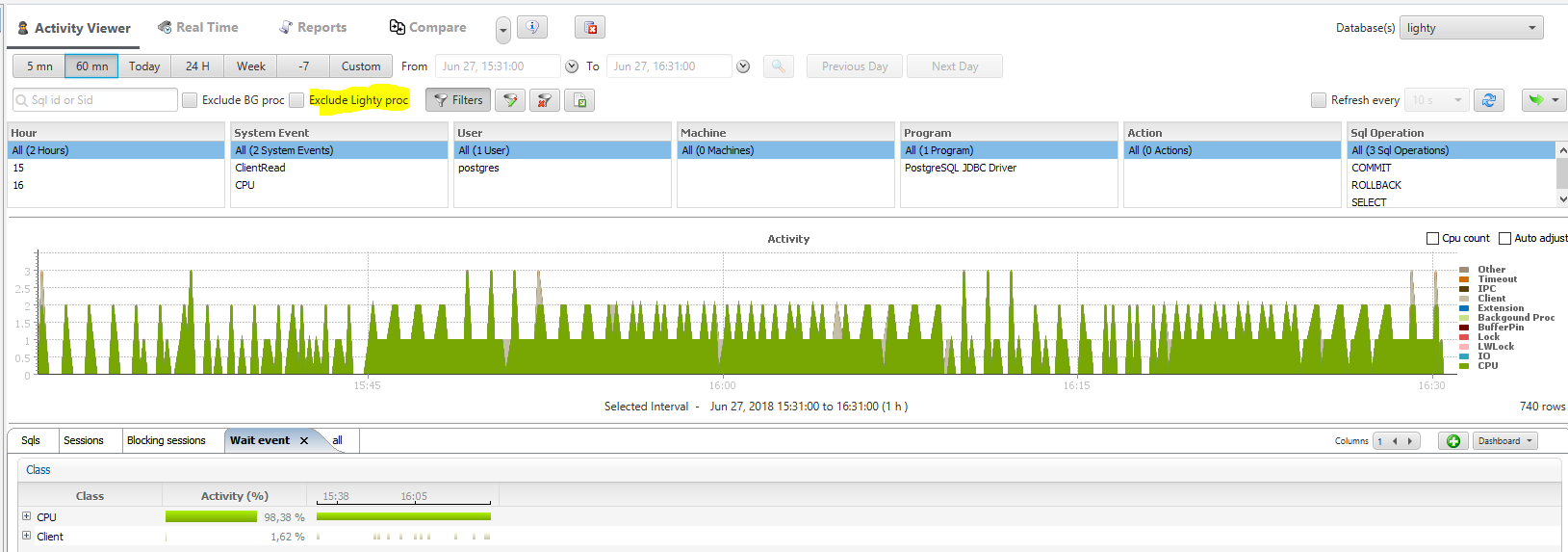
By Franck Pachot . If you follow this blog, you should know how I like Orachrome Lighty for Oracle, for its efficiency to monitor database performance statistics. Today Orachrome released the beta version of Lighty for Postgres: https://orachrome.com/news/la-beta-de-lighty-for-postgresql-est-ouverte/ The Cloud is perfect to do short tests with more resources than my laptop, especially the predictability of performance, then I started… 

Which Bitnami service to choose in the Oracle Cloud Infrastructure?

By Franck Pachot . In the Oracle Cloud PaaS you have a marketplace where you can choose your service. Some are packaged from Bitnami and available on multiple OS. My first idea is that in PaaS you do not care about the OS. But Oracle Cloud has this very nice feature where you still have full access to the OS,… 

Postgres, the fsync() issue, and ‘pgio’ (the SLOB method for PostgreSQL)

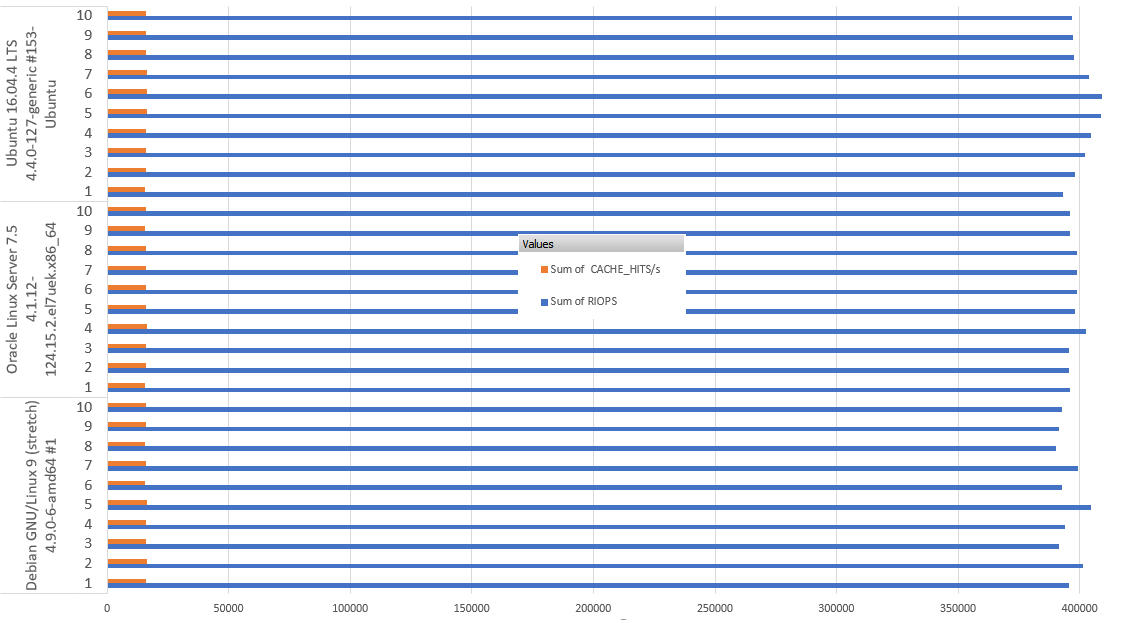
By Franck Pachot . That’s a long blog post title, which is actually just a good pretext to play with Kevin Closson SLOB method for PostgreSQL: pgio I use the beta version of pgio here. If you want to read more about it, you can start on https://kevinclosson.net/2018/05/22/sneak-preview-of-pgio-the-slob-method-for-postgressql-part-i-the-beta-pgio-readme-file/. If you are used to the SLOB for Oracle (https://kevinclosson.net/slob/) you will… 

PostgreSQL – logical replication with pglogical

Although PostgreSQL 10 integrate native logical replication (have a look here or here), it is always interesting to be aware of alternative solutions to the available in-core features. One of those is called pglogical. It’s a Postgres extension developed by 2ndQuadrant, major contributor to PostgreSQL development. The goal of this blog post is to discover how to install pglogical and… 

Full page logging in Postgres and Oracle

By Franck Pachot . In my opinion, the volume of logging (aka redo log, aka xlog, aka WAL) is the most important factor for OLTP performance, availability and scalability, for several reasons: This is the only structure where disk latency is a mandatory component of response time This is a big part of the total volume of backups This is… 

Server process name in Postgres and Oracle

By Franck Pachot . Every database analysis should start with system load analysis. If the host is in CPU starvation, then looking at other statistics can be pointless. With ‘top’ on Linux, or equivalent such as process explorer on Windows, you see the process (and threads). If the name of the process is meaningful, you already have a clue about… 

Postgres vs. Oracle access paths XI – Sample Scan

By Franck Pachot . I was going to end this series with the previous post because the last access path available in Postgres is a bit special: a Seq Scan that returns only a sample of the rows, at random. However, it is the occasion to come back to the difference between random and sequential reads. I’m still working on… 

Postgres vs. Oracle access paths X – Update

By Franck Pachot . In the previous post we have seen the cheapest way to get one row, reading only one block from its physical location. But that’s the optimal case where the row has not moved. I’ll (nearly) conclude this series about access path with an update. ROWID in Oracle Here is the ROWID of one row in Oracle:… 

Postgres vs. Oracle access paths IX – Tid Scan

By Franck Pachot . In the previous post we have seen how Postgres and Oracle finds the table row from the index entry. It uses the TID / ROWID. I’ll focus on this access path and I will have covered all Postgres access paths to table data. Oracle ACCESS BY ROWID I start with Oracle because we already have seen…