Skip to content

Database

Everything our consultants learn while running databases for customers: Oracle, PostgreSQL, SQL Server, MySQL, MariaDB, MongoDB and Delphix. Expect hands-on posts about installation, day-to-day administration, backup and recovery, performance tuning, replication and upgrades.

PostgreSQL 14: Automatic hash and list partitioning?

Declarative partitioning was introduced in PostgreSQL 10 and since then has improved quite much over the last releases. Today almost everything is there what you would expect from such a feature: You can partition by range, list and hash Attaching and detaching partitions Foreign keys Sub-partitioning Indexing and constrains on partitions Partition pruning What is missing, is the possibility to… 

Cross-cloud PMM: which TCP ports to open

By Franck Pachot . I recently installed Percona Monitoring & Management on AWS (free tier) and here is how to monitor an instance on another cloud (OCI), in order to show which TCP port must be opened. PMM server I installed PMM from the AWS Marketplace, following those instructions: https://www.percona.com/doc/percona-monitoring-and-management/deploy/server/ami.html. I’ll not reproduce the instructions, just some screenshots I took… 

The PostgreSQL shared/global catalog

A PostgreSQL instance (or cluster) can contain many databases, three of them (template0, template1 and postgres) are there by default. Over the last years we trained many people on PostgreSQL Essentials and there have been mainly two points that needed more clarification when it comes to catalogs and the postgres default database: Does the postgres default database define the catalog… 

How to declare TNS entries in Oracle Unified Directory (OUD)

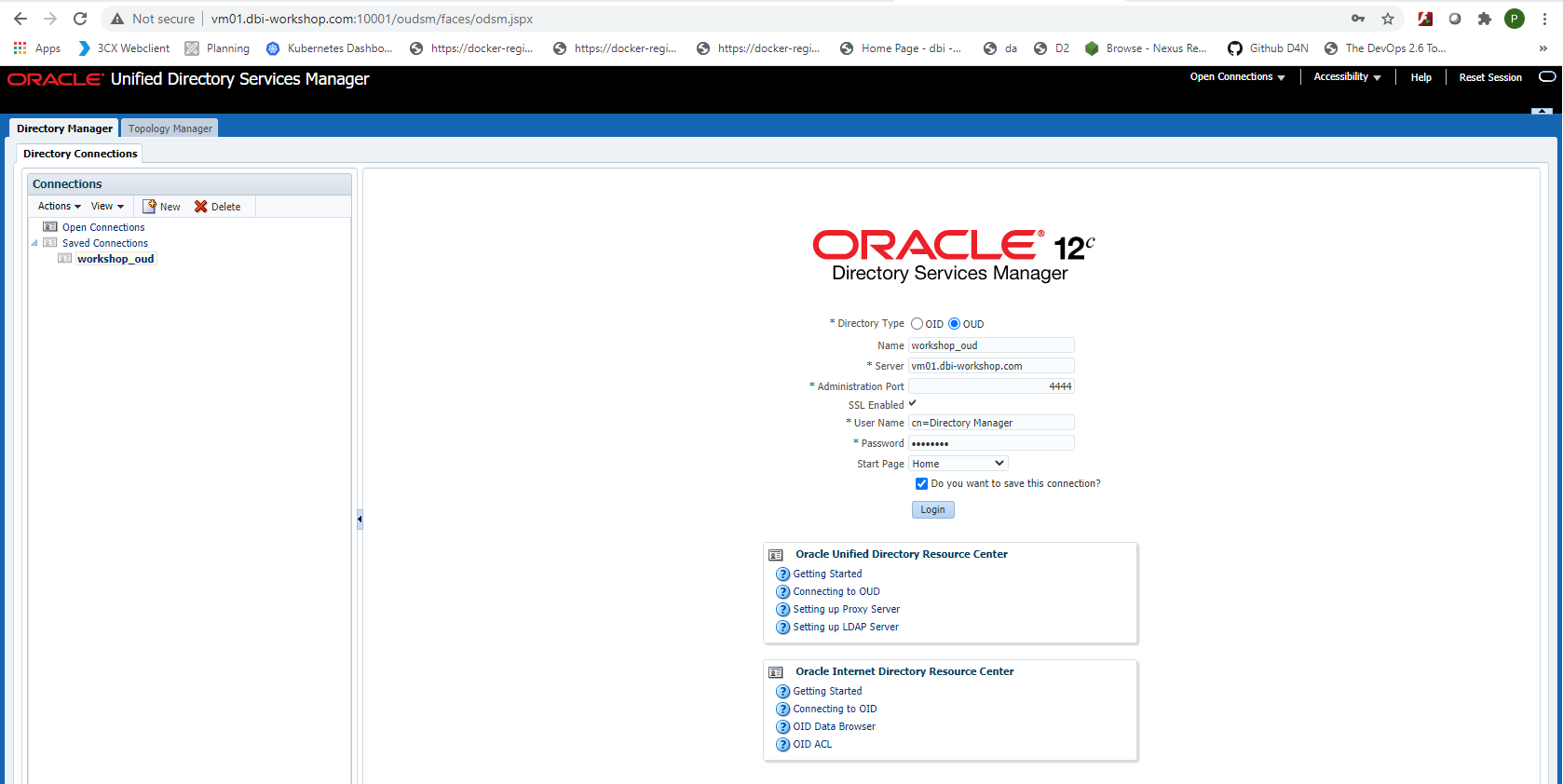
Using a LDAP server to store the TNS connection strings can be a single point of declarations for all client tools. Note that it can be a single point of failure too, thus, a High Availability LDAP configuration is recommended for production use. In my case, I was interested in using a LDAP as TNS connections repository for the WebLogic… 

Documentum Administrator plugins installation not possible

In some customer’s contexts you cannot install whatever you want. For policy reasons, or security. And documentum components really love to install client softwares to interact with them. In this blog we will discuss about the Documentum Administrator tool and the plugins it asks to install in order to gain full access to its functionalities. Documentum Administrator’s plugins DA requires… 

Documentum CTS reinstallation failing Null Pointer

I went into an issue by a customer were I had to upgrade in place the CTS. When you have to upgrade a CTS on the same server you first have to uninstall the old version in order to install the new one. Unfortunately, the uninstallation didn’t end well and some folders or configuration haven’t been removed properly. Removing CTS… 

PostgreSQL 14: Add the number of de-allocations to pg_stat_statements?

In the last post we had a look at an interesting patch (schema variables) that is currently waiting to be committed for PostgreSQL 14. Another patch, that currently is in the same state is named [PATCH] Add features to pg_stat_statements. As this does not give much information what the patch is about, here a short summary: When you reach the… 

Installing EDB Advanced Server without EDB Repository

Almost all of us, who already installed Enterprise DB Tools on a Linux server know the procedure. You need to add the EDB Repository to your server or your Red Hat Satellite configuration and after that you can easily install the tools you need. But what happens, if you are not able to add the repository? The answer is really… 

Documentum DQMan for repositories 16.7 and after

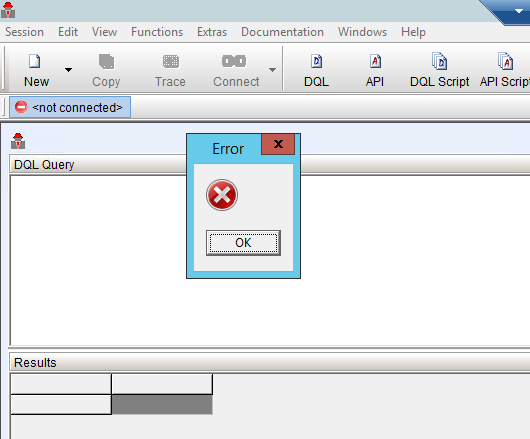
You may have noticed when upgrading your documentum infra that after 7.3 the DQMan utility from FME is no more usable (you get a red cross without any warnings on the screen). In this blog I’ll show you how to get it working again. I tested it on 16.7 but it should work on the latest ones. Install Java 32bit… 

Will PostgreSQL14 finally come with schema variables?

One of the bits you need to solve when you migrate from Oracle to PostgreSQL is this: In the Oracle database there are PL/SQL packages and some of those have package variables defined. PostgreSQL does not know the concept of a package but you can use schemas to group your PL/pgSQL functions and procedures. When it comes to packages variables…