Skip to content

Database

Everything our consultants learn while running databases for customers: Oracle, PostgreSQL, SQL Server, MySQL, MariaDB, MongoDB and Delphix. Expect hands-on posts about installation, day-to-day administration, backup and recovery, performance tuning, replication and upgrades.

Creating an Oracle Snapshot Copy PDB on top of ASM

Creating a snapshopt copy Pluggable Database (PDB) on top of Automatic Storage Management (ASM) is not possible, because you need to have a filesystem which supports sparse files. According the following MOS-Note sparse files are supported on Automatic Storage Management Cluster File System (ACFS) since 12.2.: 12.2 Oracle ACFS Sparse Files Enhancements (Doc ID 2200264.1) However, I thought it is… 

Automate restore from Rubrik with PowerShell (part 2)

As promised during my last Rubrik blog post I’m writing a second one to explain how to: log your different steps in a file add an integrity check after the restore and also improve my first scripting I will start by the end and improve my first scripts by creating functions for each step of the process. With Rubrik you… 

SQL Server: table variables performance limitations

Doing some performance troubleshooting for one of my customers I identified some issues with very large table variables inside Stored procedures. Table variables limitations are not well understood by developers although they are now well documented. Table variable rows estimation Let’s have a look at an example with my customer context which is SQL Server 2016, so compatibility level 130… 

Setup pgpass for replication

This script provides functionality to setup passwordless authentication in PostgreSQL for defined Server Names. This is very helpful by using replication via repmgr and is not Linux Distribution specific, it was used till now with SLES 12, SLES 15 and RHEL 8 Clones. As all of my scripts it provides help how the usage is with -h parameter: $ [[root@rocky… 

SQL Server 2019: What’s new on database scoped configuration options?

SQL Server 2019 added three new options in sp_configure and sys.configurations. First, how can we find the difference between these SQL Server Versions. This simple query will give us the number of options and the SQL Server Version: select count(*) as number_of_configurations, @@version FROM sys.database_scoped_configurations In SQL server 2016, we have 4 parameters for the database configuration: In SQL server… 

Creating simple extensions for PostgreSQL

When you are using PostgreSQL you should already know that PostgreSQL comes with a set of extensions by default. It might be that you need to install an additional package if you installed PostgreSQL with a package manager to get those extensions. Usually it is called something with “contrib” in its name. There is also the PostgreSQL Extension Network which… 

What are these *.ready and *.done files for in PostgreSQL?

When you run PostgreSQL workloads in production you must have a backup and restore implementation. Even for development instances, which are like production for the developers, a well-tested backup and restore procedure sometimes must be in place. Community PostgreSQL comes with pg_basebackup to help you with creating a full consistent backup of your PostgreSQL cluster. If you want to be… 

SQL Server: Fixing another huge MSDB database – 80GB+

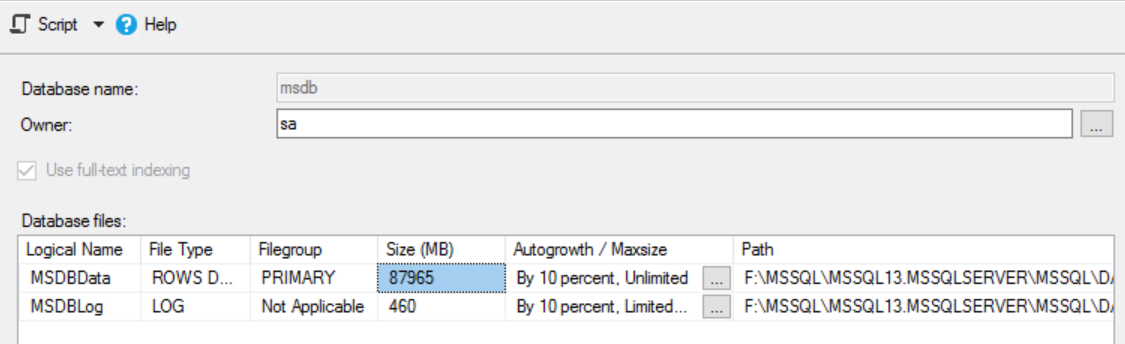
I have blogged several times about unusually large MSDB databases like here. Most of the time the problem comes from the backup history which is never purged. This time it’s different. Try to guess, if not the backup history, what can cause MSDB to increase abnormally in size? Let’s start by looking at the total size of the database: It’s… 

New predefined roles for PostgreSQL 14

Time is moving fast and PostgreSQL 14 is already in beta 2. PostgreSQL 14 will ship with a lot of new features and in this post will look at a smaller one: There are three new predefined roles: pg_read_all_data, pg_write_all_data and pg_database_owner. While it seems to be obvious what the first two roles are about, the third one might sound… 

SQL Server 2019: What’s new in sp_configure and sys.configurations options?

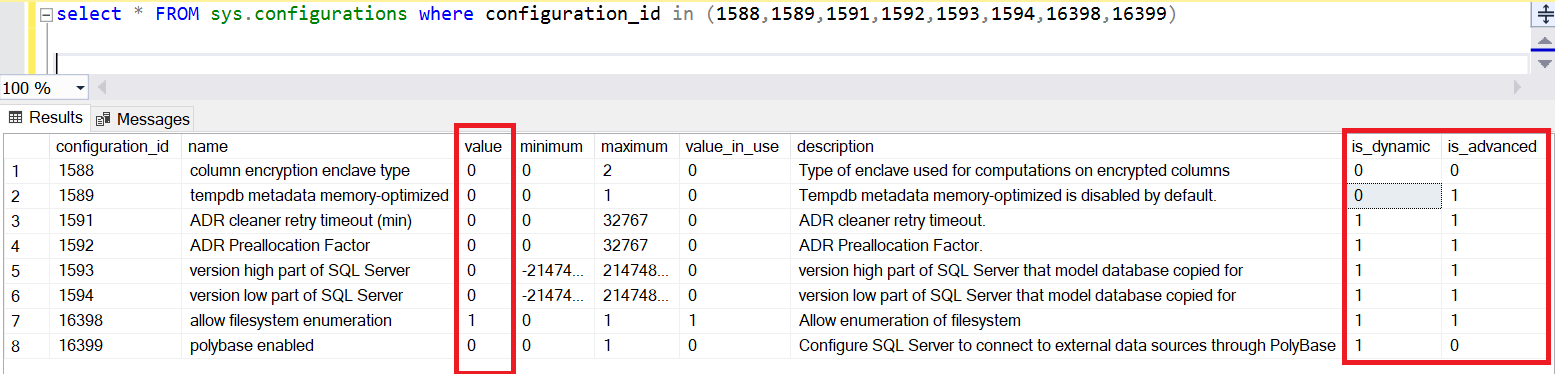
SQL Server 2019 added new options in sp_configure and sys.configurations. First, how can we find the difference between these SQL Server Versions. This simple query will give us the number of options and the SQL Server Version: select count(*),@@version FROM sys.configurations In SQL server 2016, we have 74 parameters for the instance configuration: In SQL server 2017, we have 77… 

See you on Polywork (an new LinkedIn?)

By Franck Pachot . I have published 105 additional blog posts here since the 500th one https://www.dbi-services.com/blog/rollback-to-savepoint/ that I have written on my come back to dbi-services. On Oracle Database, of course, other databases as well, on clouds (OCI and AWS mainly, with a look at GCP and Azure). But also with some thoughts on the rise of the “scale-out”…