Skip to content

Open source Team

Posts published under the Open source Team account are collective contributions by the dbi services open infrastructure consultants. The practice covers open-source databases and platforms, PostgreSQL first of all, along with MySQL, MariaDB, and Linux, from architecture, replication, and high availability to performance tuning and operations under service level agreements, and contributes actively to the PostgreSQL community.

721 posts since September 2011

Linux quick tip – What is the local time in Kolkata?

Quite easy if you know how to do it from the shell (I didn’t know it 🙂 ): dwe@dwe:~$ TZ=’Asia/Kolkata’ date Tue Mar 22 19:12:25 IST 2016 You can use “tzselect” to list the available combinations and get the local time for whatever you want: dwe@dwe:~$ tzselect Please identify a location so that time zone rules can be set correctly.… 
Getting started with Ansible – Preparations

When your infrastructure landscape becomes larger and larger you definitely need a tool which helps you in managing your servers, no matter if pḧysical or virtual, running in the cloud or not. One tool (many others are around) which assists you in provisioning, configuration management and mass deployment is Ansible. If you look at the man page you can find… 

Feeding blogs/rrs items directly into your PostgreSQL database

There are many foreign data wrappers available for PostgreSQL. One of them can be used to query rss feeds. In this post I’ll show you how you can feed summary information of a blog into your PostgreSQL database. The foreign data wrapper you’ll need to download and install is called multicorn. This foreign data wrapper in fact brings more than… 

Pre-warming the buffer cache in PostgreSQL

When a database gets shutdown for patching, operating system maintenance or other reasons you completely lose the contents of the buffer cache. No surprise. Memory is not persistent. Wouldn’t it be nice to load the most important tables to the cache when the instance starts automatically? This would reduce the time for the most important queries to return the results… 

Transactional DDL

When you are working on Oracle you probably learned that each DDL does an implicit commit in the background. There is no way to have DDLs wrapped in a real transaction (with the exception of the “create schema” command which I blogged about a long time ago). If you take a look a the SQL:2008 standard (ISO/IEC 9075-1:2008) you can… 

Install PL/JAVA in Postgres Plus Advanced Server 9.5

While doing a project at a customer we came to a point where we needed to install pl/java into Postgres Plus Advanced Server 9.5. If you follow the official documentation you will probably fail and get stuck when trying to build pl/java with maven (at least I did fail several times). Unfortunately there is not much documentation around for solving… 

EDB Postgres Advanced Server 9.5 new features – Profiles

The just released version of EDB Postgres Advanced Server 9.5 introduces profiles very much the same as in Oracle. Lets have a look at it. As in Oracle there is a default profile: (enterprisedb@[local]:5445) [postgres] > x Expanded display is on. (enterprisedb@[local]:5445) [postgres] > select * from edb_profile; -[ RECORD 1 ]———–+——– prfname | default prffailedloginattempts | -2 prfpasswordlocktime |… 

Installing EDB Postgres Advanced Server 9.5

Some days ago EnterpriseDB released EDB Postgres Advanced Server 9.5. As usual this release contains all new features that have been introduced with PostgreSQL 9.5 plus the additions that are documented in the release notes. Some time ago I blogged on how to install the 9.4 release. In this post I want to check if anything changed in the installation… 

The Postgres Plus® Cloud Database

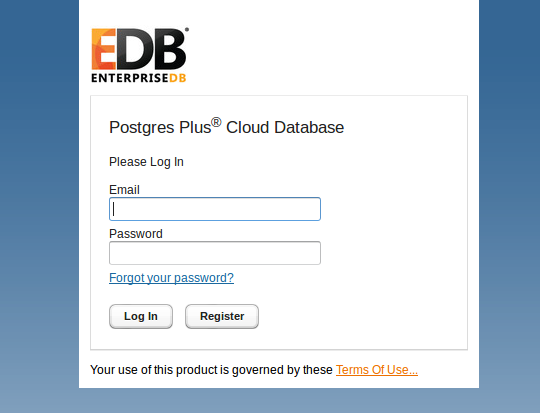
In the last posts (1, 2, 3, 4, 5) I looked at PostgreSQL in Amazon RDS. Another option you have if you want to go to the cloud is to use the The Postgres Plus® Cloud Database offered by EnterpriseDB. I will not go through the whole setup here as this is described in detail here. So once you went… 

Avoiding access to the public schema in PostgreSQL

In PostgreSQL every database contains the public schema by default. Every user that gets created and can login is able to create objects there. Here is a little demo: I’ll create a new user named u1 which is allowed to login. No additional privileges are granted: postgres=# create user u1 login password ‘u1’; CREATE ROLE postgres=# c postgres u1 You…