Skip to content

Microsoft Team

Posts published under the Microsoft Team account are collective contributions by the dbi services Microsoft consultants. The practice covers SQL Server across its lifecycle, from installation, migration, and security to high availability with Always On and performance tuning, together with Azure data services and the Microsoft Business Intelligence stack, including Power BI. The team holds Microsoft certifications up to Expert level and operates customer platforms under service level agreements.

263 posts since October 2011

How to create an Azure SQL Database using Azure PowerShell

In this blog post, I’ll go through the steps to create an Azure SQL Database using Azure PowerShell. Introduction to Azure SQL Database The SQL database services provided by Microsoft on the cloud are now grouped under the name of Azure SQL. The Azure SQL family contains services that I will briefly summarize; Azure SQL Database – DBaaS (Database-as-a-Service) Azure… 
SQL Server: Synchronize logins on AlwaysOn replicas with dbatools

The SQL Server environment  I worked with today has dozens of SQL Server instances using AlwaysOn Availability Groups for High Availability.When a login is created on the Primary replica of an Availability Group it is not synchronized automatically on secondary replicas. This might cause some issues after a failover (Failed logins). Since this is not done automatically by SQL Server… 

SQL Server: Quickly clean backup history with dbatools

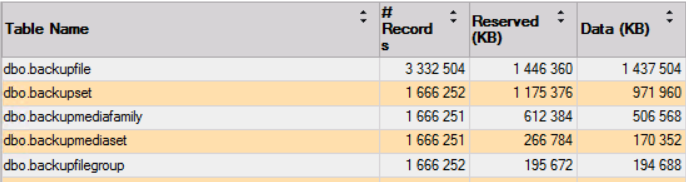
I just had to restore a database in production for my customer. Before doing the restore I have the habit to query the msdb.dbo.backupset table to get an overview of the last backups. When running my query, I felt it was taking longer than usual. So out of curiosity, I looked at the SSMS standard report “Disk Usage by Top… 

SQL Server: Collect Page Split events using Extended Event session

Earlier this week someone tried to show me how to capture page split events using Extended Events (XE) but unfortunately, the demo failed. This is a good opportunity for me to refresh my knowledge about page split and set up a simple demo about this. Hopefully, this one will be working. It’s not necessarily a bad thing when a page… 

How SQL Server MVCC compares to Oracle and PostgreSQL

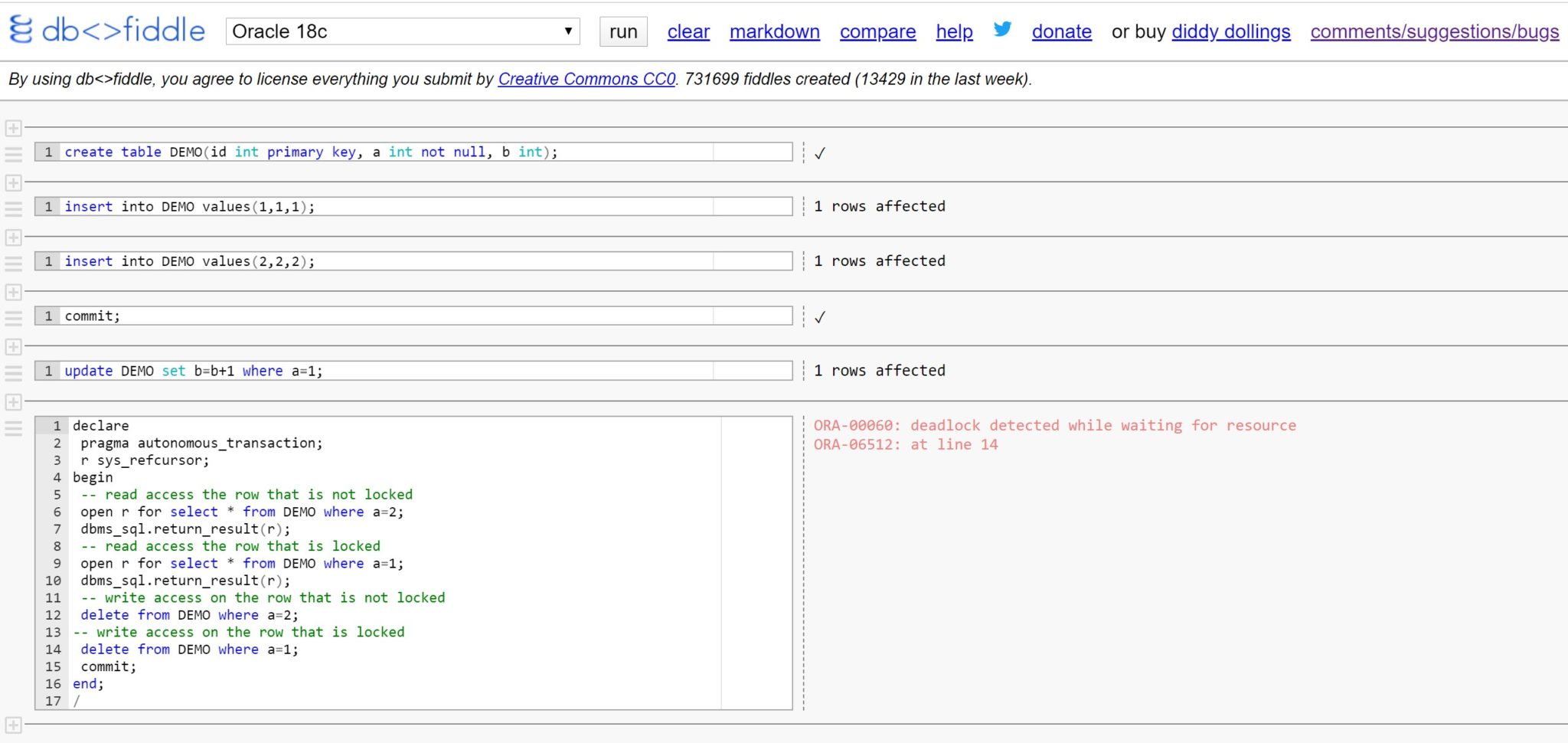
By Franck Pachot . Microsoft SQL Server has implemented MVCC in 2005, which has been proven to be the best approach for transaction isolation (the I in ACID) in OLTP. But are you sure that writers do not block readers with READ_COMMITTED_SNAPSHOT? I’ll show here that some reads are still blocked by locked rows, contrary to the precursors of MVCC… 

Provisioning a AKS cluster and KubeInvaders with Terraform

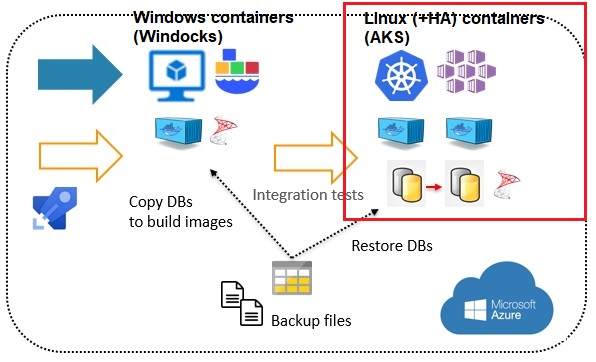
Provisioning a K8s infrastructure may be performed in different ways. Terraform has a connector called the Kubernetes provider but it doesn’t allow building and deploying a Kubernetes cluster. The cluster must be up and running before using the provider. Fortunately, there are different cloud-specific provider depending which cloud provider you want to provision your cluster. In our CI pipeline for… 

SQL Server 2019 Accelerated Database Recovery – Instantaneous rollback and aggressive log truncation

In my previous article about Accelerated Database Recovery (ADR), I wrote mostly about the new Persistent Volume Store (PVS), how important it was important in the new SQL database engine recovery process and the potential impact it may have on the application workload. This time let’s talk a little bit more about ADR feature benefits we may get with instantaneous… 

Using non-root SQL Server containers on Docker and K8s

This is something that I waited for a while, in fact since SQL Server 2017 … and the news came out on Wednesday 09th September 2019. Running Non-Root SQL Server Containers is now possible either on the next version of SQL Server (2019) and it has been backported on SQL Server 2017 as well. Non-root SQL Server containers will likely… 

When Read-Scale availability groups and Windows Failover Cluster are not good friends

A couple of days ago, with some fellow French data platform MVPS (@thesqlgrrrl and @Conseilit) we discussed an issue around Read-Scale availability groups and it made me think I had forgotten to share about a weird behavior I experienced with them.   Basically, Read-Scale availability groups are clusterless infrastructures meaning there is no need to install an underlying cluster. Obviously,… 

How to get a big picture of K8s pods and PVs by script

A couple of weeks ago, during an internal dbi services workshop about Docker and K8s, I got an interesting question: is it possible to get a big picture of pods connected to one specific persistent volume (PV) by using kubectl command? It was an interesting question because if we go through the usual kubectl command, it doesn’t provide natively the… 

Introducing Accelerated Database Recovery with SQL Server 2019

SQL Server 2019 RC1 was released out a few weeks ago and it is time to start blogging about my favorite core engine features that will be shipped with the next version of SQL Server. Things should not be completely different with the RTM, so let’s introduce the accelerated database recovery (aka ADR) which is mainly designed to solve an…