Skip to content

SQL Server 2014

Clustered columnstore index and memory management

Few weeks ago, I had the opportunity to give a session about the clustered columnstore index feature (CCI) at our In-Memory event dedicated to In-Memory technologies for Microsoft SQL Server, Oracle and SAP HANA. During our session, I explained the improvement made by Microsoft on SQL Server 2014 with the introduction of new clustered columnstore index (CCI). The CCI includes… 

SQL Server 2014: First Service pack (SP1) is available

May 14th, Microsoft has released the first Service Pack (SP1) for SQL Server 2014. It is more than thirteen months after the RTM version. SQL Server 2014 Service Pack 1 includes all of the CU from 1 to 5. Which issues are fixed in this SP1 There are 29 hotfixes: 19 for the Engine 6 for SSRS 3 for SSAS… 

Variations on 1M insert (2): write commit

In this blog post, I will try to do the same than my colleagues about Oracle and for PostgreSQL. As a reminder, we’ve seen in my previous blog post that SQL Server is designed to commit transactions implicitly by default and inserting 1M rows in this case may have a huge impact on the transaction log throughput. Each transaction is… 

In-Memory OLTP: Hash and Range indexes

Since SQL Server 2014 CTP2, Microsoft has introduced a new kind of index which is the Range index. We have now two ways for indexing an In-Memory table: using either an Hash index or a Range index. These two indexes are slightly different. In fact, a Hash index is a set of buckets, 8-bytes memory pointers, which points to the… 

Security via policies

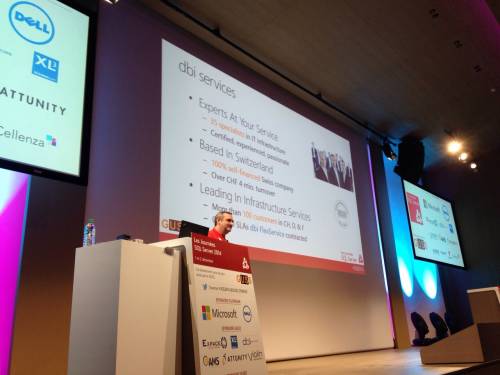
Few weeks ago, I presented the session on security via Policies for “Les journées SQL Server 2014”, organized by the French SQL Server User Group (GUSS) in Paris. I promised to post our policies script on a blog. Security Policies are split into 4 categories: Server Instance Database Data All policies follow this naming convention: dbi_”Level number”_”Level name”_”Policy name” I… 

Memory management, OOM issues with SQL Server 2014 In-memory OLTP

Last week I gave a workshop about SQL Server 2014 and the new features. The first day we worked on new In-memory OLTP and different topics such as the new internal storage, the new transaction processing behavior or the new checkpointing process. During this day, one of the attendees asked me about the memory management with In-Memory OLTP feature. It… 

Managed Backup with SQL Server 2014

In a previous blog post called Backup a SQL Server database from On-Premise to Azure, I presented the different tools to backup your on-premise databases on Azure Storage. SQL Server Managed Backup to Windows Azure was one of these tools. In my opinion, Managed Backup is a great tool. That is why I decided to dedicate an entire blog to… 

dbi services wishes you a Merry Christmas with this SQL Server script

The end of the year approachs and soon it will be time to celebrate Christmas with your family and friends. At dbi services, we wish you a merry christmas via SQL Server with the following script, to execute in your SQL Server Management Studio for example (supported only by SQL Server 2012 and SQL Server 2014). You will find a… 

How to store SQL Server data files in Azure Storage

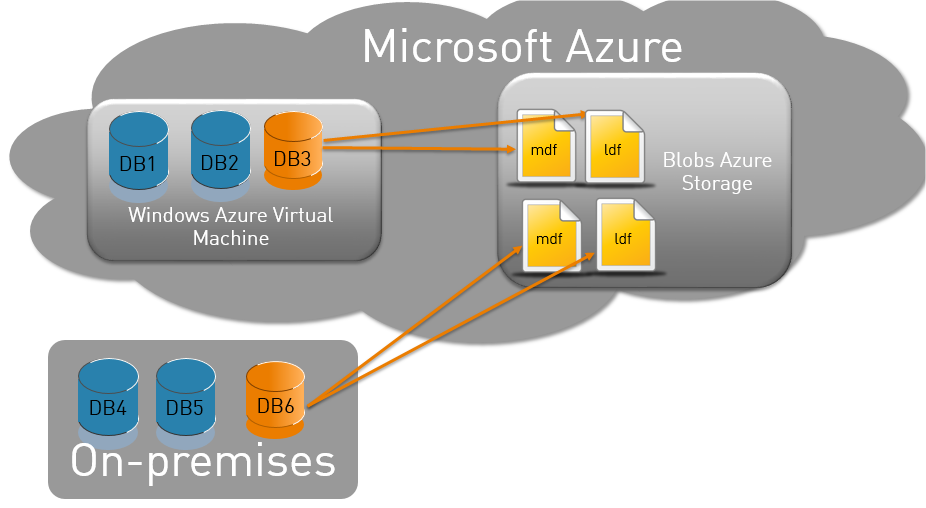
A new functionality, introduced with SQL Server 2014, enables to store data files from a SQL Server database in Windows Azure Storage. In this posting, I will show how it works.   Accessing Azure Storage The Azure Storage account is named “dbiservices”, and is composed of the “datafiles” container. This container does not contain blobs yet. If you are not… 

SQL Server tips: how to list orphaned logins

I read a lot of about orphaned database users in SQL Server, but I have almost never read about orphaned logins. Many of my customers migrate or remove databases in SQL Server. They forget – not every time but often – to remove the logins and jobs associated with these databases. I have created a script – without any cursors,…