Skip to content

Failover Cluster

Maintenance scenarios with EDB Failover Manager (1) – Standby node

Recently at a customer we again implemented a PostgreSQL architecture as described some time ago. When we delivered the first draft of the documentation the question popped up how to handle maintenance tasks in a failover cluster protected by EDB Failover Manager. So, here we go… The setup of my little test environment is as follows: IP Description 192.168.22.243 Current… 

Windows Server 2016: Introducing stretch cluster functionality

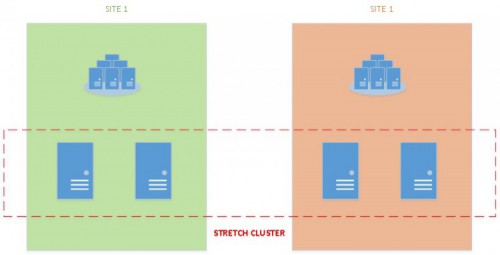
Let’s continue with the new high available functionality shipped with the next Windows version. In my previous blog, I talked about the new site awareness feature that provides more flexibility to configure failover resources priorities and more granular heartbeat threshold as well by introducing the new site concept. This time, we’ll talk about stretch cluster. What’s that? Let’s introduce the… 

SQL Server AlwaysOn: when a listener becomes the cluster and vice versa

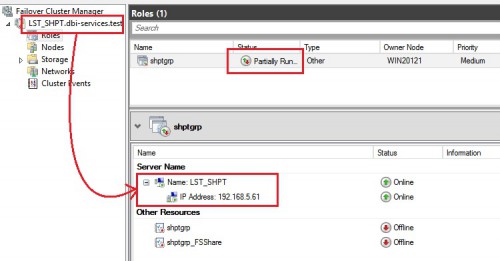
Let’s talk about a funny story that concerns an interesting issue that I faced a couple of months ago at one of my customers. Initially, the problem concerned only the creation of an availability group listener but after deleting the related availability group, he noticed quickly that the deletion failed but even more strange, he noticed that the virtual network… 

SQL Server AlwaysOn : the registry is also important for availability groups

A couple of months ago, we experienced with my colleague Nathan Courtine a weird issue at one of our customers. This issue concerned an AlwaysOn availability group and more precisely to the WSFC cluster layout. I can’t say strongly enough that the AlwaysOn availability group runs on the top of the WSFC and having a good understanding of the internal… 

Windows failover cluster 2016 : new site awareness feature

After my first two blogs about cloud witness and domain-less dependencies features shipped with Windows Server 2016, it’s time to talk about another pretty cool feature of the WSFC : site awareness that will also benefit to our SQL Server FCIs and availability groups. But before to talk further about the potential benefits of this new feature, let’s go back… 

SQL Server 2016 : availability groups with no domain dependencies

Are you aware about the new features of the next Windows version? Currently we’re in TP3 and during my investigation, I was very happy to see the new features for Windows clustering (cf. this blog post from Microsoft). By reading this article we can see: Workgroup Clusters: Clusters with nodes which are member servers / workgroup (not domain joined) If… 

SQL Server 2014: FCIs, availability groups, and TCP port conflict issues

After giving my session about SQL Server AlwaysOn and availability groups at the last French event “Les journées SQL Server 2014”, I had several questions concerning the port conflict issues, particularly the differences that exist between FCIs and availability groups (AAGs) on this subject. In fact, in both cases, we may have port conflicts depending on which components that are… 

WSFC : Manual or automatic failover? That is the question!

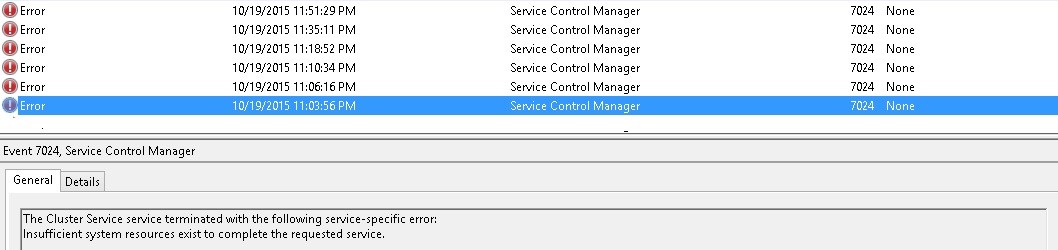
During the night, you receive an alert concerning your SQL Server failover cluster or your availability groups and you’re in panic mode because the message displayed is : a failover has occured .. see the log for more details … So keep quiet and after connecting to your environment you are not able to find anything … What was happen?… 

SQL Server failover cluster, VSphere, & SCSI-3 reservation nightmares

When I have to install a virtualized SQL Server FCI at a customer place as an SQL Server consultant, the virtualized environment usally is ready. I guess this is the same for most part of the database consulting people. Since we therefore lack practice, I have to admit that we do not always know the good configuration settings to apply…