Skip to content

Failover Cluster

Prepare Failover Cluster for AG configuration

In this blog I will show you some important powershell commands to prepare a Failover Cluster for AG configuration. Please keep in mind, this is a test environment and I will not talk about firewall rules. Our objective is to configure a failover cluster with two nodes for a AlwaysOn Availability Group (AG) configuration. As this is for my tests… 
When Read-Scale availability groups and Windows Failover Cluster are not good friends

A couple of days ago, with some fellow French data platform MVPS (@thesqlgrrrl and @Conseilit) we discussed an issue around Read-Scale availability groups and it made me think I had forgotten to share about a weird behavior I experienced with them.   Basically, Read-Scale availability groups are clusterless infrastructures meaning there is no need to install an underlying cluster. Obviously,… 

Introducing high-availability and multi-subnet scenarios with SQL Server on Linux

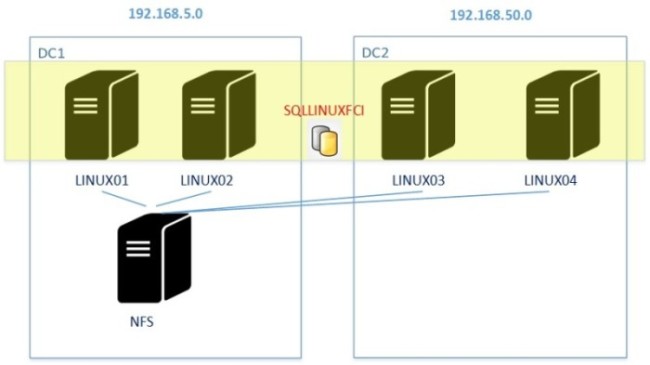
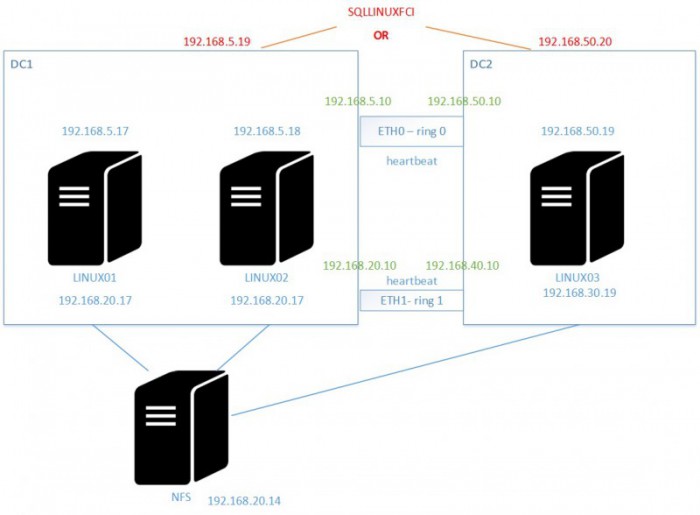
On my first blog about SQL Server on Linux, I introduced the new high availability feature which concerns only SQL Server failover cluster instances so far. During this discovery time, I had the support of Mihaela Blendea (@MihaelaBlendea) at Microsoft to clarify some architecture aspects about this new kind of architecture. Firstly, I would like to thank her. It’s always a… 

Introducing high-availability with SQL Server on Linux

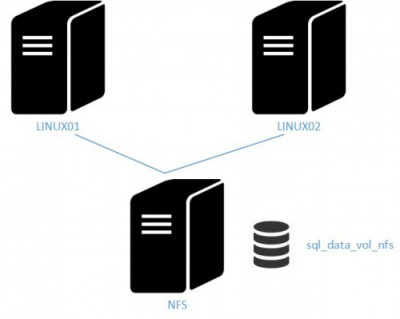
A couple of months ago, I did my first installation of SQL Server on Linux. I wrote about it in this blog post. So now it’s time to start the new year by talking about high availability on Linux with SQL Server vNext. Running standalone instances will be suitable for scenarios but I guess introducing high-availability with critical environments still… 

Dealing with WSFC 2016 quarantine state and availability groups

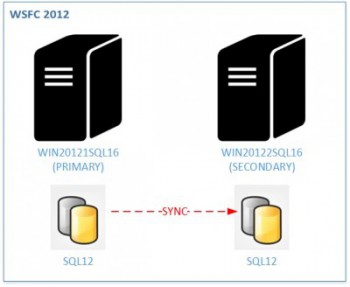
I was playing with my lab environment which includes Windows 2016 and SQL Server 2016 and I noticed an interesting scenario while testing cluster node failures. After simulating some network outage scenarios, I was not able to bring back my cluster node online immediately by using traditional way. A quick look at the cluster manager led me to notice something… 

Migrating your existing availability group infrastructure to 2016

Have you already a plan to migrate your old SQL Server 2012 availability group infrastructure to windows 2016 and SQL Server 2016? In a previous post, I talked about distributed availability groups and cross-cluster migration scenarios but this time the game is not the same because we want to achieve an in-place upgrade of the existing AG infrastructure. This question… 

EDB Failover Manager 2.1, (two) new features

In the last post we upgraded EDB EFM from version 2.0 to 2.1. In this post we’ll look at the new features. Actually we’ll look only at two of the new features in this post: Failover Manager now simplifies cluster startup with the auto.allow.hosts property efm promote now includes a -switchover option; the -switchover option instructs Failover Manager to perform… 

EDB Failover Manager 2.1, upgrading

Some days ago EnterpriseDB released a new version of its EDB Failover Manager which brings one feature that really sounds great: “Controlled switchover and switchback for easier maintenance and disaster recovery tests”. This is exactly what you want when you are used to operate Oracle DataGuard. Switching back and forward as you like without caring much about the old master.… 

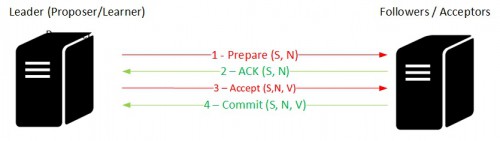
Windows Failover Cluster : Introduction to paxos tag

A couple of days ago, I was in charge to install a new SQL Server AlwaysOn and availability group with one of my colleague Nathan Courtine. During the installation, we talked about testing a disaster recovery scenario where we have to restart the Windows Failover cluster in forced quorum mode. Restarting a WSFC in such mode implies some internal stuff… 

Maintenance scenarios with EDB Failover Manager (3) – Witness node

In the last posts ( Maintenance scenarios with EDB Failover Manager (1) – Standby node , Maintenance scenarios with EDB Failover Manager (2) – Primary node ) we looked at how to perform maintenance operations on the master as well as on the standby node in a failover cluster managed by EDB Failober Manager. What is still open is how… 

Maintenance scenarios with EDB Failover Manager (2) – Primary node

In the last post I looked at how you can do maintenance operations on the standby node when you are working in a PostgreSQL cluster protected by EDB Failover Manager. In this post I’ll look on how you can do maintenance on the primary node (better: the node where the primary instance currently runs on). This requires slightly more work…