Skip to content

audit

Cleanup Audit Trail – the Full Picture

Oracle Database 23ai introduces several enhancements to unified auditing, focused on flexibility, and effectiveness. Some of the new key features are: Desupport of Traditional Auditing: Traditional auditing is desupported in Oracle 23ai, which means all auditing must now be done using unified auditing. Unified auditing consolidates audit records into a single, secure trail and supports conditional policies for selective auditing.… 

Plotting SQL Server Performance counters with Python

As a consultant, I often use Performance Monitor (Perfmon) to collect performance metrics for SQL Server. After running Perfmon for, say, a week to capture a baseline of server activity, you can end up with a large amount of data. Here’s what you might end up with: Looking at so much information can be overwhelming if you don’t know exactly… 

Control-M/EM : Find who created a Workload Policy

Introduction: Control-M gives us many ways to get info about jobs , for example by checking their definition , or checking their execution log or the Alert viewer,checking their execution their scheduling and so on. There is also ways to monitor other Control-M components such as resources,database update,communication between Control-M components.. Everything depends of what you need but you will… 

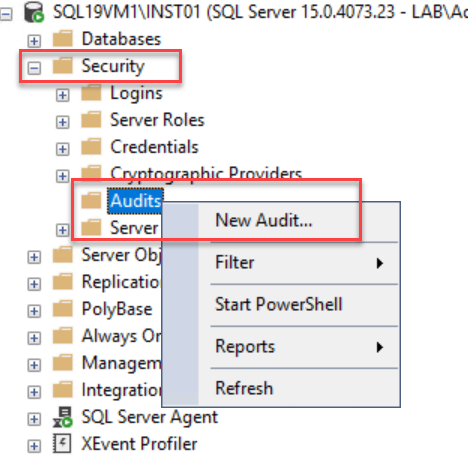
SQL Server: Audit changes on Instance Configuration, Linked Servers and Agent Jobs

Introduction Very often with our customers, there is only one person with the DBA role. The configuration of the instances is then under control and if anything strange has to be questioned, the culprit is quickly identified. 🙂 When many people, not necessarily having DBA knowledge, have high permissions (sysadmin) on instances it becomes important to know who does what.… 

12cR2 auditing all users with a role granted

By Franck Pachot . 12.1 introduced Unified Auditing where you define policies and then enable them. As with the traditional audit, you enable them for all users or for specific users. The unified auditing adds a syntax to audit all users except some listed ones. 12.2 adds a syntax to audit a group of users, defined by the role granted.… 

Auditing in PostgreSQL

Today, especially in the Pharma and Banking sectors, sooner or later you will be faced with the requirement of auditing. Detailed requirements will vary but usually at least tracking logons to the database is a must. Some companies need more information to pass their internal audits such as: Who created which objects, who fired which sql against the database, who… 

AUDIT_SYS_OPERATIONS and top-level operation

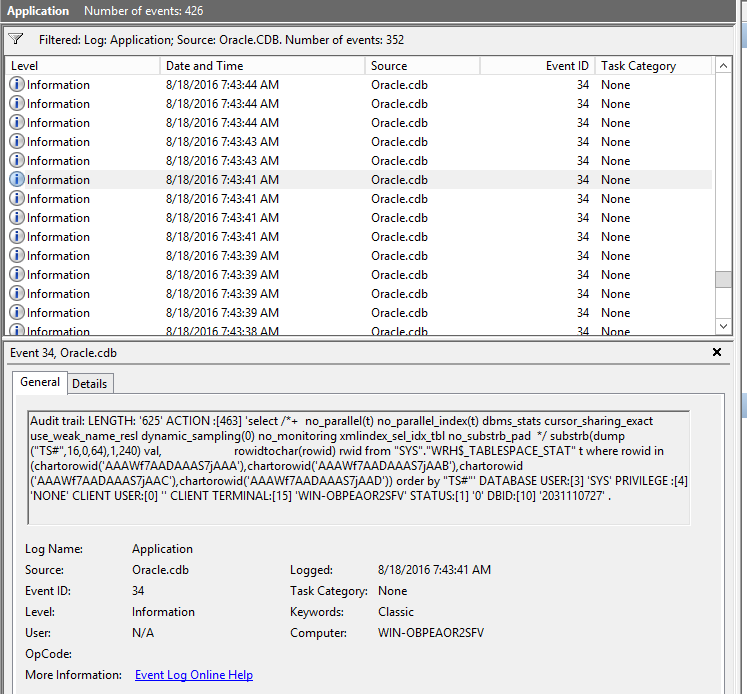
By Franck Pachot . SYSDBA is powerful. You should use it only when you need to. And you should audit what is done when connected SYSDBA. This is achieved by AUDIT_SYS_OPERATION. But do you have an idea how much audit log will be generated? Note that in 12c, AUDIT_SYS_OPERATION=true is the default. The documentation says: AUDIT_SYS_OPERATIONS enables or disables the… 

Dbvisit replicate CDC without old values

By Franck Pachot . In a previous post I presented how Dbvisit replicate can capture changes and write them in an audit table with old and new values. Here is how to do it wen you want only the new values – with same column names. What I want to get here is a table with: same column names as… 

Nothing in feature usage statistics since 12c?

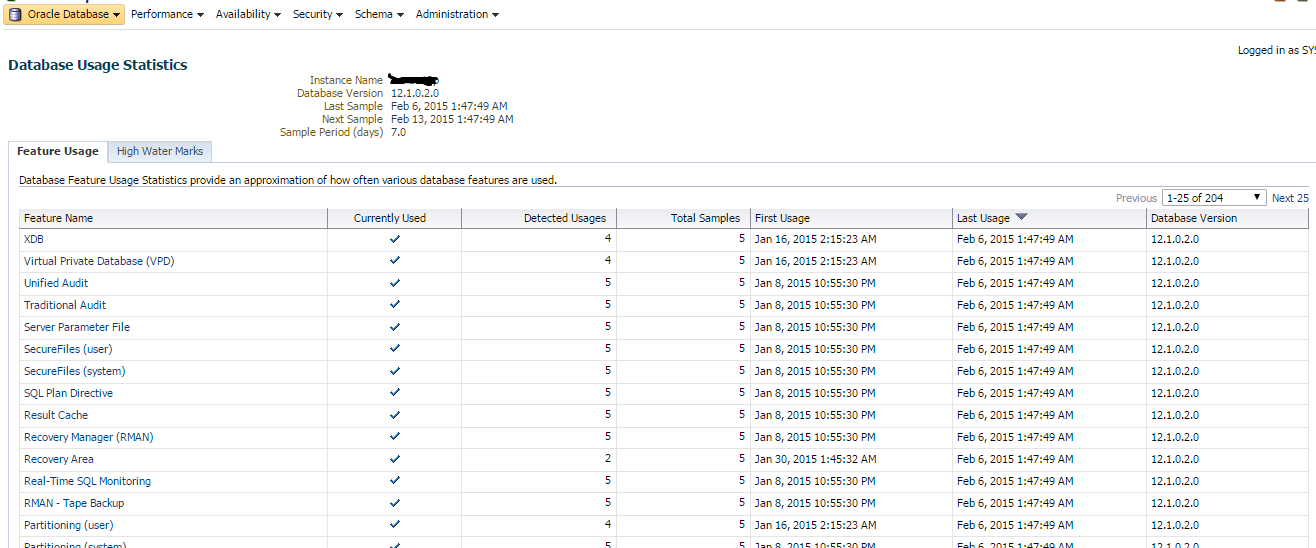
By Franck Pachot . It don’t want to rub salt in the wound about 12c upgrades and Adaptive Dynamic Sampling being overzealous, but here is a case with an unexpected consequence: you see nothing in the ‘Database Feature Usage’ since migration. The photo novel starts like this: we are in September and when I check the ‘Database Feature Usage’ page…