Skip to content

Database

Everything our consultants learn while running databases for customers: Oracle, PostgreSQL, SQL Server, MySQL, MariaDB, MongoDB and Delphix. Expect hands-on posts about installation, day-to-day administration, backup and recovery, performance tuning, replication and upgrades.

AUDIT_SYS_OPERATIONS and top-level operation

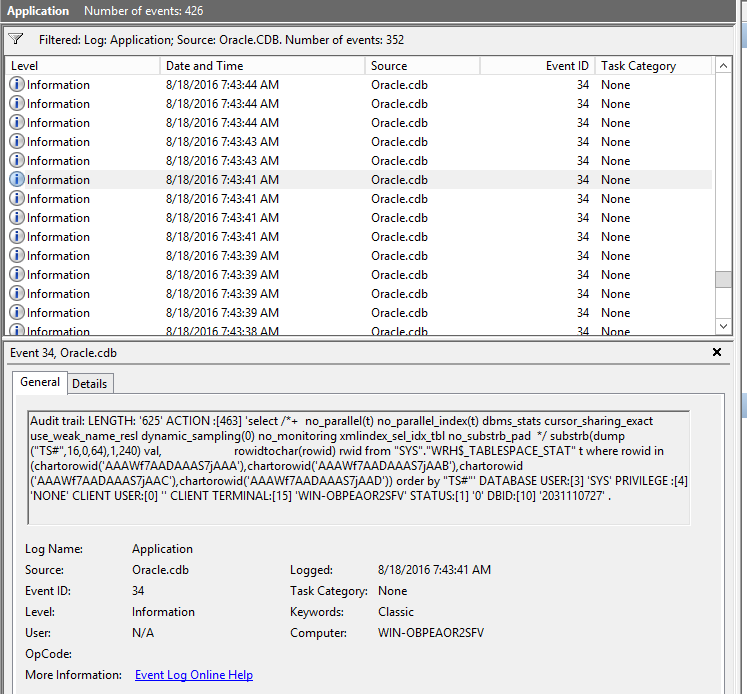
By Franck Pachot . SYSDBA is powerful. You should use it only when you need to. And you should audit what is done when connected SYSDBA. This is achieved by AUDIT_SYS_OPERATION. But do you have an idea how much audit log will be generated? Note that in 12c, AUDIT_SYS_OPERATION=true is the default. The documentation says: AUDIT_SYS_OPERATIONS enables or disables the… 
Neue Datenbank Konsole Befehle (DBCC) CLONEDATABASE

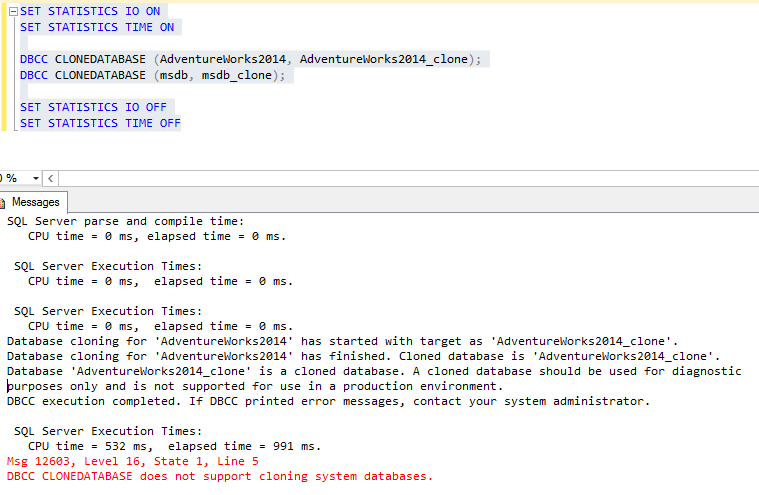
Sie haben es vielleicht noch nicht gesehen, aber mit den Service Pack 2 von SQL Server 2014 gibt es einen neuen DBCC Befehl: CLONEDATABASE. „DBCC CLONEDATABASE sollte Kopien eines Schemas und den Statistiken einer Produktionsdatenbank erstellen, um bei Leistungsproblemen Abfragen zu untersuchen.“ MSDN Quelle finden wir hier. Dieser Befehl kann nur Benutzedatenbanken klonen. Wie Sie sehen, für die Systemdatenbanken ist… 

Generate Azure VM with Resource Manager deployment in PowerShell

Recently, there is a new way to manage the Azure infrastructure with Resource Manager. It brings many advantages regarding the classic deployment. The differences between these two deployments will not be covered in this blog because it is not the initial goal, and it already exists a very good Microsoft topic on this subject. In this blog, we will generate… 

Unplugged pluggable databases

By Franck Pachot . When Oracle Multitenant came out in 12c, with pluggable databases, it was easy to draw them as USB sticks that you can plug and unplug to/from your Container Database (CDB). I don’t like this because it gives the false idea that an unplugged database is detached from the container. Containers In the Oracle documentation, the Concept… 

Windows: Sauvegarde RMAN sur un disque partagé

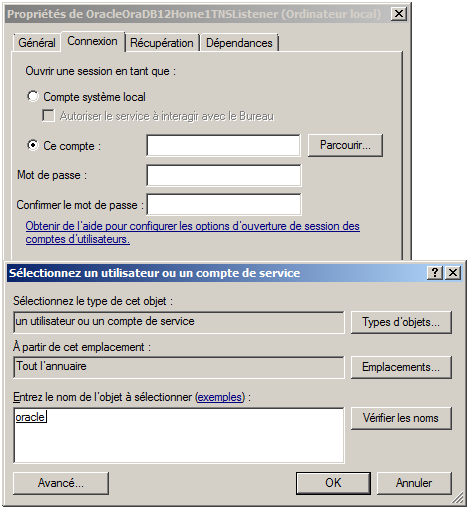
Dans ce blog, je vais vous expliquer comment exporter les backups RMAN sur un « share disk » appartenant à un Domaine. Assurer la sécurité des données est l’une des tâches principales de l’administrateur : La mise en œuvre d’une protection des fichiers sensibles de la base : Fichier de contrôle Fichiers de journalisation La mise en place d’une stratégie de sauvegarde/récupération : Adaptée aux contraintes… 

Multitenant internals: object links on fixed tables

By Franck Pachot . The previous post partly answered to the original question (why an object link to V$SESSION is refreshed only every 30 seconds): recursive queries on shared=object views. Now let’s see what is different with fixed tables. Disclaimer: this is research only. Don’t do that anywhere else than a lab. This is implicit when the title is ‘internals’.… 

Multitenant internals: how object links are parsed/executed

By Franck Pachot . I had a comment on object links internals when creating a sharing=object view on GV$SESSION. Before posting about this specific case, I realized that I’ve never explained how a query on an object link is run on the CDB$ROOT container. Data link testcase Here is how I create the DEMOT table and DEMOV view as object… 

List usernames instead of uids with the ps command for long usernames

By William Sescu Have your ever faced such a situation. You have usernames in your /etc/passwd file with more than 8 characters. This is no problem for Linux at all, usernames may be up to 32 characters long, only your ps output might look a little scrambled. It shows you the uid instead of the username like in the following… 

How to do a Filesystem Resize (ext3/ext4) on Redhat running on VMware

By William Sescu A filesystem resize can be done in several ways, online, offline, with LVM2 or without LVM2.  However, this blog will describe how to do an online resize of ext3/ext4 filesystems where a virtual disk (vmdk) is online added to a VMware Redhat guest OS. So let’s start with the online filesystem resize of ext3/4 filesystems on the… 

SQL Server AlwaysOn: troubleshooting improvements with new service packs

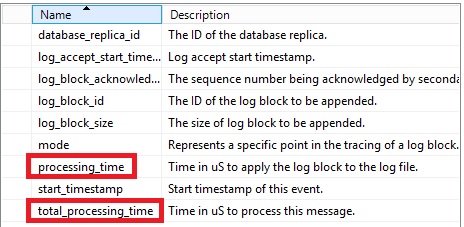
As promised in my latest blog, I will talk about improvements in the detection of the availability group replication latency. As a reminder, replication latency between high available replicas may be monitored in different manners so far. Firstly, in my experience I had the opportunity to use different performance counters as “Database Replica:Transaction Delay” and “Databas Replica:Mirrored Write Transactions/sec” in… 

Exadata X-5 Bare Metal vs. OVM load testing

By Franck Pachot . In a previous post I tried to compare a single thread workload between Exadata X5 Bare Metal and Virtualized. The conclusions were that there is no huge differences, and that this kind of comparison is not easy. About the comparison is not easy, some reasons have been nicely detailed by Lonny Niederstadt in this twitter thread… 

Oracle serializable is not serializable

By Franck Pachot . Did you know that when you set isolation level to SERIALIZABLE, it is not serializable but SNAPSHOT? This isolation level is lower than serializable. I’ve never thought about it until I read Markus Winand slides about transactions. I recommend every developer or DBA to read those slides. This post is there to illustrate write skew in…