Skip to content

Database

Everything our consultants learn while running databases for customers: Oracle, PostgreSQL, SQL Server, MySQL, MariaDB, MongoDB and Delphix. Expect hands-on posts about installation, day-to-day administration, backup and recovery, performance tuning, replication and upgrades.

Oracle 12cR2 Optimizer Adaptive Statistics

By Franck Pachot . When 12.1 came out, the major issue we encountered after migration was related to the new adaptive features of the optimizer: automatic reoptimization, SQL Plan Directives and the resulting dynamic sampling. Of course, Oracle product managers listen to feedbacks, ensure to provide workarounds or fixes and make things better for next release. Let’s see what has… 
Oracle 12cR2 Long Identifiers

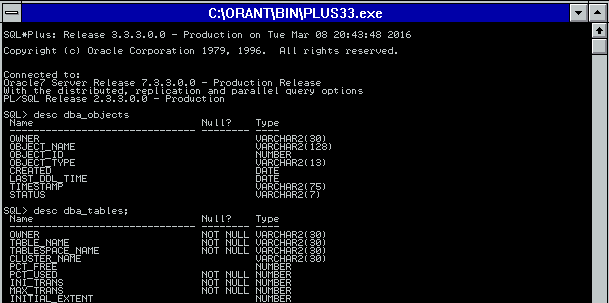
By Franck Pachot . This morning during Gerald Venzl presentation of “What’s New for Developers in the Next Generation of Oracle Database” at Oracle Open World, one feature has been acclaimed by a full room: 12.2 show the end of identifiers limited to 30 characters. 12.1 We knew it would happen because in 12.1 all data dictionary views have 128… 

Oracle Database 12.2 – PDBaaS

By Franck Pachot . It’s official, Larry Ellison made the announcement at first keynote and the database product team at oracle has released the version and the documentation publicly. Oracle Database Exadata Express Cloud Service is the ‘Cloud First’ environment for 12.2 Documentation Documentation is there: Cloud > Platform > Data Management > Exadata Express The 12.2 new features available… 

SQL Server 2016: Dynamic Data Masking and database role

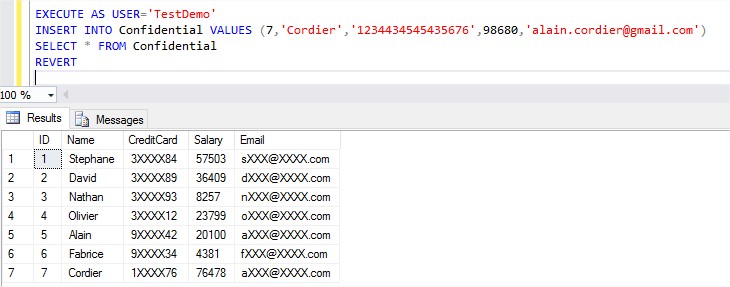
Last week, dbi services organized an event named “SQL Server 2016: what’s new?” in Lausanne, Basel and Zurich. I would take the opportunity to say again a big thank you to everyone which joined us. During my session some questions concerning the new functionality Dynamic Data Masking were asked. In fact data are masked for some roles and not for… 

Oracle 12cR2 SQL new feature: LISTAGG overflow

By Franck Pachot . LISTAGG was a great feature introduced in 11g: put rows into line with a simple aggregate function. 12cR2 adds an overflow clause to it. What happens when you have so many rows that the LISTAGG result is too long? SQL> select listagg(rownum,’,’)within group(order by rownum) from xmltable(‘1 to 10000′); select listagg(rownum,’,’)within group(order by rownum) from xmltable(‘1… 

Les 24 heures du PASS (24HOP) – édition francophone

Je n’ai pas encore blogué sur le sujet mais il est temps de le faire. Cette année, aura lieu la première édition francophone des 24h du PASS  les 20 et 21 septembre 2016. L’idée est plutôt simple: proposer une série de 24 webinaires gratuits de 10h jusqu’à 22h (heure française)  pendant 2 jours. C’est l’occasion de recevoir et d’échanger les dernières informations autour… 

SQL Server 2016 : Basic availability groups may fit to your HA needs

In this blog let’s talk about SQL Server and availability groups in standard Edition. I had some customer questions about existing limitations and this is a good opportunity to review them on this blog post. First of all, let’s say that Microsoft has already documented the restrictions here and from my side, I already written a blog post on the… 

Result cache side effects on number of calls

By Franck Pachot . During the execution of a SQL statement, you cannot guess how many times an operation, a predicate, or a function will be executed. This depends on the execution plan, on some caching at execution, and some other execution time decisions. Here is an example where result cache may bring some overhead by calling a function multiple… 

Sharding with PostgreSQL

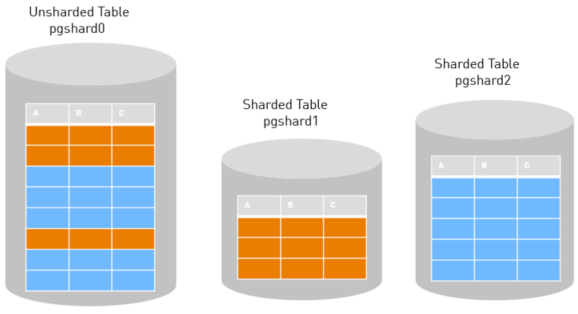
By Mouhamadou Diaw In this article we are going to talk about sharding in PostgreSQL. What is sharding, Sharding is like partitioning. The difference is that with traditional partioning, partitions are stored in the same database while sharding shards (partitions) are stored in different servers. Below is an example of sharding configuration we will use for our demonstration PostgreSQL does… 

What the hell are these template0 and template1 databases in PostgreSQL?

When people start to work with PostgreSQL, especially when they are used to Oracle, some things might be very confusing. A few of the questions we usually get asked are: Where is the listener and how can I configure it? When you talk about a PostgreSQL cluster where are the other nodes? Why do we have these template databases and… 

Securing your connections to PostgreSQL by using SSL

Security is a big topic today and in the news almost every day. As the database usually holds sensitive data this data must be well protected. In most cases this is done by encrypting critical data inside the database and decrypt only when requested. But this is not all: When a client reads the data it is decrypted inside the… 

EDB Failover Manager 2.1, (two) new features

In the last post we upgraded EDB EFM from version 2.0 to 2.1. In this post we’ll look at the new features. Actually we’ll look only at two of the new features in this post: Failover Manager now simplifies cluster startup with the auto.allow.hosts property efm promote now includes a -switchover option; the -switchover option instructs Failover Manager to perform…