Skip to content

Database

Everything our consultants learn while running databases for customers: Oracle, PostgreSQL, SQL Server, MySQL, MariaDB, MongoDB and Delphix. Expect hands-on posts about installation, day-to-day administration, backup and recovery, performance tuning, replication and upgrades.

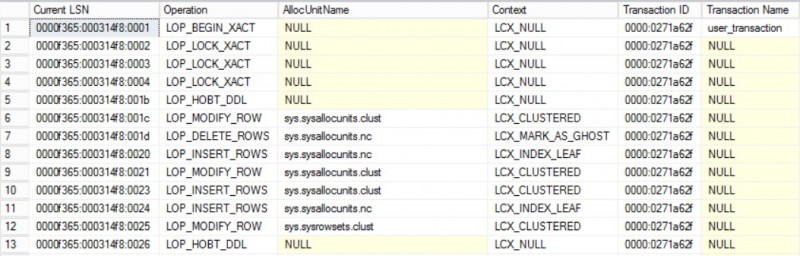
Partitioning – When data movement is not performed as expected

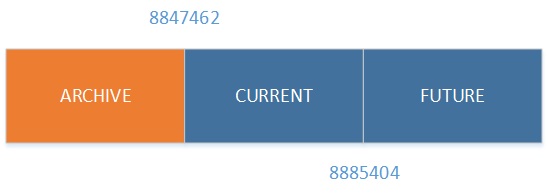
This blog is about an interesting partitioning story and curious data movements during merge operation. I was at my one of my customer uses intensively partitioning for various reasons including archiving and manageability. A couple of days ago, we decided to test the new fresh developed script, which will carry out the automatic archiving stuff against the concerned database in… 
OTN Appreciation Day : External tables

As part of the OTN Appreciation Day (see https://oracle-base.com/blog/2016/09/28/otn-appreciation-day/) I’m writing about one of my favorite Oracle features: External tables. Traditionally people loaded data in an Oracle database using SQL*Loader. With the introduction of external tables, SQL*Loader became obsolete (in my view ;-)), because external tables provide the same loading capabilities and so much more than SQL*loader. Why? Because external… 

OTN Appreciation Day – tnsping

By William Sescu Tim Hall had the idea that as many people as possible would write a small blog post about their favorite Oracle feature and we all post them on the same day. I do have a lot of favorite Oracle tools, and the one I choose today is: tnsping tnsping tells you, if your connect string can be resolved… 

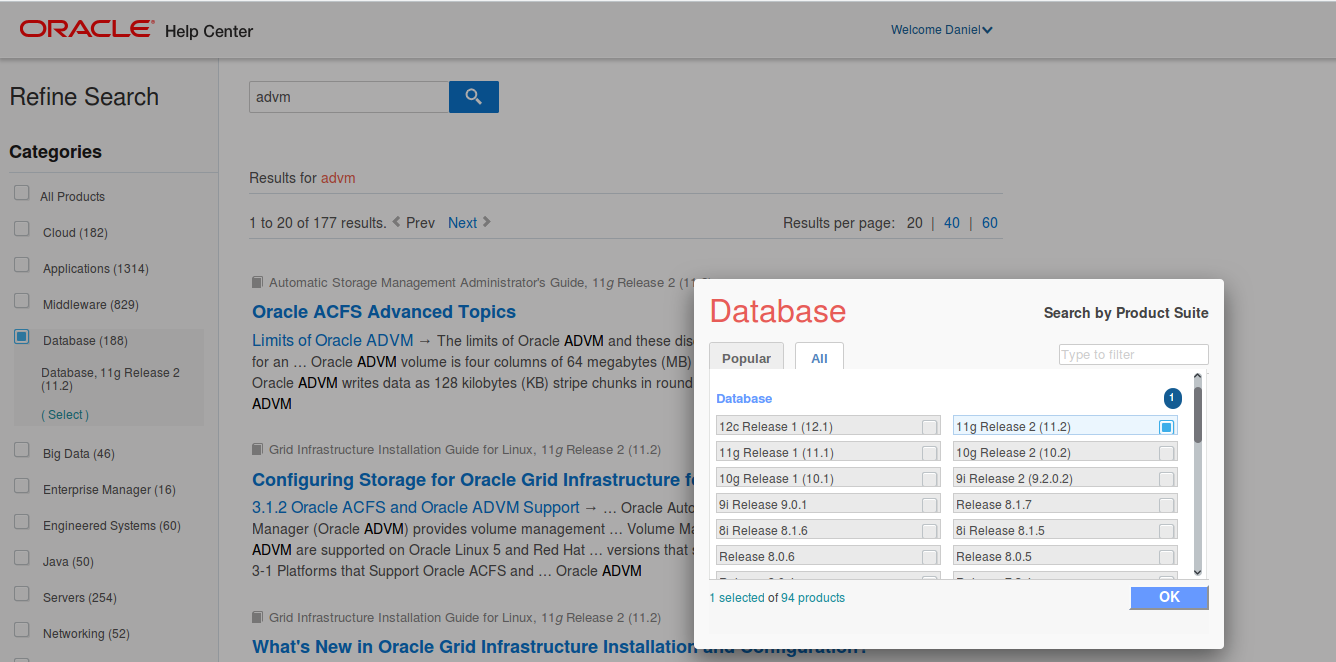
OTN Appreciation Day : ADVM

Tim Hall had the idea that as many people as possible would write a small blog post about their favorite Oracle feature and we all post them on the same day. Here is my favorite feature: ADVM – The Oracle ASM Dynamic Volume Manager. So, what is it? The docs tell you this: “Oracle ASM Dynamic Volume Manager (Oracle ADVM)… 

Oracle 12c – Managing RMAN persistent settings via SQL

By William Sescu RMAN persistent settings can be managed in two different ways. Via the RMAN interface – e.g. RMAN> CONFIGURE BACKUP OPTIMIZATION ON; Via SQL – e.g. VARIABLE RECNO NUMBER; EXECUTE :RECNO := SYS.DBMS_BACKUP_RESTORE.SETCONFIG(‘BACKUP OPTIMIZATION’,’ON’); There are several scenarios when it might be helpful to use the SQL way. I will show 3 of them: Automation Reset to default… 

Oracle – Suspending/Resuming an Oracle PID with “oradebug suspend/resume” or the OS kill command

By William Sescu Sometimes, if you kick off a huge load or transformation job, your Archive Destination might run full, faster than your RMAN backup job cleans up the destination. To avoid an Archiver Stuck in such situations, the “oradebug suspend/resume” can be helpful, or the UNIX kill command. Usually, the “oradebug suspend” and the UNIX kill command work quite well. Before… 

How to patch Postgres Plus Advanced Server in a Standby configuration

In the last post we looked at how you can patch a Postgres Plus Advanced server. Wouldn’t it be nice, in a standby configuration, to patch the standby first without touching the master, then do a controlled switchover and finally patch the old master? In case this is a configuration with EDB Failover Manager the only downtime which would happen… 

SQL Server 2016: TRUNCATE PARTITIONS with sliding Windows scenarios

Some time ago, I had to deal with a new partitioning scenario that included sliding windows stuff for mainly archiving purpose. Regarding the customer context, I used some management scripts that include this time dropping oldest partition. We didn’t care about data oldest than 2 years. Usually in this case, I use a method that consists in dropping data by switching… 

Fun with PL/SQL code reviews – Part 1

For quite a long time I did not work anymore with PL/SQL and was quite happy when I had the chance to review some code at a customer. The status today: I am not that happy anymore 🙁 Let me explain why and show you some examples on what was discovered. Of course all of the identifiers have been obfuscated… 

Running a Cassandra cluster in a single server

This blog post is about the configuration of Apache Cassandra for running a cluster of 3 instances on a single host. Basically C* is not really build to run in a multi instances environment, but for many cases and reasons you might run a C* cluster on a single server. The principal reason is for tests cases. Context The objective… 

How to patch Postgres Plus Advanced Server

As with any other software there comes the time when you need to patch your Postgres Plus Advanced Server instances. Is that different from patching Community PostgreSQL? Yes and no 🙂 The difference is that you need a subscription to get access to the EDB Customer Portal for being able to download the patch. This is pretty much the same… 

Apache Cassandra overview

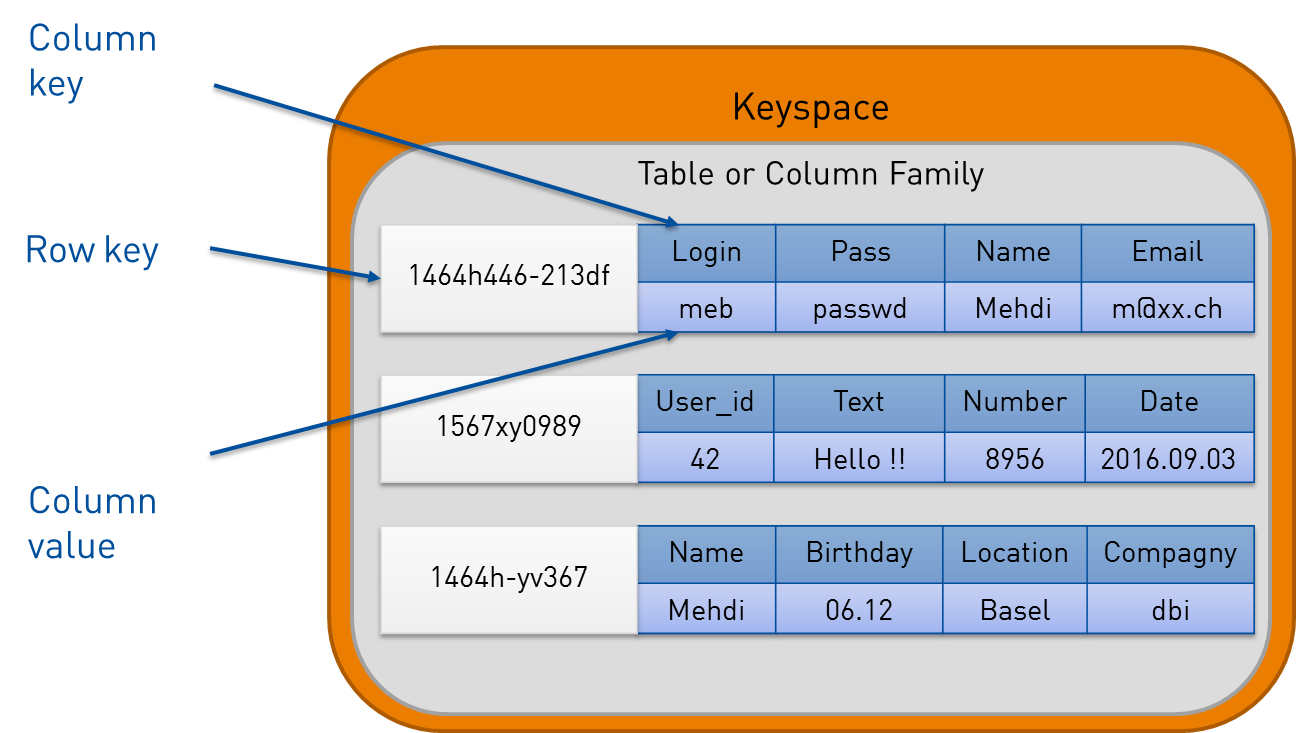
Apache Cassandra is one of the most popular NoSQL databases http://db-engines.com/en/ranking. It is used by many big companies as Facebook, Netflix and many others. Initially the project was initiated by Facebook. In combination with Google BigTable and Amazon DynamoDB, they developed Cassandra. Actually, Cassandra is developed and maintained by the Apache foundation for the community version and by DataStax for…