Skip to content

Database

Everything our consultants learn while running databases for customers: Oracle, PostgreSQL, SQL Server, MySQL, MariaDB, MongoDB and Delphix. Expect hands-on posts about installation, day-to-day administration, backup and recovery, performance tuning, replication and upgrades.

sqlplus and its column output

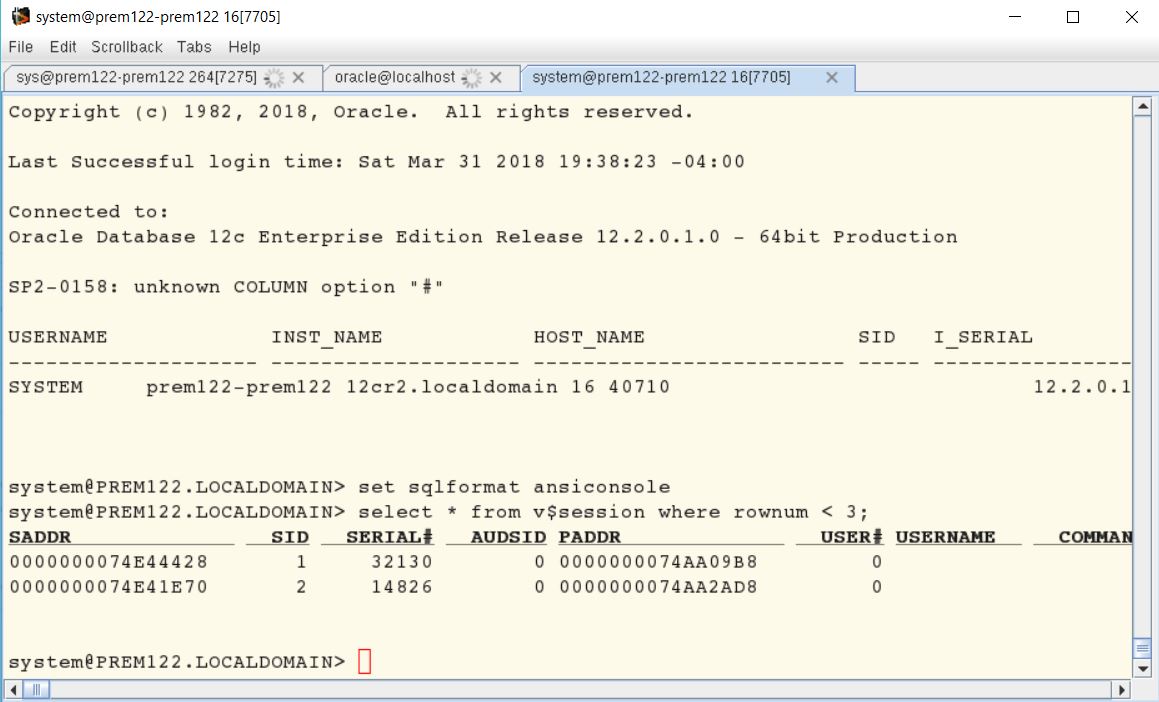
During tuning or normal DBA activities one of the most annoying things is sqlplus with its default column output when running queries. I.e. even after setting a linesize of 1000 and a pagesize of 1000 the output may look as follows in your preferred terminal emulation (putty here): Most people address this by using other tools like sqldeveloper (or sqlcl… 
Docker: efficiently building images for large software

By Franck Pachot . I see increasing demand to build a Docker image for the Oracle Database. But the installation process for Oracle does not really fit the Docker way to install by layers: you need to unzip the distribution, install from it to the Oracle Home, remove the things that are not needed, strop the binaries,… Before addressing those… 

Docker-CE on Oracle Enterprise Linux 7

By Franck Pachot . Here is how I install the latest Docker version on Oracle Linux 7. You find several blog posts about it which all install ‘docker-engine’. But things move fast in this agile world and docker package name has changed. The Community Edition is now ‘docker-ce’ and you want this one to run the latest version. I’m on… 

Insert…on conflict with partitions finally works in PostgreSQL 11

Another partitioning improvement for PostgreSQL 11: Insert…on conflict is now supported (for most cases) in PostgreSQL 11 thanks to this commit. Lets see how it works. We’ll again use the slightly modified little list partitioned table from the last post, here in PostgreSQL 10: postgres=# select version(); version Insert —————————————————————————————————————————- PostgreSQL 10.0 on x86_64-pc-linux-gnu, compiled by gcc (GCC) 4.8.5 20150623… 

How reimaging detects the ODA hardware?

A long time ago, ODA referred to the only model that existed (nearly). Actually, not so long time ago, as ODA X3, X4 and X5 were released between 2013 and 2015. And it was quite the same hardware. Now there is 3 current models in the X7 range, and they were 4 in the previous generation (X6). ODA is now… 

The WAL segment size becomes changeable in PostgreSQL 11

Up to PostgreSQL 10 the wal segment size was fixed once PostgreSQL was compiled and installed. When you wanted to have something else than the default you needed to tell that to the configure command when building from source, e.g. postgres@pgbox:/home/postgres/postgresql/ [PGDEV] ./configure –with-wal-segsize=64MB For PostgreSQL 11 two commits landed (1 and 2) which change this. Lets have a look.… 

The same MAC address for two interfaces on the same host?

Yes, sounds strange, but exactly this is what we faced today. In the end it is clear and not strange anymore but for a moment we really thought we are hitting a bug in the operating system, which was RedHat 7.4. For the little demo for this post I’ll use CentOS 7.4 but this should not really matter. Lets go.… 

When you execute the same statement thousands of times -> prepare it

Every time you send a SQL statement to PostgreSQL it must be parsed. Parsing is fast, yes, but parsing the same statement a thousand times can quickly sum up to quite some time the database could spend for something else. To avoid that PostgreSQL comes with the prepare statement. Using that you can avoid parsing of statements and only planning… 

PostgreSQL – logical replication with pglogical

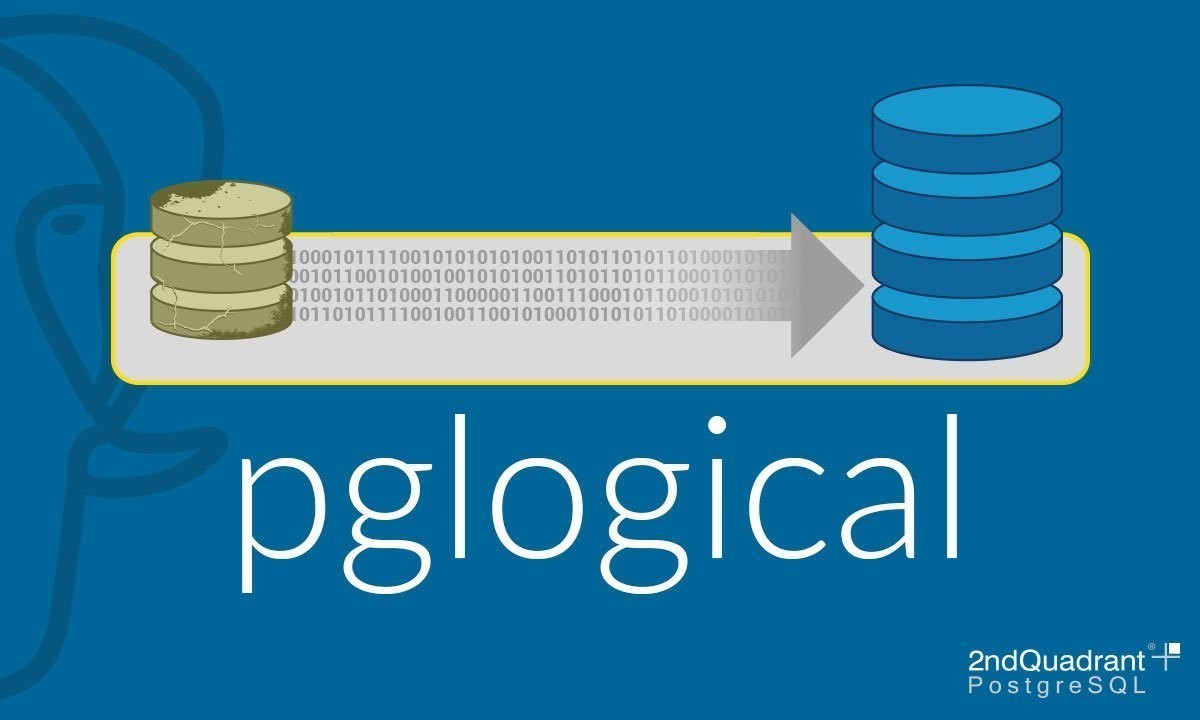
Although PostgreSQL 10 integrate native logical replication (have a look here or here), it is always interesting to be aware of alternative solutions to the available in-core features. One of those is called pglogical. It’s a Postgres extension developed by 2ndQuadrant, major contributor to PostgreSQL development. The goal of this blog post is to discover how to install pglogical and… 

Updating the partition key now works in PostgreSQL 11

In the last post about partitioning improvements in PostgreSQL 11 we talked about unique indexes and primary keys on partitioned tables. Both did not work in PostgreSQL 10 but now do in PostgreSQL 11. Another operation that did not work in PostgreSQL 10 and does now in PostgreSQL 11 is: Updating the partition key, which means that a row will… 

Hash Partitioning in PostgreSQL 11

By Mouhamadou Diaw PostgreSQL 10 comes with partition support. But Hash Partitioning was not supported. PostgreSQL 11 will support Hash Partition. In the documentation we can read The table is partitioned by specifying a modulus and a remainder for each partition. Each partition will hold the rows for which the hash value of the partition key divided by the specified… 

What is the maximum in list size in PostgreSQL?

Yesterday, while being at a customer, an interesting question popped up: What is the maximum of in list values in PostgreSQL? I couldn’t answer although I never read somewhere that there is a limit. The following is for fun only and I am not saying that creating huge in lists is a good idea. Lets go. The version I tested…