Skip to content

Database

Everything our consultants learn while running databases for customers: Oracle, PostgreSQL, SQL Server, MySQL, MariaDB, MongoDB and Delphix. Expect hands-on posts about installation, day-to-day administration, backup and recovery, performance tuning, replication and upgrades.

TRANSPORT_CONNECT_TIMEOUT and RETRY_COUNT

By Franck Pachot . When you have a Data Guard configuration, you want the application to connect to the right server, where the primary is, without taking too much time. The default TCP timeout is 1 minute which is too long. When you don’t want to configure a virtual IP address (VIP) you can simply list all the addresses in… 
ATP vs ADW – the Autonomous Database lockdown profiles

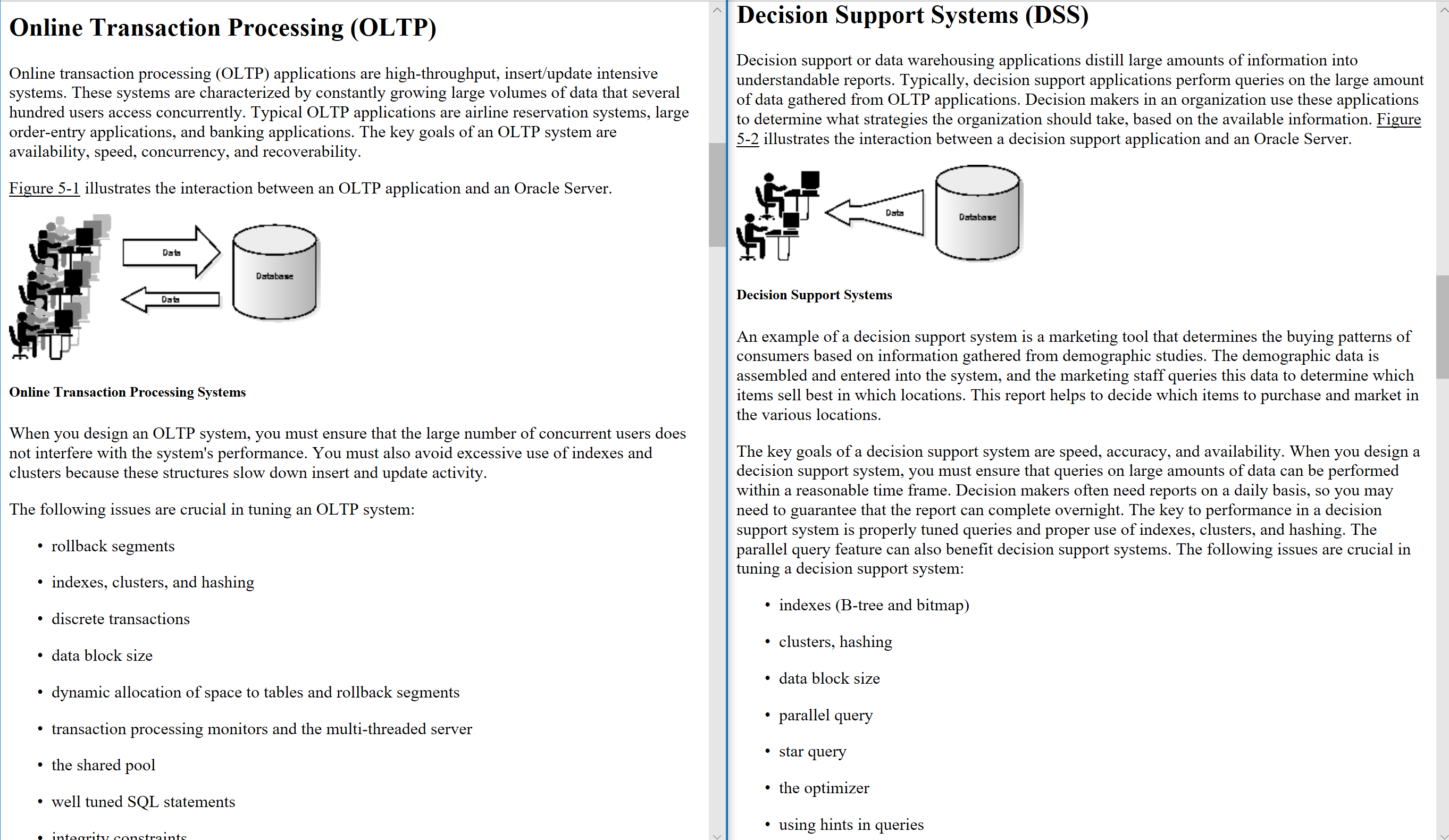
By Franck Pachot . The Oracle database has always distinguished two types of workloads: transactional (OLTP) and datawarehouse (VLDB, DWH, DSS, BI, analytics). There is the same idea in the managed Oracle Cloud with two autonomous database services. To show how this is old, here is how they were defined in the Oracle7 Tuning Book: The definition has not changed… 

Using Oratcptest

By Mouhamadou Diaw Last day I did some tests with Oratcptest. This a command line tool which can be used to measure network bandwidth and network latency between client and server. In this blog I am going to show how to use this tool in a DataGuard environment. I am using a DataGuard environment with following configuration. 1 2 3… 

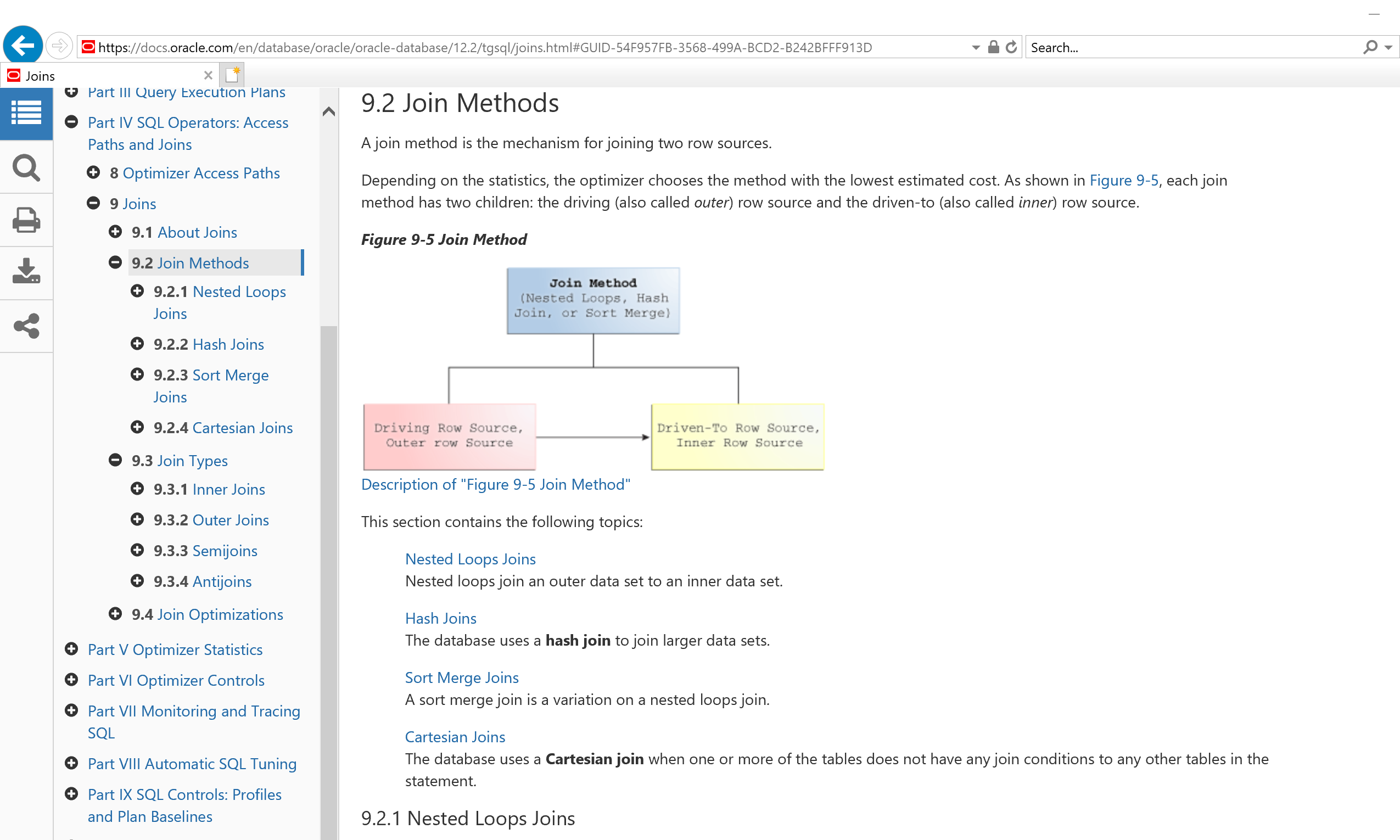
MERGE JOIN CARTESIAN: a join method or a join type?

By Franck Pachot . I’ll present about join methods at POUG and DOAG. I’ll show how the different join methods work in order to better understand them. The idea is to show Nested Loops, Hash Join, Sort Merge Join, Merge Join Cartesian on the same query. I’ll run a simple join between DEPT and EMP with the USE_NL, USE_HASH, USE_MERGE… 

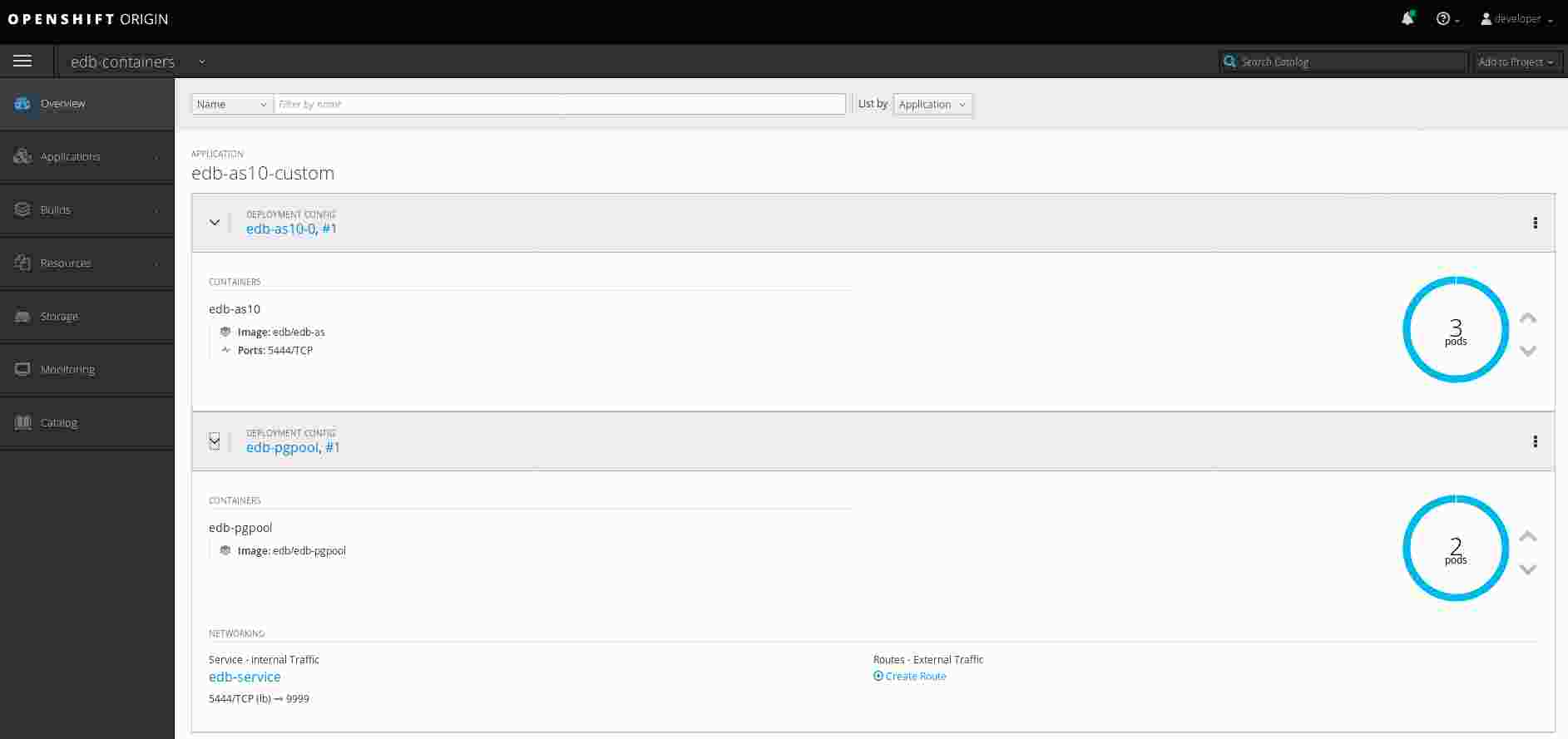
Backing up and restoring EDB containers in MiniShift/OpenShift

This blog refers to an older version of EDB’s Postgres on Kubernetes offering that is no longer available. The last blogs in the series are already some days old: Setting up MiniShift, Deploying EDB containers in MiniShift/OpenShift, Customizing PostgreSQL parameters in EDB containers in MiniShift/OpenShift, Scaling the EDB containers in MiniShift/OpenShift, EDB Failover Manager in EDB containers in Minishift/OpenShift and… 

New installed Fusion Middleware Reports or Forms WebLogic Servers fails to start after configuring SSL

We installed a Fusion Middleware reports and Forms 12.2.1.2.0 on a Linux Server. Those are single node Reports and Forms WebLogic Servers. After disabling the Non SSL Listen Port, we got the below error in the WebLogic Servers log files while starting the Managed Server with only SSL ports enabled. ####<Aug 19, 2017 9:22:44 PM GMT+00:00> <Notice> <Security> <host01.example.com> <WLS_Reports>… 

How much free space can be reclaimed from a segment?

By Franck Pachot . You have the feeling that your table takes more blocks than it should? Here are the queries I use to quickly check the free space. The idea is to call DBMS_SPACE.SPACE_USAGE and infer the minimum space from the percentages. For example, a block in FS3 (defined as having at least 50 to 75% free space) is… 

Catching interface state changes with Network Manager

Sometimes it is required that you can react on state changes of your network interfaces. Maybe you want to get notified by mail or you want to execute a script that does something in case an event is trapped. As usual I will be using CentOS 7 for this little demonstration but as most distributions use systemd and NetworkManager nowadays… 

When does PostgreSQL create the table and index files on disk?

A question that pops up from time to time is: When we create a table or an index in PostgreSQL are the files on disk created immediately or is this something that happens when the first row is inserted? The question mostly is coming from Oracle DBAs because in Oracle you can have deferred segment creation. In PostgreSQL there is… 

Oracle 18c preinstall RPM on RedHat RHEL

By Franck Pachot . The Linux prerequisites for Oracle Database are all documented but using the pre-install rpm makes all things easier. Before 18c, this was easy on Oracle Enterprise Linux (OEL) but not so easy on RedHat (RHEL) where the .rpm had many dependencies on OEL and UEK. Now that 18c is there to download, there’s also the 18c… 

Upgrade Oracle Grid Infrastructure from 12.1.0.2.0 to 12.2.0.1.0

The following blog will provide the necessary steps to upgrade the Grid Infrastructure from 12.1 to 12.2, for a Standalone Server. One of the new features of GI 12.2 is the usage of the AFD (Oracle ASMFD Filter Driver). Assumptions : You have installed Oracle GI 12.1 as grid user You have installed Oracle Database 12.1 as oracle user You… 

Patching ODA lite to 12.2.1.4.0

Here is how to apply the latest patch for your ODA. As usual the Oracle documentation is not 100% accurate. I applied this patch on 2 ODAs X7-2M previously deployed in 12.2.1.2.0, no intermediate patch was needed. 1) Download the patch The patch number is 28216794. This patch will update the following components:  dcs (odacli), operating system, bios/firmwares, ilom, GI,…