Skip to content

Oracle Team

Posts published under the Oracle Team account are collective contributions by the dbi services Oracle consultants. The practice covers the full Oracle Database lifecycle: architecture, migration and upgrade, high availability with RAC and Data Guard, backup and recovery, performance tuning, and engineered systems such as Oracle Database Appliance and Exadata. The team holds Oracle certifications up to Certified Master level and operates customer platforms under service level agreements.

1,009 posts since December 2010

Managing My Amazon Web Services Redhat Instance

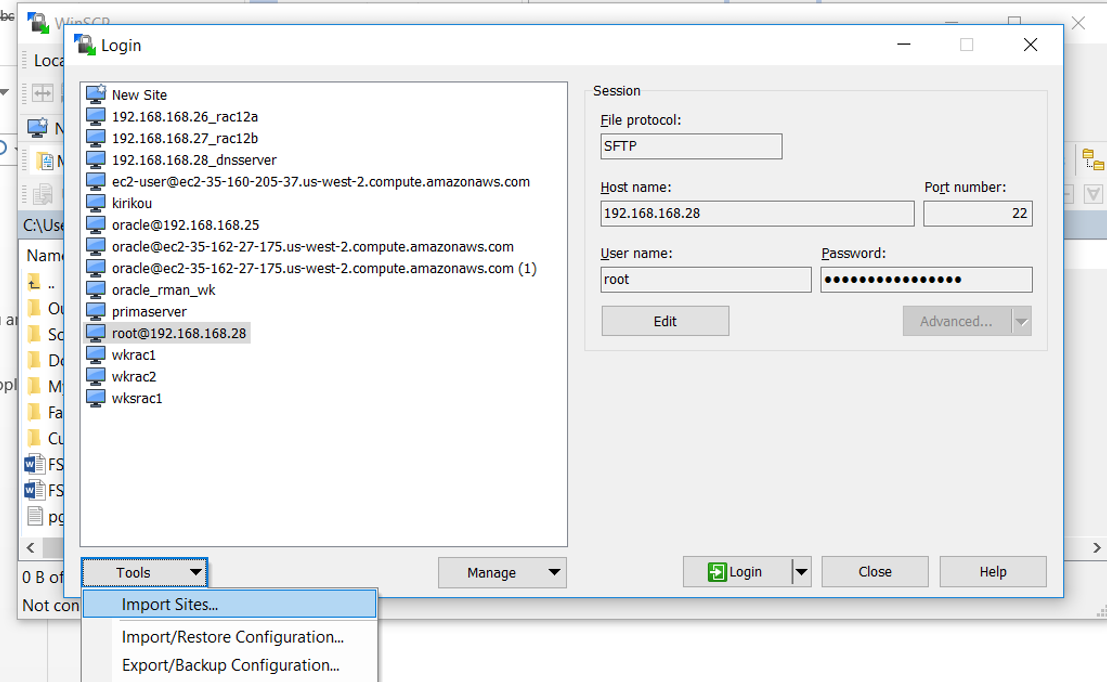
By Mouhamadou Diaw In a precedent Blog I talked about how to create an AWS linux instance. Some questions can be: How to create a new user and to connect with, how to transfert files from my workstation, how to connect to my oracle instance from my workstation and so on. In this blog I am going to deal with… 
Linux Instance in Amazon Web Services (AWS)

By Mouhamadou Diaw In this article I will talk about how to create a linux machine in the cloud amazon AWS. For testing a trial account can be created. Once registered, we can connect by using the “Sign In to the Console” button To create an instance, let’s click on EC2 under Compute And then let’s use the Launch Instance… 

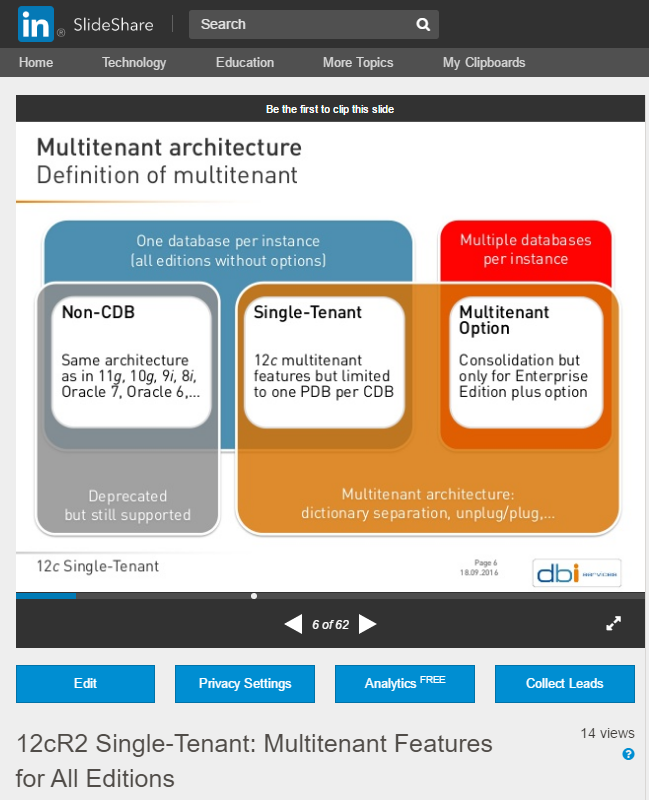
12cR2 Single-Tenant: Multitenant Features for All Editions

By Franck Pachot . Now that 12.2 is there, in the Oracle Public Cloud Service, I can share the slides of the presentation I made for Oracle Open World: 12cR2 Single-Tenant: Multitenant Features for All Editions from Franck Pachot I’ll give the same session in French, In Geneva on November 23rd at Oracle Switzerland. Ask me if you want an… 

12cR2 new index usage tracking

By Franck Pachot . A common question is: how to know which indexes are not used, so that I can drop them. If you tried to use index monitoring you probably have seen the limits of it which make it difficult to use. It has been improved in 12.2 so let’s check if it helps to release the stress of… 

12cR2 has new SQL*Plus features

By Franck Pachot . 12cR2 is there. What’s new in SQL*Plus? For sure, you can’t expect lot of things from it. The new command line is the SQL*Developer sqlcl which aims to be 100% compatible with SQL*Plus with lot of more features. However, a few little things came here: default editor, command line history and easy row/LOB prefetch and statement… 

Oracle 12cR2: MAX_PDBS

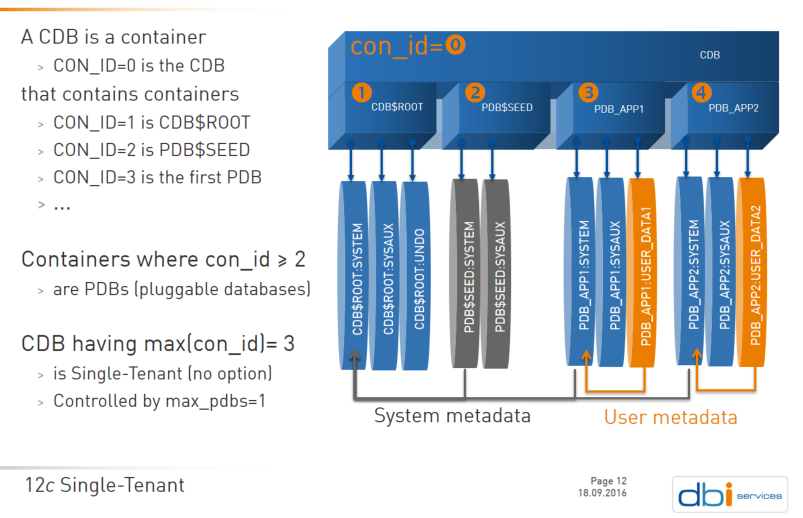
By Franck Pachot . Oracle database 12.2 is there on the Database Cloud Service, in multitenant. In EE High Performance or Extreme Performance, you have the multitenant option: you can create 4096 pluggable database (instead of 252 in 12.1). If you are in lower services, you can create only one user PDB (not counting application root and proxy PDB). If… 

Oracle 12cR2: Pluggable database relocation

By Franck Pachot . Here is, in my opinion, the most beautiful feature of the multitenant architecture. You know how I love Transportable Tablespaces. But here: No need to put the source in read/only No need to export/import the metadata logically No need for any option: available even in Standard Edition Standard Edition I am in Standard Edition here in… 

Oracle 12c – DB_UNKNOWN in ASM

By William Sescu Have you ever noticed a DB_UNKNOWN directory in your ASM structure? It usually happens in combination with spfile creation in ASM, or with RMAN spfile restores to ASM. The correct location is +DATA/<SID>/PARAMETERFILE/SPFILE.<#>.<#>, and an ASM alias from +DATA/<SID>/ pointing to it. But sometimes, the spfile ends up in +DATA/DB_UNKNOWN/PARAMETERFILE/SPFILE.<#>.<#> Technically no issue. The spfile in the… 

12cR2 multitenant containers in SQL_TRACE

By Franck Pachot . In multitenant you session can switch between containers. For example, since 12.1, a common user can switch explicitly between CDB$ROOT and any PDB with the ‘ALTER SYSTEM SET CONTAINER’. Any user connected to a PDB will also have it session switching implicitely when querying through metadata links and data links (new name for object links). In… 

Oracle 12cR2 multitenant: Local UNDO

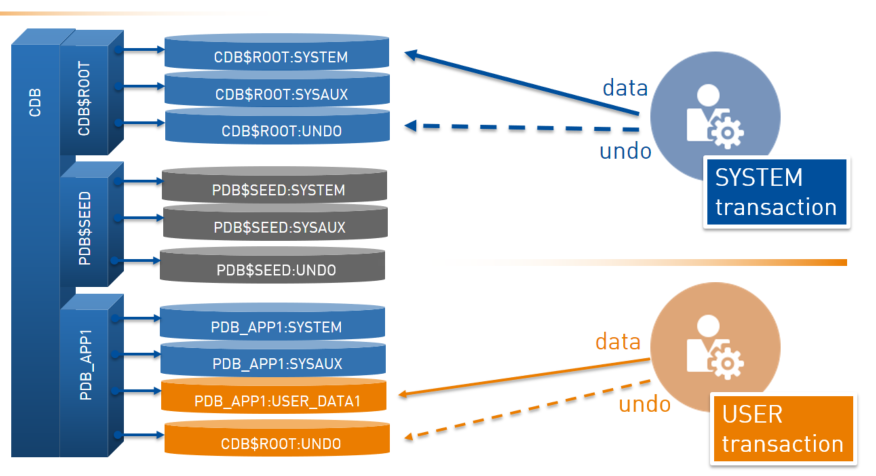
By Franck Pachot . Pluggable Databases are supposed to be isolated, containing the whole of user data and metadata. This is the definition of dictionary separation coming with multitenant architecture: only system data and metadata are at CDB level. User data and metadata are in separate tablespaces belonging to the PDB. And this is what makes the unplug/plug available: because… 

Oracle 12cR2 PL/SQL new feature: TNSPING from the database

By Franck Pachot . Database links are resolved with the server TNS_ADMIN configuration (sqlnet.ora and tnsnames.ora). You can use tnsping to check the resolution, but it supposes that you are on the server and have set the same environment as the one which started the database. In 12.2 you have a new package to check that: DBMS_TNS. It’s the kind… 

Oracle Public Cloud: create a database from command line

By Franck Pachot . You love the Oracle Public Cloud with its simple Web interface? Great. But what if you want to automate a database creation from command line? Easy with the CURL and REST API. JSON First, you need to create a JSON file with all the information for your service. Everything is documented: https://apicatalog.oraclecloud.com/ui/views/apicollection/oracle-public/database/1.1/serviceinstances $ cat createrequestbody.json  …