Skip to content

Replication

A short glance at Attunity replicate

By Franck Pachot . If you follow my blog, you should know that I really like Dbvisit replicate because it’s simple, robust, has good features and excellent support. But that’s not a reason to ignore other alternatives (and this is the reason of https://www.dbi-services.com/news-en/replication-event-2/). When you have heterogeneous sources (not only Oracle) there is Oracle Golden Gate with very powerful… 
Windows Server 2016: Introducing stretch cluster functionality

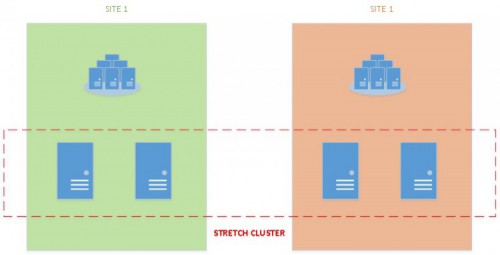
Let’s continue with the new high available functionality shipped with the next Windows version. In my previous blog, I talked about the new site awareness feature that provides more flexibility to configure failover resources priorities and more granular heartbeat threshold as well by introducing the new site concept. This time, we’ll talk about stretch cluster. What’s that? Let’s introduce the… 

Exception from executeScript in Alfresco Share

I didn’t have the opportunity to post a new entry about Alfresco in this blog for a long time now, so I will fix this! In this blog entry, I will talk about a bug I encountered a few months ago. I resolved it but I, so far, not had the time to share my knowledge with you. I. Description… 

Adding new tables to an existing Oracle GoldenGate replication

Once a replication environment is set up, it’s rarely forever. Adding tables to an Oracle GoldenGate replication group with minimal impact to the current replication is quite a difficult operation. This posting should help you with this task. In the example below, tables from schema G001 will be added to an existing replication setup from the database PROD1 to REP1. CFG_ADV_COND CFG_NARRATIVE_TEMPLATE… 

MySQL Data High Availability with semi-synchronous replication

Starting with MySQL 5.5 it is possible to configure semi-synchronous replication. As you probably know, by default, MySQL replication is asynchronous.  Asynchronous replication means that events/transactions applied on one server are not immediately applied on the other one. In the specific context of MySQL such behavior means that the MySQL Master writes transactions/events to the local binary logs, however it

…