Skip to content

Pluggable Databases

Migration with Multitenant: how easy it is!

Introduction On Oracle Database, Multitenant feature will be turning 9 in July, but it’s not yet widely deployed as most of the databases are still running on non-CDB architecture. With 19c, Multitenant is now mature and free if you stick to a maximum of 3 PDBs per CDB. If the benefits of Multitenant are not obvious at first glance, it’s… 

Character Sets and Oracle 21c PDBs : How It Works

By Mouhamadou Diaw When creating a database in a multitenant environment we must understand how character set works for CDB and PDBS. In Oracle documentation we can find following lines -When the character set of the CDB root is AL32UTF8, PDBs that are plugged into the CDB can have a different character set from the CDB root. PDBs that you… 

Move a PDB from a server to another one using NFS

Introduction Multitenant brings new possibilities regarding Oracle databases, and one of them is to move a database from a container to another quite easily. When containers are on the same server, it’s very easy, but when the containers are on different servers, you will need to use a database link or an RMAN restore. But there is also another solution… 

Oracle 21c: Blockchain Tables

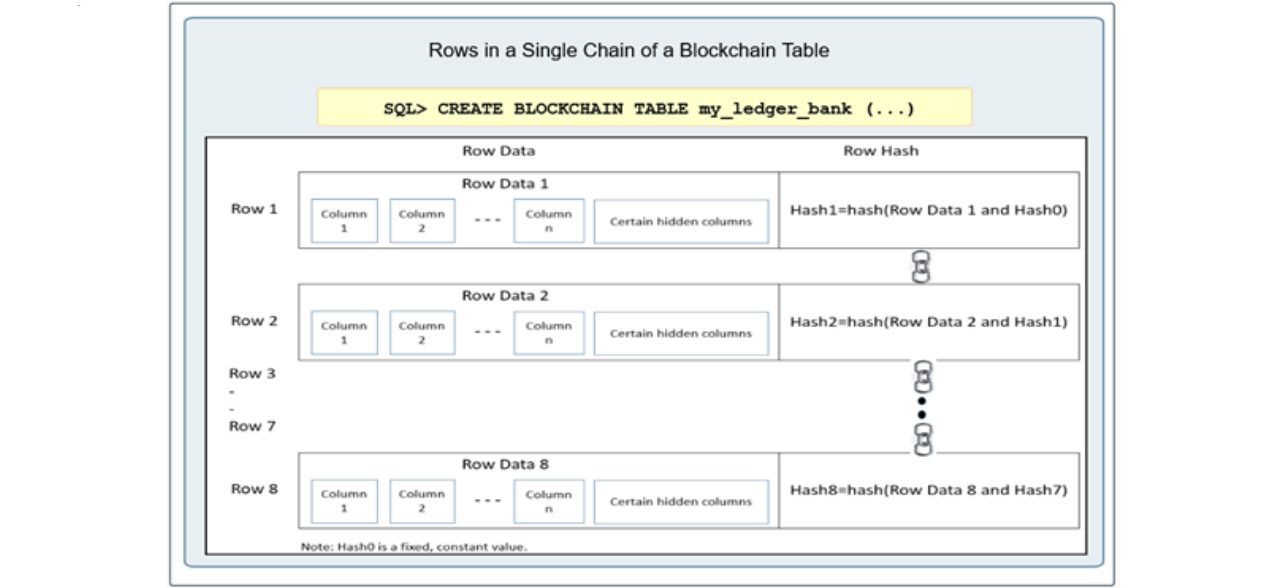
Oracle Blockchain Tables With Oracle Database 20c/21c the new feature Oracle Blockchain Tables has been introduced. Blockchain Tables enable Oracle Database users to create tamper-resistant data management without distributing a ledger across multiple parties. Database security can be improved by using Blockchain Tables to avoid user fraud and administrator fraud as well. One of the main characteristics of Oracle Blockchain… 

Upgrade to Oracle 19c – performance issue

In this blog I want to introduce you to a workaround for a performance issue which randomly appeared during the upgrades of several Oracle 12c databases to 19c I performed for a financial services provider. During the upgrades we ran into a severe performance issue after the upgrades of more than 40 databases had worked just fine. While most of… 

Oracle ACFS: “du” vs. “df” and “acfsutil info”

By Franck Pachot . This is a demo about Oracle ACFS snapshots, and how to understand the used and free space, as displayed by “df”, when there are modifications in the base parent or the snapshot children. The important concept to understand is that, when you take a snapshot, any modification to the child or parent will [grid@cloud ~]$ asmcmd… 

Some myths about PostgreSQL vs. Oracle

By Franck Pachot . I originally wrote this as a comment on the following post that you may find on internet: https://www.2ndquadrant.com/en/blog/oracle-to-postgresql-reasons-to-migrate/ but my comment was not published (many links in it… I suppose it has been flagged as spam?) so I put it there. You should never take any decision on what you read on the internet without verifying.… 

What is a serverless database?

By Franck Pachot . After reading the https://cloudwars.co/oracle/oracle-deal-8×8-larry-ellison-picks-amazons-pocket-again/ paper, I am writing some thoughts about how a database can be serverless and elastic. Of course, a database needs a server to process its data. Serverless doesn’t mean that there are no servers. Serverless as not waiting for server provisioning The first idea of “serverless” is about provisioning. In the past… 

Migrating From Oracle Non-CDB 19c to Oracle 20c

By Mouhamadou Diaw With Oracle 20c, the non-multitenant architecture is no longer supported. So, people will have to migrate their databases to container if they want to use Oracle 20c. There are many methods to transform a non-cdb database to a pluggable one. -Datapump -Full Trabsportable Tablespaces -Plugging non-cdb database , upgrade the plugged database and then convert -Upgrading the… 

Oracle disables your multitenant option when you run on EC2

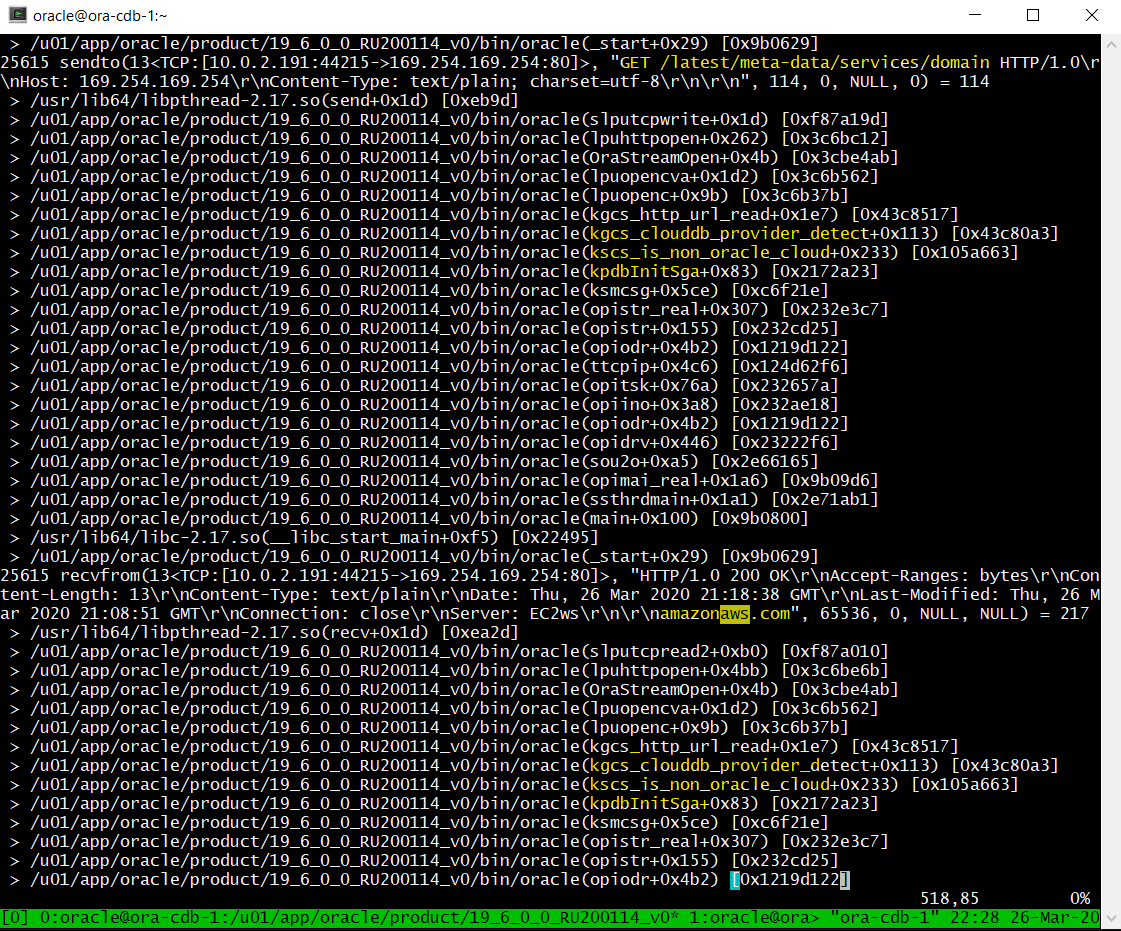
I have installed Oracle 19.6 on an EC2 for our Multitenant Workshop training. And of course, during the workshop we create a lot of PDBs. If you don’t have paid for the Enterprise Edition plus the Multitenant Option you can create at most 3 pluggable database. But with this option you can create up to 252 pluggable databases. Does it… 

Oracle 19c : Point-In-Time Recovery in a PDB

By Mouhamadou Diaw Point-In-Time Recovery is also possible in a multitenant environment. As in Non-CDB, a recovery catalog can be used or not. In this blog we will see how to recover a dropped tablespace in a PDB. We will also see the importance of using a recovery catalog or not. A PITR of a PDB does not affect remaining… 

ATP vs ADW – the Autonomous Database lockdown profiles

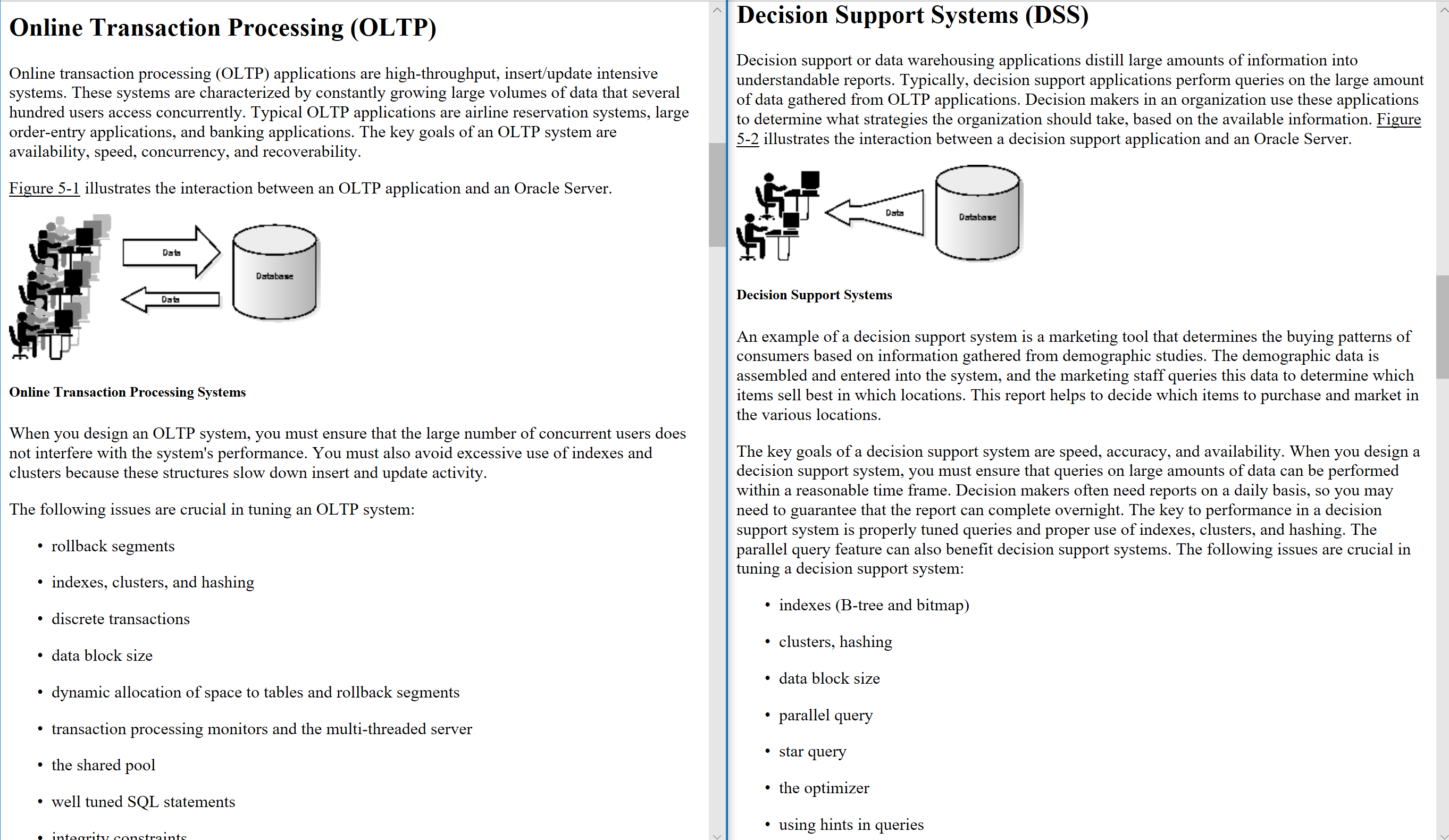
By Franck Pachot . The Oracle database has always distinguished two types of workloads: transactional (OLTP) and datawarehouse (VLDB, DWH, DSS, BI, analytics). There is the same idea in the managed Oracle Cloud with two autonomous database services. To show how this is old, here is how they were defined in the Oracle7 Tuning Book: The definition has not changed…