Skip to content

Oracle 19c

ODA X8-2: the new generation

Introduction ODA X7-2 marked the maturity of the Oracle Database Appliance evolution, with 3 models suitable for nearly all customers using Oracle databases. The X7-2M was my favorite, with a lots of cores available (and restrainable), enough memory for dozens of databases, and strong storage performance and capacity (with a maximum of 50TB RAW NVMe). And taking up only 1U… 

RMAN in a Multitenant Environment

By Mouhamadou Diaw The Oracle Multitenant architecture came with Oracle 12c a few years ago. For people usually working with traditional Non-CDB database it might be confusing the first time to do Backup and Recovery with pluggable databases (PDBs) In this document we are trying to explain how to use RMAN backup and recovery in a multitenant environment for an… 

dbvisit 9: Automatic Failover

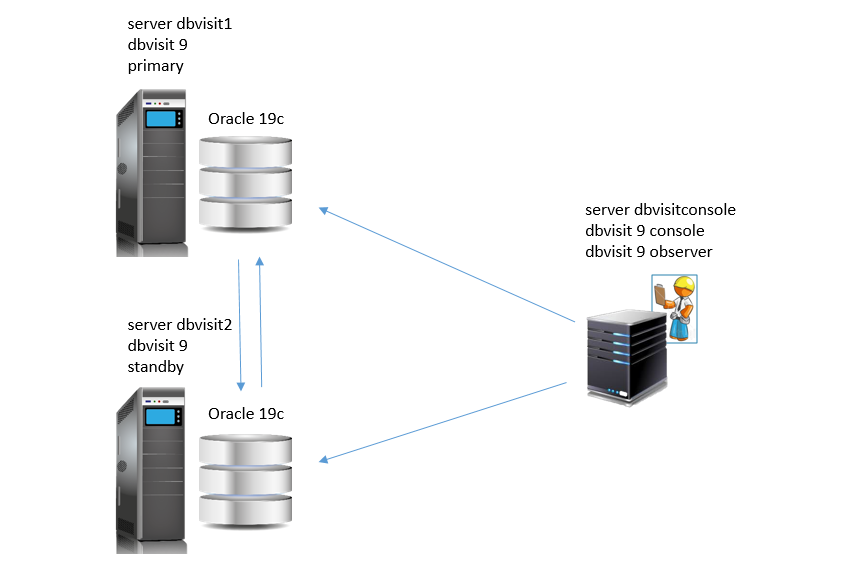
By Mouhamadou Diaw dbvisit 9 is released since a few months. And one new feature I tested is the Automatic Failover. In this blog I suppose that dbvisit 9 is already installed and that the standby database is already created. Indeed I will not describe nor dbvisit installation neither the standby creation as it is the same as the previous… 

Oracle 19C : Exporting and Importing Broker Configuration

By Mouhamadou Diaw Up to Oracle 19c, there was no automatic way to backup the configuration of the broker. One solution was to manually copy all executed instructions in a file. With Oracle 19c, there is now the possibility to export and to import the configuration of the broker. Indeed the new EXPORT CONFIGURATION command will enable to save the… 

Oracle 19C : Dynamic Change of Fast-Start Failover Target

By Mouhamadou Diaw Oracle 19C is now available on premise. There are lot of new features. One for the Data Guard Broker is that now we can dynamically change the fast-start failover target to a specified member in the list without disabling the fast-start failover. I have tested this new feature and is describing this in this blog I am… 

OBUG 2019 – First event from Oracle Users Group in Belgium!

Introduction It’s the first edition of the Techdays, the Oracle community event in Belgium. This event happened in Antwerp these past 2 days, and a lot of speakers came from around the world to talk about their experience on focused subjects. Really amazing to heard such high-level conferences. And it was a great pleasure for me because I’ve been working… 

Configure AFD with Grid Infrastructure software (SIHA & CRS) from very beginning.

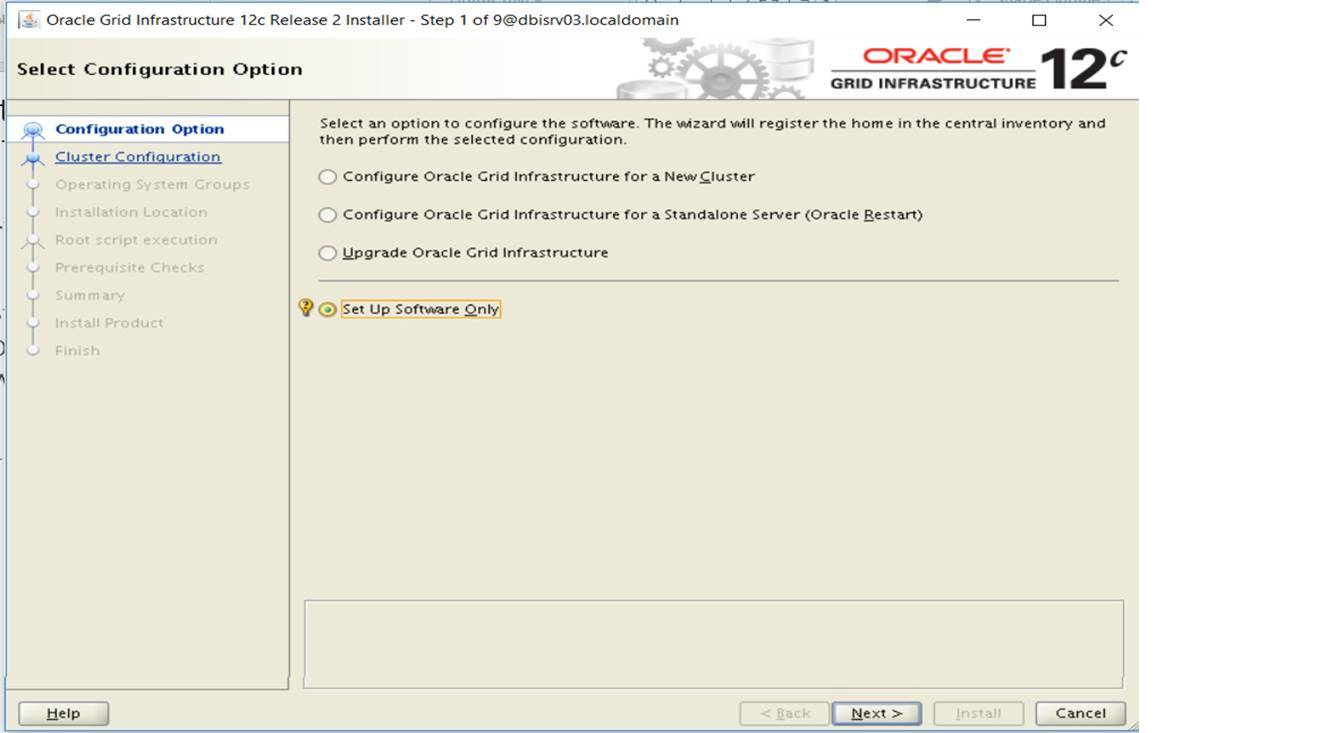
Introduction : Oracle ASM Filter Driver (Oracle ASMFD) simplifies the configuration and management of disk devices by eliminating the need to rebind disk devices used with Oracle ASM each time the system is restarted. Oracle ASM Filter Driver (Oracle ASMFD) is a kernel module that resides in the I/O path of the Oracle ASM disks. Oracle ASM uses the filter… 

Docker: efficiently building images for large software

By Franck Pachot . I see increasing demand to build a Docker image for the Oracle Database. But the installation process for Oracle does not really fit the Docker way to install by layers: you need to unzip the distribution, install from it to the Oracle Home, remove the things that are not needed, strop the binaries,… Before addressing those… 

PDB upgrade from 12c to 18c

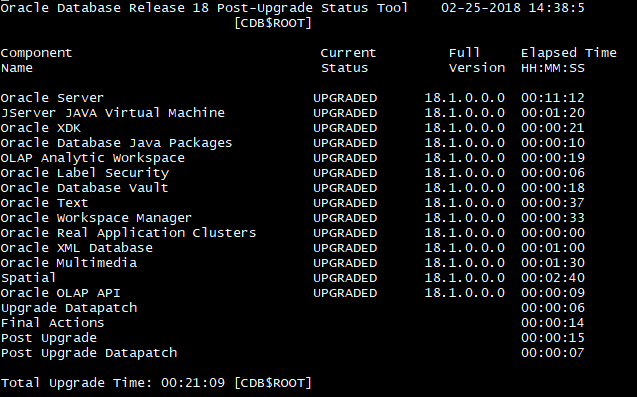
By Franck Pachot . Oracle 18c is out, in the Oracle Cloud, and the first thing I do with a new version is testing how long it takes to upgrade a previous version PDB by unplug/plug. Faster upgrade should be the benefit of having a slim dictionary where the system objects are reduced to metadata links and data links. However,… 

Quick history on database growth

By Franck Pachot . AWR collects segment statistics, and this can be used to quickly understand an abnormal database growth. Here is a script I use to get, from the AWR history, the segments that have grown by more than 1% of the database size, in one hour. First I must mention that this uses only the part of AWR… 

Postgres vs. Oracle access paths IX – Tid Scan

By Franck Pachot . In the previous post we have seen how Postgres and Oracle finds the table row from the index entry. It uses the TID / ROWID. I’ll focus on this access path and I will have covered all Postgres access paths to table data. Oracle ACCESS BY ROWID I start with Oracle because we already have seen…