Skip to content

Authentication

MongoDB OIDC authentication with Okta

Since version 7.0.11, MongoDB natively supports OpenID Connect (OIDC) authentication. This move was part of MongoDB’s cloud strategy, since cloud environments use OIDC a lot for authentication and authorization. In version 8.0, MongoDB deprecated LDAP authentication and authorization, making it clear that OIDC is the future for MongoDB authentication. In this blog, I will present how to set up OIDC… 

Setting up TLS encryption and authentication in MongoDB

When securing a MongoDB deployment, protecting sensitive data is essential. MongoDB supports encryption throughout the lifecycle of the data, with three primary types of data encryption : Among these, encryption in transit is fundamental : it protects data as it moves between your application and the database. In MongoDB, this is achieved through TLS (Transport Layer Security), which ensures that… 

Manage Feathers.js authentication in Swagger UI

In addition to my previous articles Add a UI to explore the Feathers.js API and Add authentication in a Feathers.js REST API, today, I will explain how to manage Feathers.js authentication in Swagger UI and make it simple for our users. After enabling authentication on API methods, as a result, using Swagger UI for testing is difficult, if not impossible.… 

Add authentication in a Feathers.js REST API

Following on from my previous articles: Create REST API from your database in minute with Feathers.js, and Add a UI to explore the Feathers.js API, today I want to add authentication in my Feathers.js REST API. Creation, update and delete operations will be authenticated, while read will remain public. First step: add authentication to my application I’m using the code… 

How to keep your Prometheus ecosystem secure

Prometheus is a popular open-source monitoring system that helps track and alert for various applications. However, regarding security, there are some essential things to consider. Prometheus server, for instance, does not provide authentication or TLS encryption out of the box, meaning anyone accessing the server’s HTTP endpoints can access all of our time-series data. So, what solutions are available?One solution… 

Kubernetes SSO using Azure AD: The Production Solution

In my previous blog I’ve detailed the tests we did regarding SSO in Kubernetes using Azure AD. I’ve described all the steps of our research on this topic in order to give our readers a real idea of how implementing a new solution happens. It is not a straight forward process and you have to explore several leads, do a… 

Kubernetes SSO using Azure AD

I’ve worked on this project to authenticate Kubernetes users against Azure AD and so have Single Sign-On (SSO). That was a long journey on a rocky road and it’s worth summarising in this blog all the steps required to make it done. I didn’t find the Kubernetes and Azure documentation helpful enough to make it work straight away. I had… 

Password rolling change before Oracle 21c

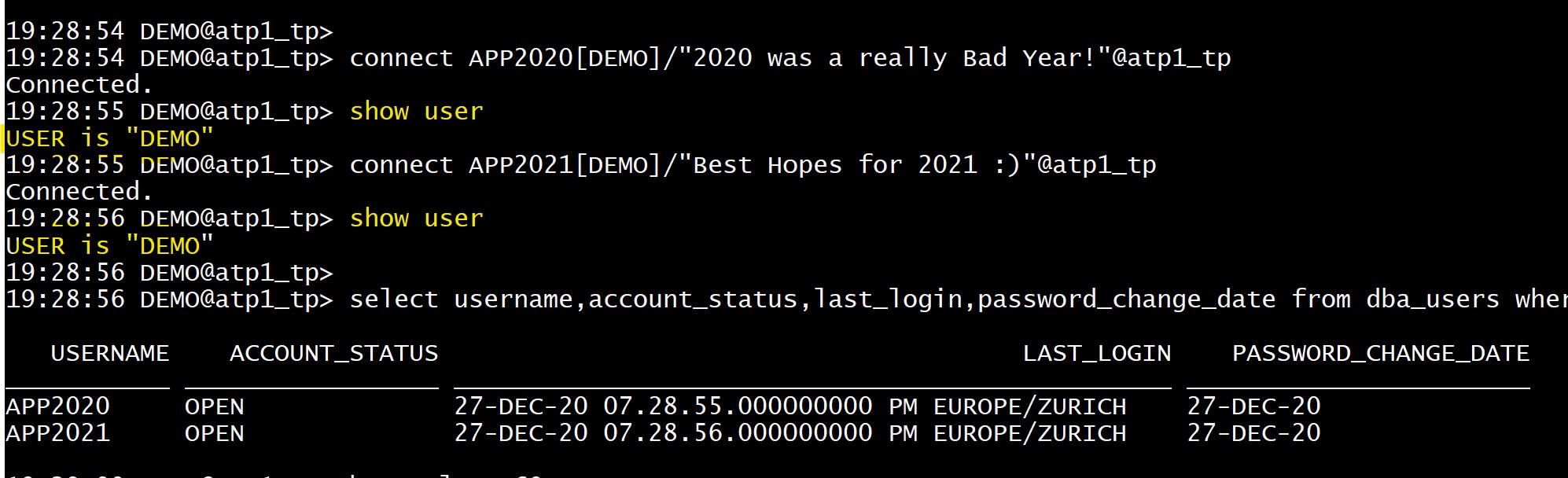
By Franck Pachot . You may have read about Gradual Password Rollover usage from Mouhamadou Diaw and about some internals from Rodrigo Jorge. But it works only on 21c which is only in the cloud, for the moment, in Autonomous Database and DBaaS (but here I’ve encountered some problems apparently because of a bug when using SQL*Net native encryption). But… 

Documentum – D2-Smartview class cast exception

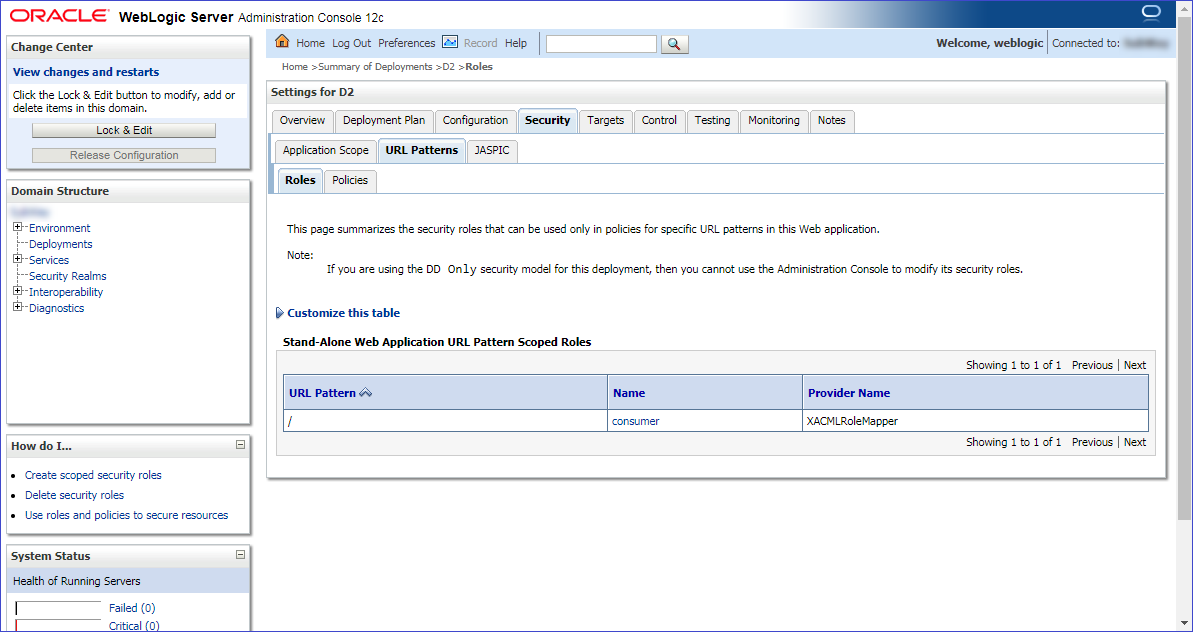
D2-Smartview is a new UI that OpenText now provides starting with the version 16 of D2. It’s a lightweight UI that can perform some of the actions that D2 does. The list of features will probably increase with time but at the moment, I guess it’s more for simple users that have very basic needs, consumer like roles mainly. An… 

WebLogic – SSO/Atn/Atz – Infinite loop

This blog will be the last of my series around the WebLogic SSO (how to enable logs, 403 N°1, 403 N°2) which I started some weeks ago. Several months ago on a newly built High Availability Environment (2 WebLogic Servers behind a Load Balancer), an application team was deploying their D2 Client as always. After the deployment, it appeared to… 

WebLogic – SSO/Atn/Atz – 403 Forbidden, another issue

Earlier today, I posted another blog with almost the same title but the similarities stop here. The thing is that when you access your application, there aren’t much error codes possible so if there is an issue, it’s often the same generic message that is being displayed on the browser. To get some background on the issue that I will… 

WebLogic – SSO/Atn/Atz – 403 Forbidden, a first issue

In a previous blog, I explained how it was possible to enable the SSO/Atn/Atz (SSO/Authentication/Authorization) debug logs in order to troubleshoot an issue. In this blog, I will show the logs generated by an issue that I had to deal with last month at one of our customers. This issue will probably not occur very often but it is a…