I recently had the opportunity to attend FabCon 2026 in Barcelona, Microsoft’s flagship event dedicated to Microsoft Fabric data, analytics, Artificial Intelligence and and SQL Server. As a Technology Leader data analytics and quality, attending events like FabCon enables staying ahead of the rapidly evolving Microsoft ecosystem and understanding how new innovations can create business value for our customers.
This year’s event clearly demonstrated one thing: Artificial Intelligence is no longer an isolated capability. It is becoming an integral and important part of every data and analytics process within Microsoft Fabric.
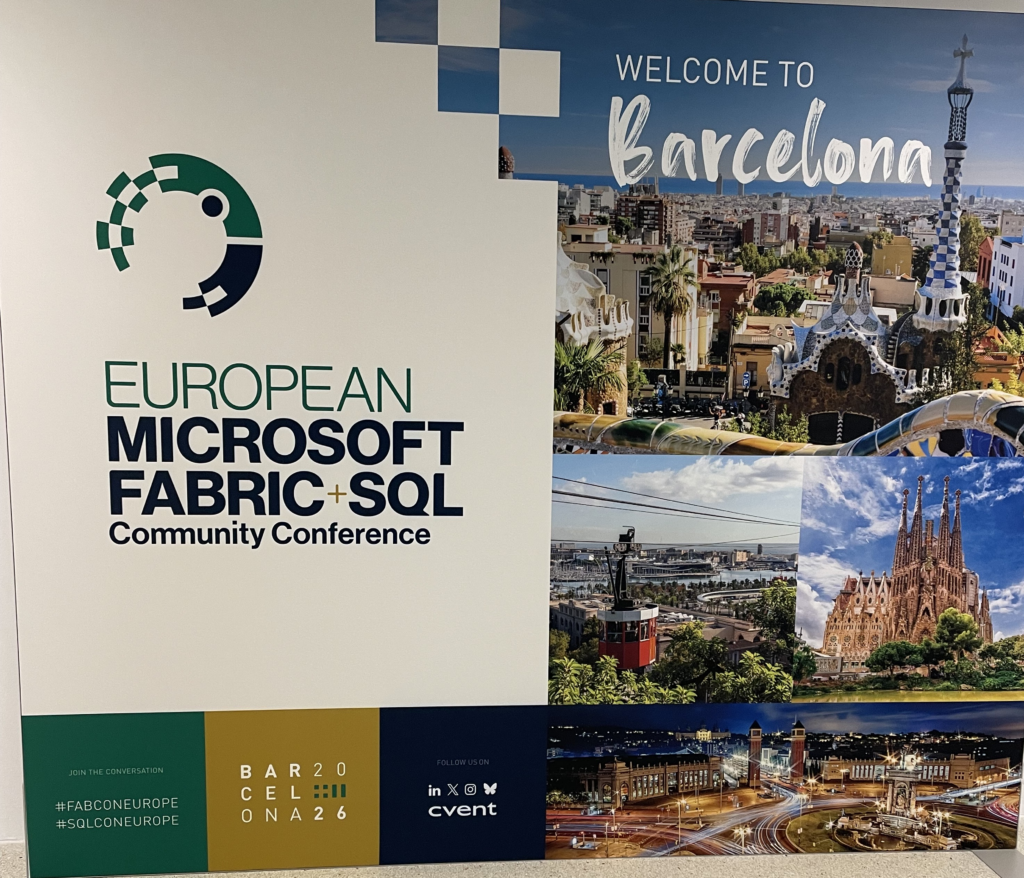

As usually during such big event, bringing together about 5000 users, community members and interested people, Microsoft introduced a significant enhancements or new features.
Some of them are :
- Azure SQL Server local
- AI Powered database operations
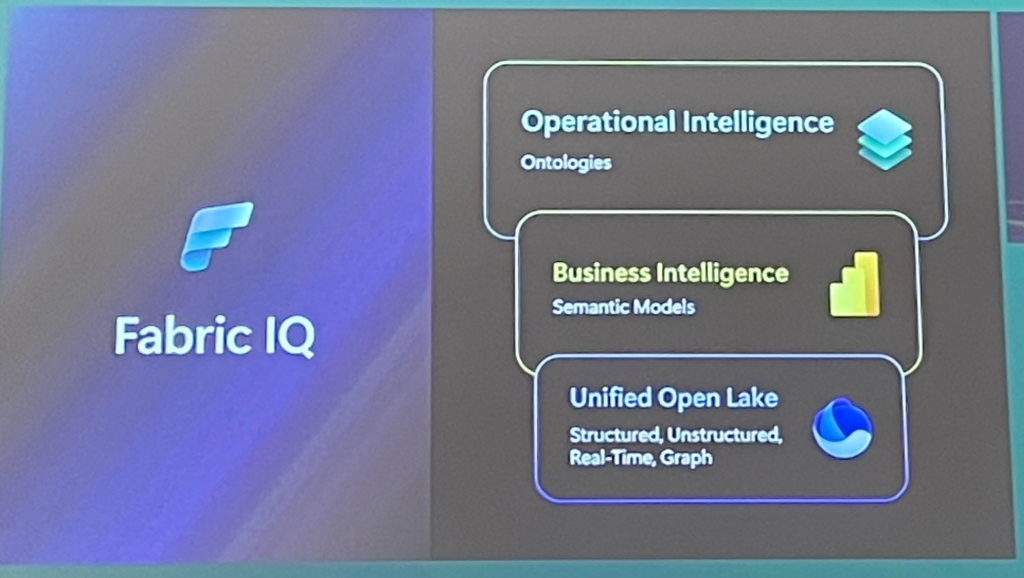
- Fabric IQ
- Fabric deployment plan
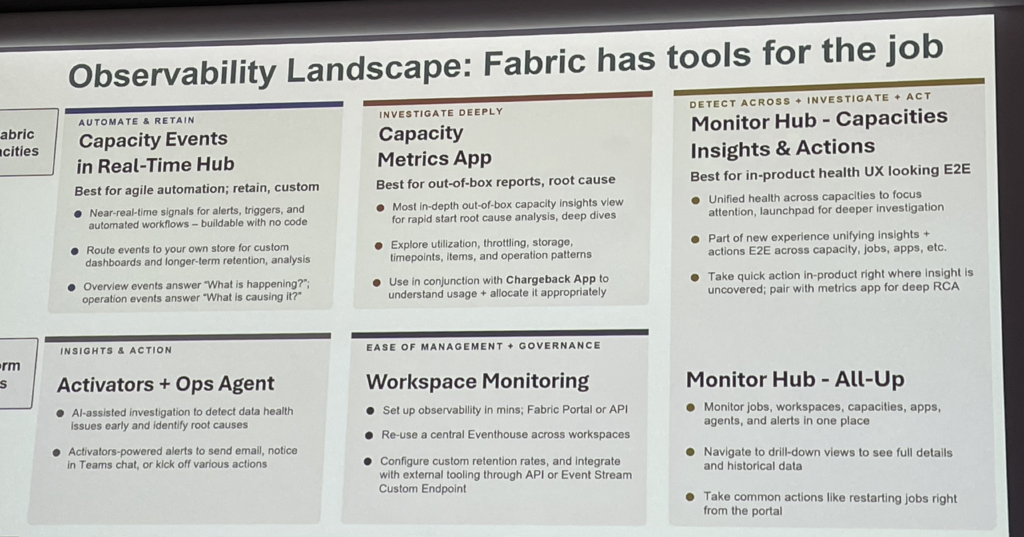
- Observability in Fabric
- Fabric catalog new capabilities with AI and policies
- Fabric on-demand billing F0
- Planning in Fabric
- Modern report builder in Power BI
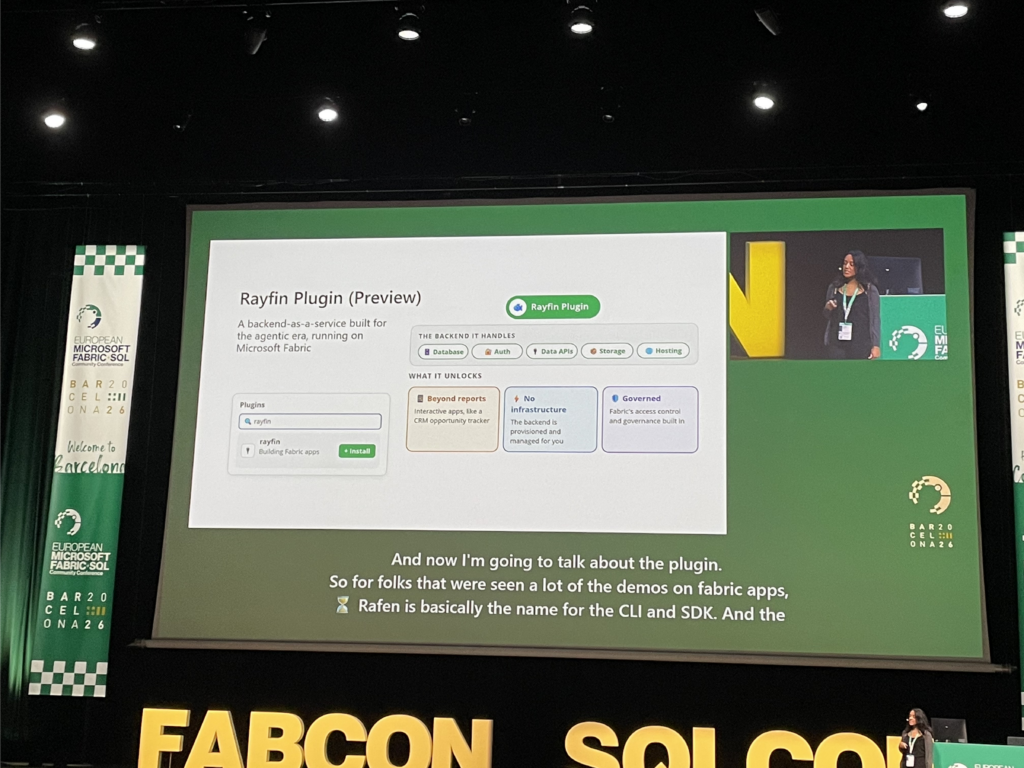
- App development in Fabric
- Warehouse GPU accelerator
- Ontology in Fabric
Microsoft Fabric Continues to Evolve Rapidly
Since its introduction, Microsoft Fabric has established itself as a unified platform that brings together data integration, data engineering, data warehousing, real-time analytics, and business intelligence. .
The focus is no longer only on consolidating data workloads into a single platform. The emphasis has shifted toward making data more intelligent, more accessible, and more actionable through AI-powered experiences.
One of the most striking themes throughout the conference was the pervasive integration of AI capabilities across the Fabric ecosystem.
It is helping bridge that gap by allowing users to interact with the data using natural language, automate repetitive tasks, and accelerate analytics workflows.
Some key trends presented during the event included:
- AI-assisted data preparation and transformation
- Automated insight generation
- Natural language querying
- AI-driven report creation and enhancement
- Intelligent monitoring and optimization of data platforms
The objective is clear: reduce complexity and enable both technical and business users to extract value from data faster.
The Rise of AI Agents
We know that AI is able to make our live easier to helping us to setup things much quicker.
We use it today to find information to setup things more quickly.
Perhaps the most exciting topic discussed during the conference was the emergence of AI Agents.
Moving beyond traditional copilots, AI Agents are designed to perform tasks autonomously, orchestrate processes, and interact with multiple systems while leveraging enterprise data securely and ensure and guide AI engine to respond with correct answer.
Within the Microsoft ecosystem, AI Agents have the potential to:
- Analyze business data proactively
- Generate recommendations and insights
- Trigger workflows and business actions
- Support decision-making processes
- Interact with users using natural language
This evolution represents a significant step toward intelligent business applications where AI is not only assisting users but actively contributing to operational efficiency and innovation.
Expand you data insight boundaries with ontology
This new Fabric IQ feature is also present throughout the conference. It enables you to create your business model from your data used by AI agent as your business knowledge layer.
You can see it as a data models reconciliation avoiding AI agent to be confused by identities that are named differently across the multitude of data models you can have.
In y shell Fabric ontology is about :
- Improving natural-language querying.
- Providing better context for AI-generated insights.
- Standardizing business metrics and attributes across reports.
- Reducing ambiguity when multiple data sources contain similar information
App deployment
Fabrics enable now to deploy App to provide an application layer instead of creating reports and dashboards. By only prompting and giving the AI you app specifications you can easily create applications for your end users to provide better data insight experience. You can as well integrate Fabric data agents within your app to provide natural-language data analysis capabilities to your users.
What about security and governance
Even with all this new AI capabilities, AI will only acces what users are authorized to see. In other words, AI agent never bypass fabric permissions you have defined.
But the risk that users using with AI agents send business data outside their tenant is increasing. Therefore data governance is essential before adopting broadly AI within an organization :
- Purview policies
- Access restrictions
- Data classification
- Workspace segregation
- Role-based security
- RLS and OLS
The take away
AI is a reality we cannot ignore and bypass we have to adopt it quickly, and the evolution and capabilities are amayzing it can make our lives easier and has a real business added value.
There is always a but…don’t forget the governance…don’t forget the to manage and control the AI…and constantly auditing deeply you environment becomes more and more essential. And you know what, AI in this field will be you best friend again.
Stay alert and tune
![Thumbnail [60x60]](https://www.dbi-services.com/blog/wp-content/uploads/2022/09/CHC_web-min-min-scaled.jpg)
![Thumbnail [90x90]](https://www.dbi-services.com/blog/wp-content/uploads/2022/09/DDI_web-min-scaled.jpg)
![Thumbnail [90x90]](https://www.dbi-services.com/blog/wp-content/uploads/2022/08/STH_web-min-scaled.jpg)
![Thumbnail [90x90]](https://www.dbi-services.com/blog/wp-content/uploads/2022/08/ATR_web-min-scaled.jpg)
![Thumbnail [90x90]](https://www.dbi-services.com/blog/wp-content/uploads/2022/10/STS_web-min-scaled.jpg)