Skip to content

Database

Everything our consultants learn while running databases for customers: Oracle, PostgreSQL, SQL Server, MySQL, MariaDB, MongoDB and Delphix. Expect hands-on posts about installation, day-to-day administration, backup and recovery, performance tuning, replication and upgrades.

Windows Server 2016: Introducing stretch cluster functionality

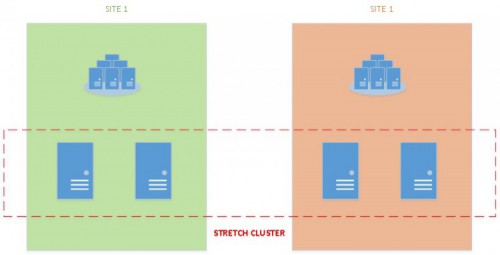
Let’s continue with the new high available functionality shipped with the next Windows version. In my previous blog, I talked about the new site awareness feature that provides more flexibility to configure failover resources priorities and more granular heartbeat threshold as well by introducing the new site concept. This time, we’ll talk about stretch cluster. What’s that? Let’s introduce the… 
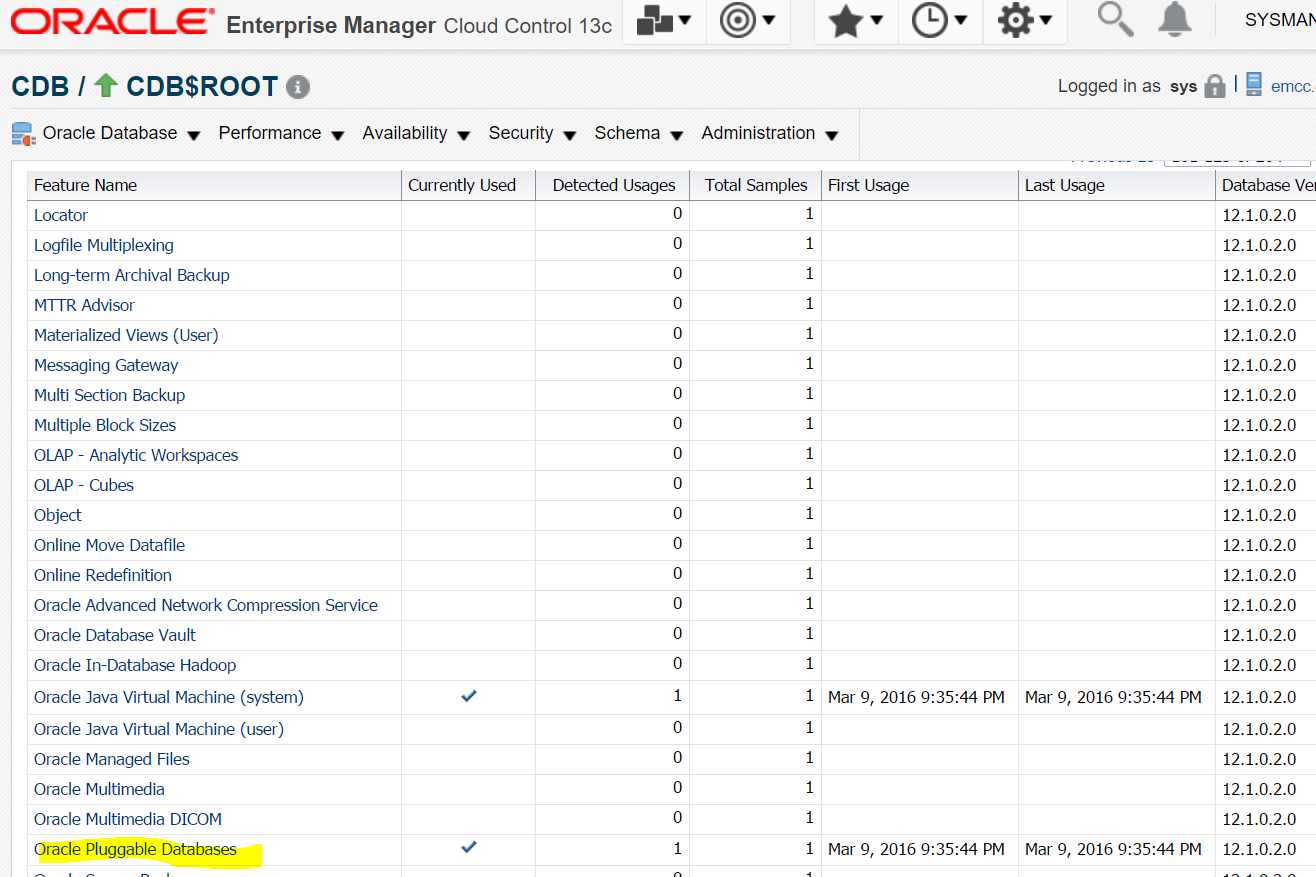
How to check Multitenant Option feature usage

By Franck Pachot . Matching the Feature Usage Statistics to licensed options is not always easy. And once a feature usage is recorded, it is usually stored definitively. Let’s see how the multitenant option is recorded there. exec_db_usage_sampling I have a single-tenant database with only one user pluggable database: 16:19:20 SQL> show pdbs   CON_ID CON_NAME OPEN MODE RESTRICTED ———-… 

Install PL/JAVA in PostgreSQL 9.5.1

Some time ago I blogged about how to install PL/JAVA in Postgres Plus Advanced Server 9.5. This resulted in an interesting comment from the maintainer of PL/Java. After exchanging some emails and some more testing it turned out that there really is an issue with my build of PostgreSQL. I usually compile PostgreSQL from source and use the “–with-extra-version” flag… 

Configurer les “Bonnes Pratiques” de Windows Server avec PowerShell

PowerShell est un outil en ligne de commande dorénavant intégré à tous les environnements Windows. Cet outil est extrêmement puissant, et avec le vent en poupe, puisqu’il permet de simplifier l’exécution et l’automatisation des tâches de configuration et d’administration. Dans mon travail d’Administrateur de bases de données, j’effectue de nombreux Audits d’environnements afin de vérifier, par exemple, si les bonnes… 

LVM : How to extend a Volume Group

In this article we’ll going to explore on how to extend a partition which resides in a Logical Volume. LVM (Logical Volume Manager) is a great tool for managing your storage devices on a Linux host. Lets start with some vocabulary. In the order of the lowest layer (hard disks) towards the highest layer (the file system): Your hard disks… 

Linux quick tip – What is the local time in Kolkata?

Quite easy if you know how to do it from the shell (I didn’t know it 🙂 ): dwe@dwe:~$ TZ=’Asia/Kolkata’ date Tue Mar 22 19:12:25 IST 2016 You can use “tzselect” to list the available combinations and get the local time for whatever you want: dwe@dwe:~$ tzselect Please identify a location so that time zone rules can be set correctly.… 

RAC to RON then RON to RAC and singleton service

By Franck Pachot . You will probably never do it, but let’s imagine you have a RAC database, policy managed, with singleton service. Then you convert it to RAC One Node and you change your mind and convert it back to RAC. Be careful, the singleton services are converted to uniform ones when converting to RAC My RACDB database is… 

SQL Server 2016: new database-scoped configuration parameters part 2

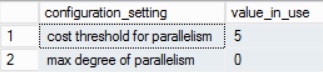
In this blog post, let’s continue with other database-scoped options shipped with the SQL Server 2016 RC0. We will first begin with the first one and my preferred option: setting the MAXDOP value for an individual database. I really hope that applications like SharePoint that requires to limit the MAXDOP to 1 at the server level will use this kind… 

SQL Server 2016: new database-scoped configuration parameters

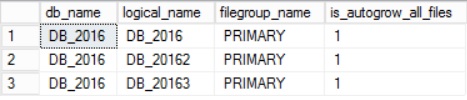
Do you remember new capabilities shipped with SQL Server 2016 CTP2 about tempdb? In this blog post, I talked about well-known trace flags 1117 and 1118 that become useless for tempdb because their related effects are automatically applied to tempdb. Another interesting news that comes from the new SQL Server 2016 RC0 is the use of new database-scoped parameters AUTOGROW_SINGLE_FILE… 

RMAN 12c Push and Pull duplicate explained

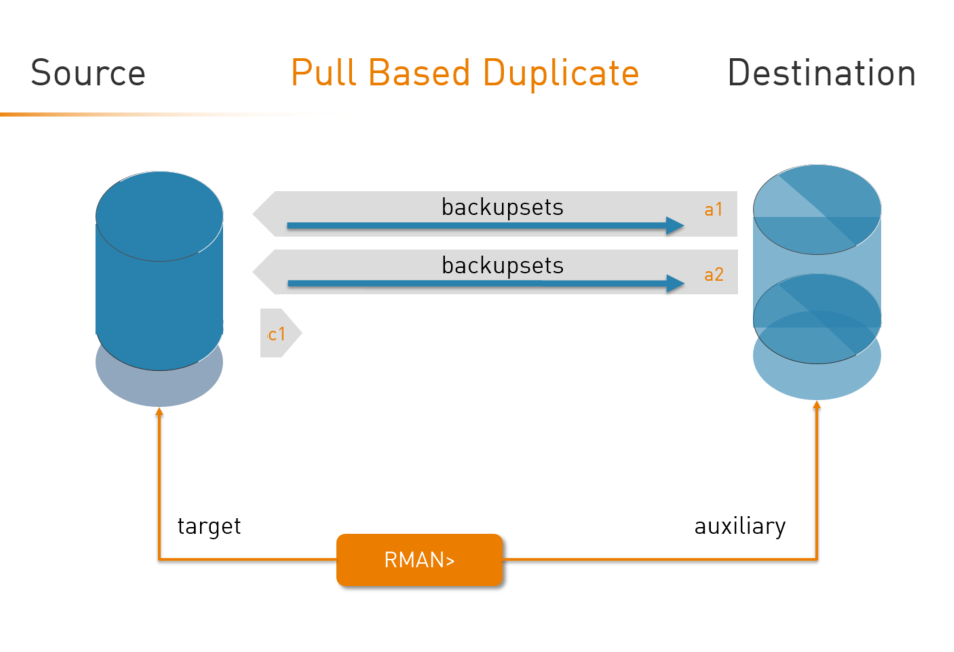
By Franck Pachot . Oracle Database 12c introduced the ‘restore from service’ where you can restore and recover by requesting backupsets from the source. With that feature, the duplicate from active can work in the opposite way: instead of asking the source (target) to send the files to the destination (auxiliary) now the destination can do all the job. Let’s… 

Getting started with Ansible – Preparations

When your infrastructure landscape becomes larger and larger you definitely need a tool which helps you in managing your servers, no matter if pḧysical or virtual, running in the cloud or not. One tool (many others are around) which assists you in provisioning, configuration management and mass deployment is Ansible. If you look at the man page you can find… 

Windows Containers: Migration

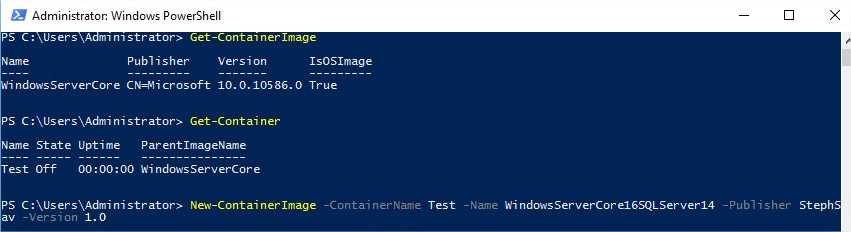
In my last blog post (here), I explained how to configure a host for Windows Container as well as how to use some Windows Container cmdlets. Finally I demonstrated how to create a container with a SQL Server 2014 instance. In this blog post, I will continue by explaining how to migrate the container I just created. First of all,…