Skip to content

Database

Everything our consultants learn while running databases for customers: Oracle, PostgreSQL, SQL Server, MySQL, MariaDB, MongoDB and Delphix. Expect hands-on posts about installation, day-to-day administration, backup and recovery, performance tuning, replication and upgrades.

Postgres vs. Oracle access paths IX – Tid Scan

By Franck Pachot . In the previous post we have seen how Postgres and Oracle finds the table row from the index entry. It uses the TID / ROWID. I’ll focus on this access path and I will have covered all Postgres access paths to table data. Oracle ACCESS BY ROWID I start with Oracle because we already have seen… 
Improving Statspack Experience

By Franck Pachot . I’ve published a few month ago an article in the UKOUG OracleScene magazine on Improving Statspack Experience: quick setup script, changing settings, filling Idle Events,etc. In the article, I used dbms_job to schedule the snapshots, because I have this script for years and never took the time to do it with dbms_scheduler. Thanks to Nicolas Jardot… 

Bequeath connect to PDB: set container in logon trigger?

By Franck Pachot . There are little changes when you go to multitenant architecture and one of them is that you must connect with a service name. You cannot connect directly to a PDB with a beaqueath (aka local) connection. This post is about a workaround you may have in mind: create a common user and set a logon trigger… 

Get trace file from server to client

By Franck Pachot . The old way to get a user dump trace file, for sql_trace (10046), Optimizer compilation trace (10053), lock trace (10704), Optimizer execution trace (10507),… is to go to the server trace directory. But if you don’t have access to the server (as in the ☁) the modern (12cR2) way is to select from V$DIAG_TRACE_FILE_CONTENTS. Before everybody… 

Postgres vs. Oracle access paths VIII – Index Scan and Filter

By Franck Pachot . In the previous post we have seen a nice optimization to lower the consequences of bad correlation between the index and the table physical order: a bitmap, which may include false positives and then requires a ‘recheck’ of the condition, but with the goal to read each page only once. Now we are back to the… 

Replicating specific tables in PostgreSQL 10 Beta with mimeo

By Mouhamadou Diaw In this blog I am going to test the extension mimeo with PostgreSQL 10 beta. Mimeo is a replication extension for copying specific tables in one of several specialized ways from any number of source databases to a destination database where mimeo is installed. In our configuration we are going to replicate data on a same server… 

ODA X6 2S 2M 2L HA: Small Medium Large and High Availability

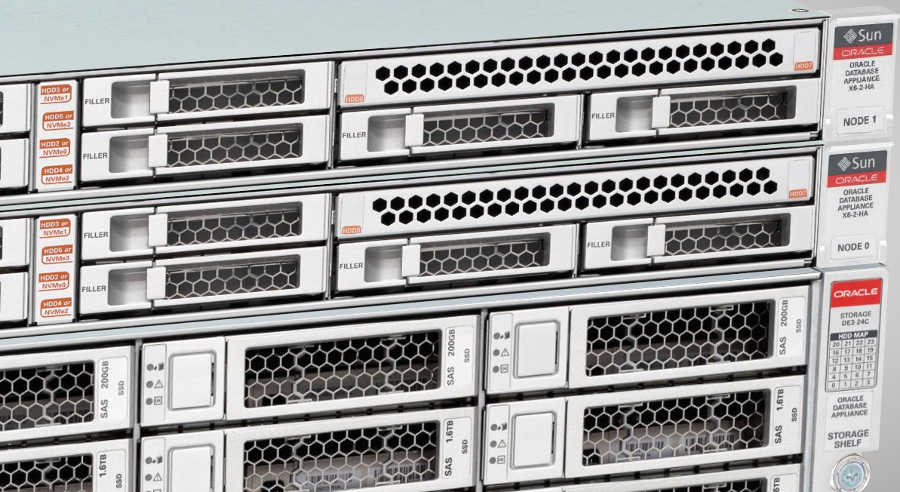
By Franck Pachot . There are 4 models of Oracle Database Appliance with the new ODA X6 which is for the moment the latest ODA hardware version. One is similar to the previous X5-2 one, and 3 smaller ones known as ODA Lite. They are 1 year old already, here is a small recap of the differences and links to… 

Postgres vs. Oracle access paths VI – Index Scan

By Franck Pachot . In the previous post my queries were still reading the indexed column only, from a table which had no modifications since the last vacuum, and then didn’t need to read table pages: it was Index Only Scan. However, we often need more columns than the ones that are in the index. Here is the Index Scan… 

SQL Server on Linux: Introduction to DBFS experimental tool

A couple of months ago, Microsoft announced two additional command line tools for SQL Server that are mssql-scripter and DBFS. The latter has drawn my attention because it exposes live data from SQL Server DMVs as virtual files in a virtual directory on Linux operating system. Microsoft has probably taken another positive step in the SQL Server’s adoption on Linux.… 

Postgres vs. Oracle access paths V – FIRST ROWS and MIN/MAX

By Franck Pachot . We have seen how an index can help to avoid a sorting operation in the previous post. This avoids a blocking operation: the startup cost is minimal and the first rows can be immediately returned. This is often desired when displaying rows to the user screen. Here is more about Postgres startup cost, Oracle first_rows costing,…