Skip to content

Clemens Bleile

Clemens Bleile has more than 30 years of IT experience, including 13 years in Oracle Support and 15 years in Oracle Consulting. He specializes in Oracle Database performance tuning and highly available, cost-efficient database architecture design. He holds Oracle Certified Professional (11g, 12c) and Oracle Certified Expert for Performance Management and Tuning credentials. Prior to dbi services, he managed the EMEA Database Performance team at Oracle Global Customer Support Services. Clemens holds a Master's degree in Business Information Systems from the Fachhochschule Furtwangen, Germany.

68 posts since February 2016

Creating archived redolog-files in group dba instead of oinstall

Since Oracle 11g files created by the database belong by default to the Linux group oinstall. Changing the default group after creating the central inventory is difficult. In this Blog I want to show how locally created archived redo can be in group dba instead of oinstall. One of my customers had the requirement to provide read-access on archived redo… 
Oracle 19c

Oracle 19c has been released quite a while ago already and some customers already run it in Production. However, as it is the long term supported release, I thought I blog about some interesting information and features around 19c to encourage people to migrate to it. Download Oracle 19c: https://www.oracle.com/technetwork/database/enterprise-edition/downloads or https://edelivery.oracle.com (search e.g. for “Database Enterprise Edition”) Docker-Images: https://github.com/oracle/docker-images/tree/master/OracleDatabase… 

Restart a failed transportable tablespace import during a cross platform incremental backup migration

I’m currently working in a project to migrate a 11g-Datawarehouse-database from Solaris to Linux Intel (Endian-change). We do use the cross platform incremental backups method as described in My Oracle Support Note 1389592.1 for that. I.e. incremental backups are applied to database files and during the migration the recovered datafiles are attached to the target database via the transportable tablespace… 

Technical and non-technical sessions at the DOAG 2018

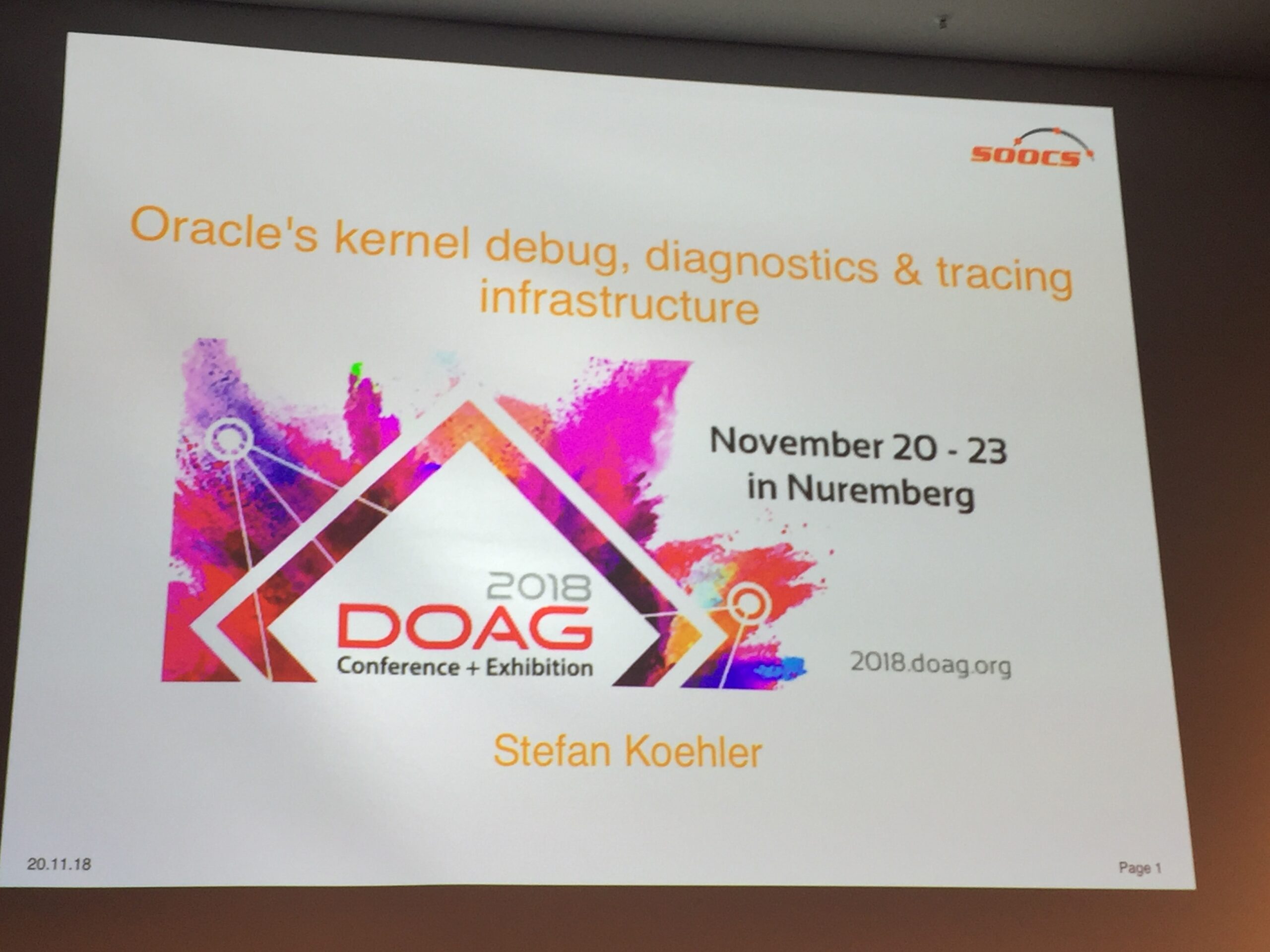
The amazing DOAG 2018 conference is over now. As every year we saw great technical as well as great non-technical sessions. What impressed me was the non-technical presentation “Zurück an die Arbeit – Wie aus Business-Theatern wieder echte Unternehmen werden” (back to work – how business theatres become real business company again) provided by Lars Vollmer. It was very funny,… 

Running PLSQL as SYSDBA through DEFINER-rights?

Recently I got an interesting request: The customer wanted to allow the application installation routine to create a guaranteed restore point without giving it all required privileges to do so. So the idea was to encapsulate creating and dropping a guaranteed restore point in a PLSQL package and granting the application owner the permission to execute the package. The problem… 

Restarting a failed transportable tablespace metadata import

I’m currently working in a project to migrate a Datawarehouse-database from Solaris to Linux Intel (Endian-change). We do use the cross platform incremental backups method as described in My Oracle Support Note 1389592.1 for that. I.e. incremental backups are applied to database files and during the migration the recovered datafiles are attached to the target database via the transportable tablespace… 

sqlplus and its column output

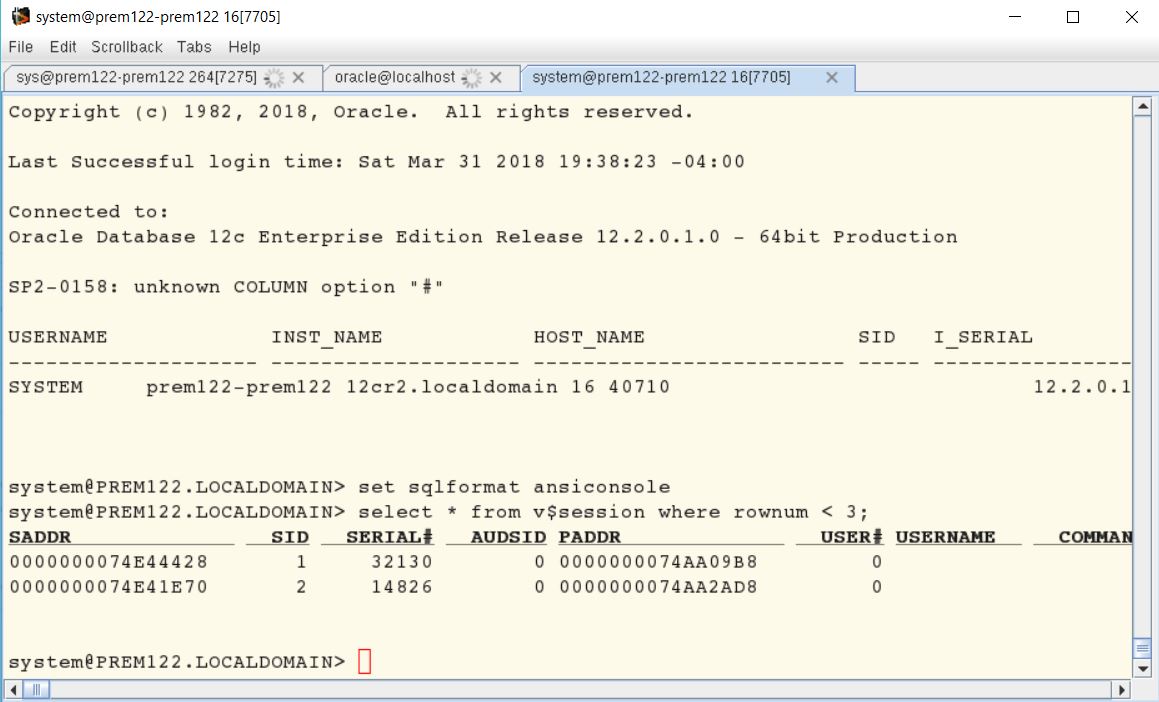
During tuning or normal DBA activities one of the most annoying things is sqlplus with its default column output when running queries. I.e. even after setting a linesize of 1000 and a pagesize of 1000 the output may look as follows in your preferred terminal emulation (putty here): Most people address this by using other tools like sqldeveloper (or sqlcl… 

Connect-times to the DB suddenly become very slow using sqlcl

I recently wrote a couple of sql-scripts which had to run on all of my customer’s DBs. The sql-scripts had to be started from a Linux-client, which does not have any Oracle client software installed. So I thought of using sqlcl (see http://www.oracle.com/technetwork/developer-tools/sqlcl/downloads/index.html), because there is no need to “install” something then. All I needed was an installed JRE on… 

CPUs: Cores versus Threads on an Oracle Server

When doing a performance review I often do talk with the DBA about the CPU utilization of the server. How reliable is the server CPU utilization with tools like top or the host CPU utilization in the AWR-report? E.g. on an Linux Intel x86-64 server with 8 Cores and 16 logical CPUs (Intel Hyperthreading), what does a utilization of 50%… 

Running the Oracle Client on a Raspberry Pi

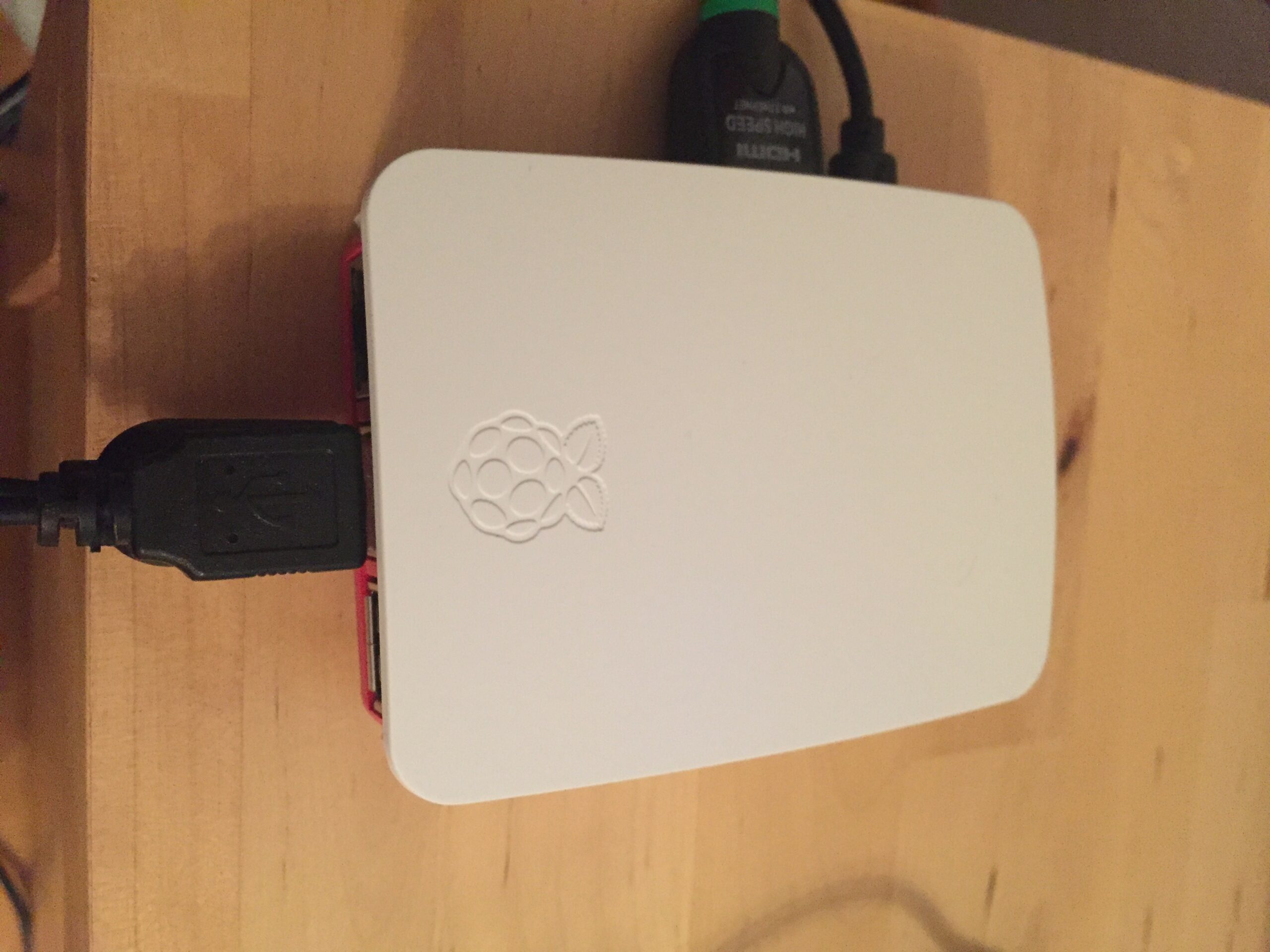
What are the possibilities to use a Raspberry Pi computer as an Oracle client? Besides other things I’ll show a possibility in this Blog to run the fat/thick Oracle Client on a Raspberry Pi! REMARK: All examples below were made with an Rasperry Pi 3 and the OS Raspbian, which can be downloaded from https://www.raspberrypi.org/downloads First of all what’s possible…