Skip to content

PDB

Oracle 18c clone PDB and Transparent Data Encryption

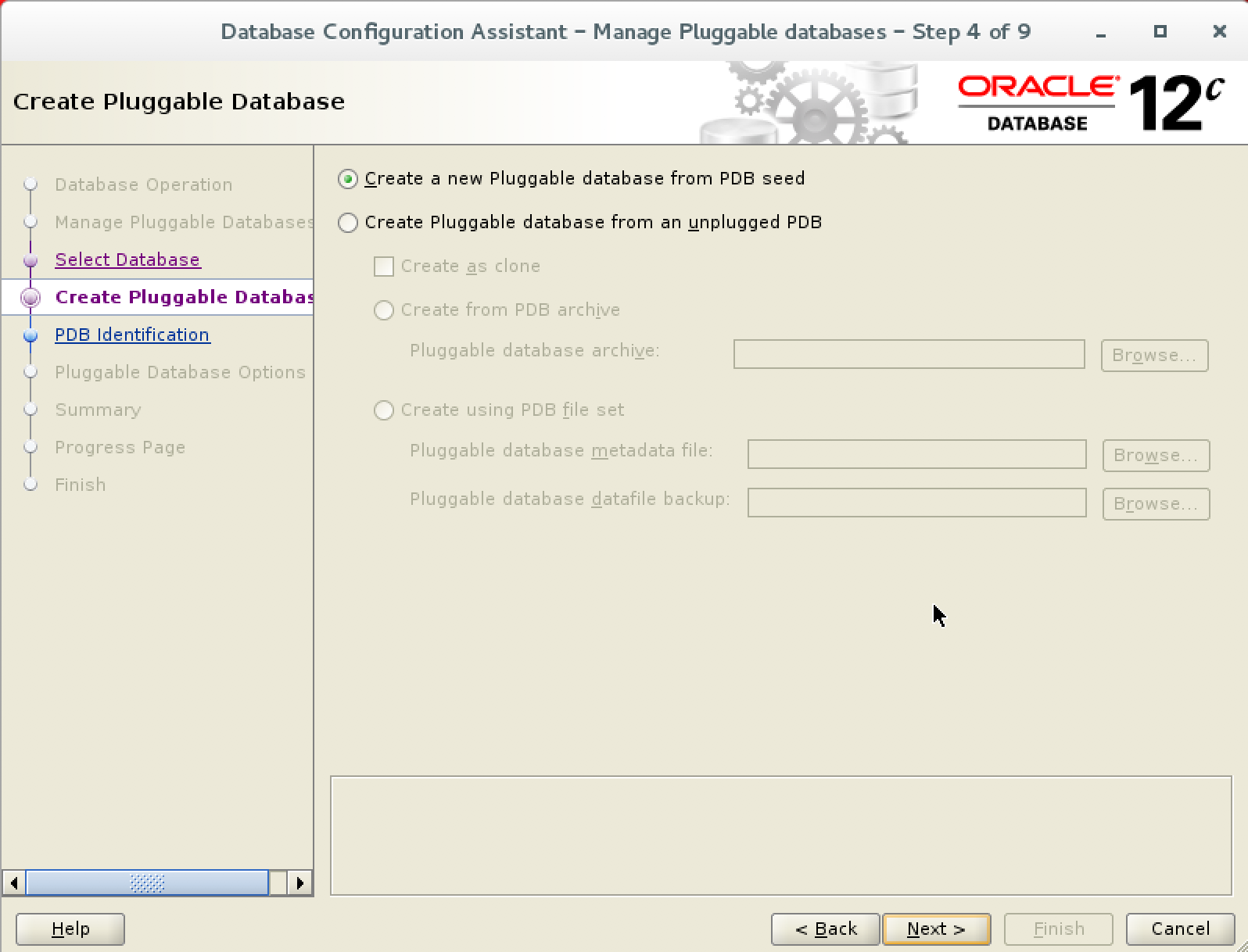
Let’s do some tests with the Oracle 18c new feature in creating PDB clone with DBCA. Unfortunately, this feature does not work when you have TDE enabled. Just to remember, with Oracle 12.2 we had the possibility to create PDBs with dbca just from PDBseed to from unplugged PDBs: Now in version 18c we can create PDBs from existing PDBs as… 
18c PDB switchover

By Franck Pachot . In multitenant, the recovery and availability are at CDB level. But customers asked for a switchover at PDB level so Oracle has done that in 18c, based on refreshable PDBs. For this test I have two multitenant database on an Oracle Cloud service in 18c: CDB1 and CDB2. The only special thing I did was disable… 

18c, Cloud First and Cloud Only features: think differently

By Franck Pachot . Remember the times when the Oracle Software features were the same on all platforms? Where Oracle databases could be ported to any relevant platform? Where we were able to try any feature, freely, by downloading the latest release software? Now we need to think differently. Because: The new software is released on Cloud first The major… 

Multitenant, PDB, ‘save state’, services and standby databases

By Franck Pachot . Creating – and using – your own services has always been the recommendation. You can connect to a database without a service name, though the instance SID, but this is not what you should do. Each database registers its db_unique_name as a service, and you can use it to connect, but it is always better to… 

12c Multitenant internals: PDB_PLUG_IN_VIOLATIONS

By Franck Pachot . In the previous post https://www.dbi-services.com/blog/12c-multitenant-internals-pdb-replay-ddl-for-common-users I’ve done some DDL on a common user to show how this is replayed later for PDBs that were not opened at that time. But what happens when one of the DDL fails on one PDB? PDB$LASTREPLAY In the last post, the C##USER1 common user was created and all pluggable databases… 

12c Multitenant internals: PDB replay DDL for common users

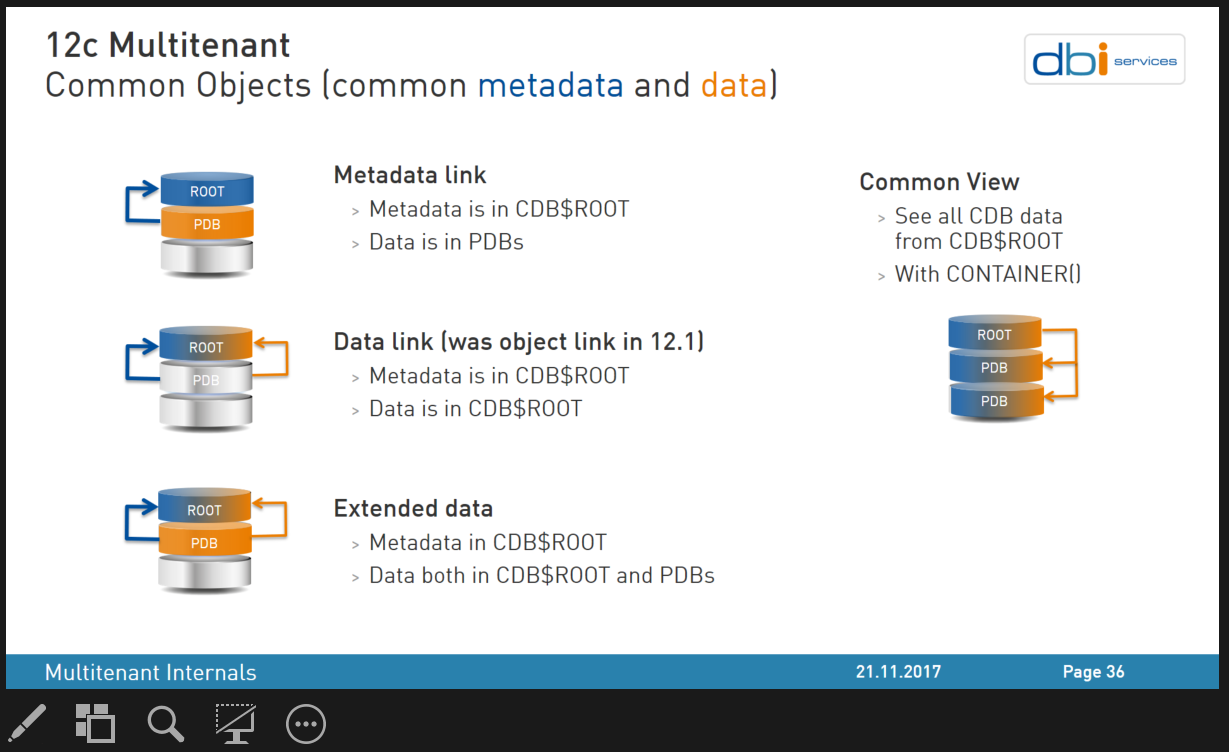
By Franck Pachot . In multitenant, you can create common Users, Roles, and Profiles. You create them in CDB$ROOT, with the CONTAINER=ALL clause (which is optional because it is the only possible value when connected to CDB$ROOT) but they are visible to all containers. As the goal of multitenant is to avoid to duplicate common metadata to all containers, You… 

Drop PDB including datafiles may keep files open

By Franck Pachot . I like that Oracle drops the datafiles from the operating system when we remove them from the database (with drop tablespace or drop pluggable database) because I don’t like to have orphean files remaining in the filesystem. However, to ensure that space is reclaimed, we must be sure that Oracle did not leave a process with… 

12c Multitenant Internals: compiling system package from PDB

By Franck Pachot . When I explain the multitenant internals, I show that all metadata about system procedures and packages are stored only in CDB$ROOT and are accessed from the PDBs through metadata links. I take an example with DBMS_SYSTEM that has nothing in SOURCE$ of the PDB. But I show that we can compile it from the PDB. This… 

Multitenant internals: INT$ and INT$INT$ views

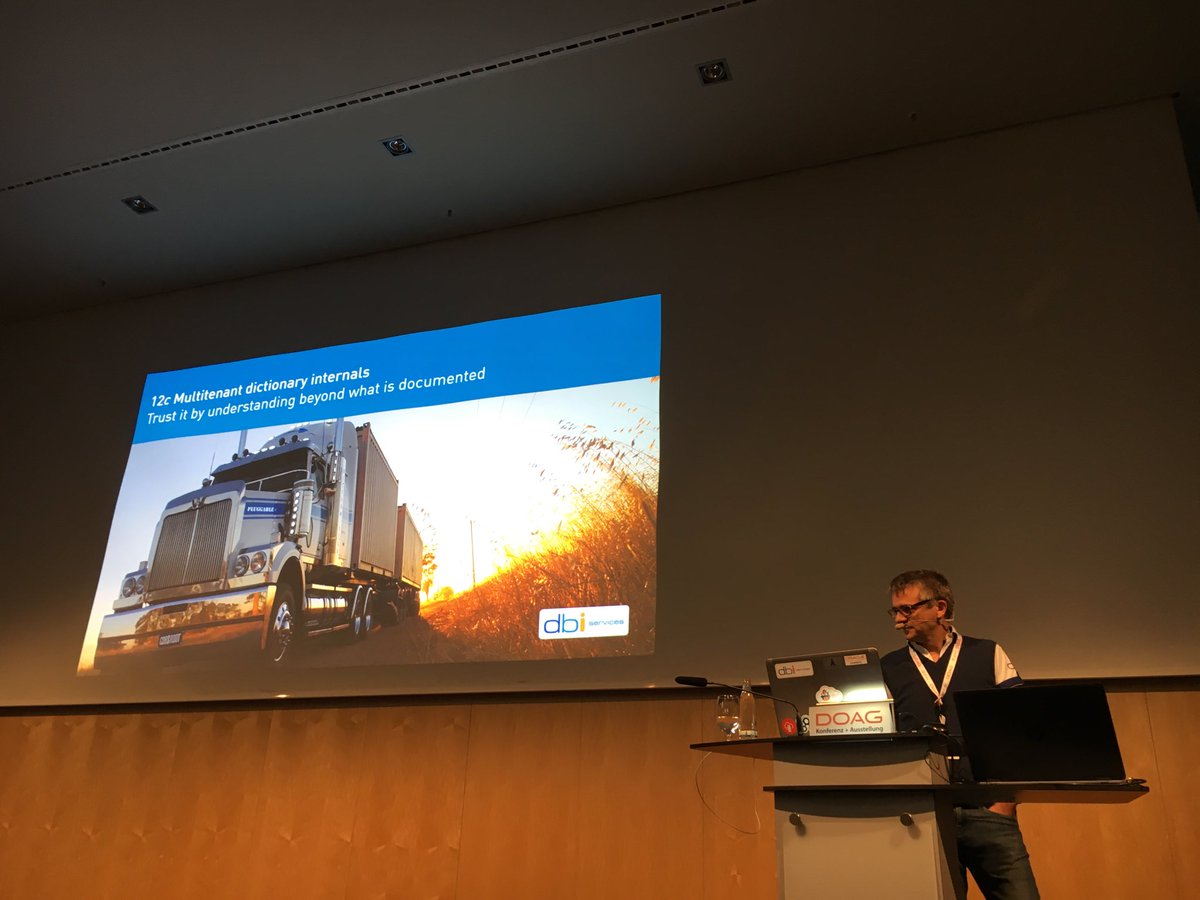
By Franck Pachot . This month, I’ll talk – with lot of demos – about multitenant internals at DOAG conference. The multitenant dictionary architecture starts with a simple idea: system metadata and data are in CDB$ROOT and user metadata and data are in PDB. And it could have been that simple. When a session connected to a PDB needs to… 

Multitenant dictionary: what is consolidated and what is not

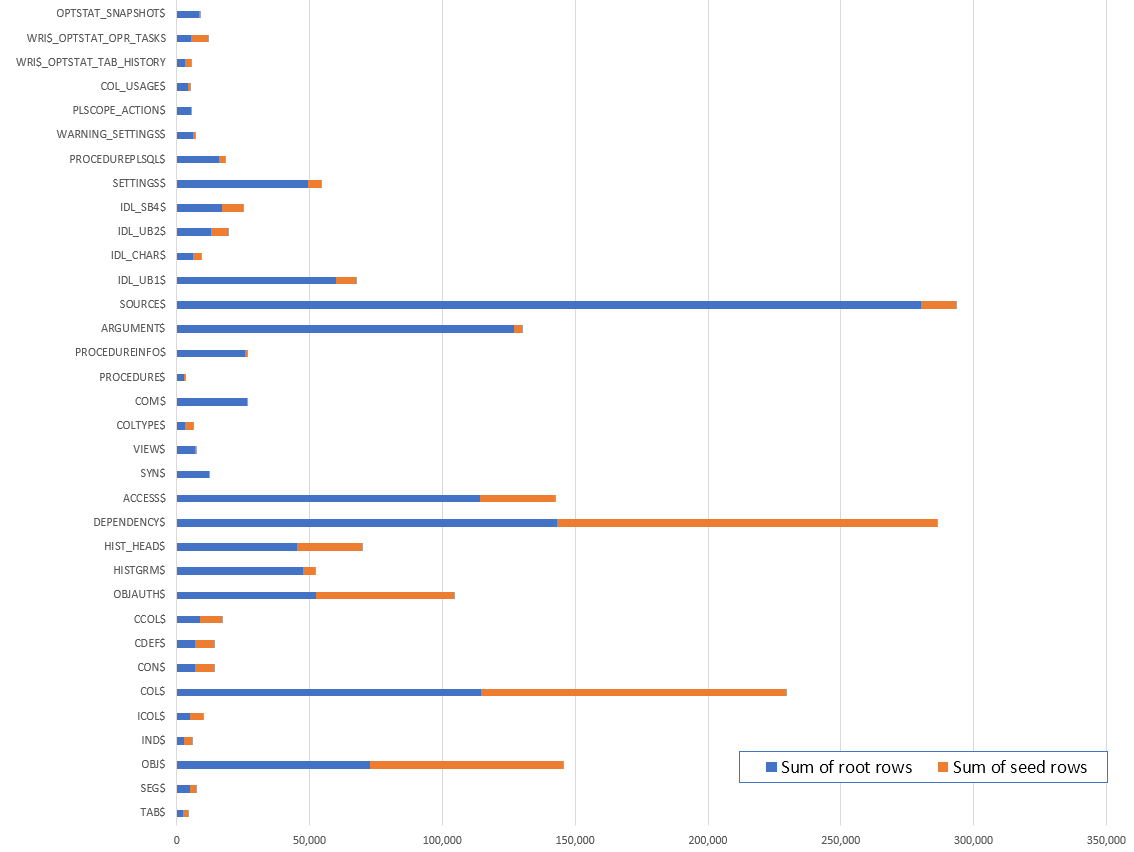
By Franck Pachot . The documentation says that for Reduction of duplication and Ease of database upgrade the Oracle-supplied objects such as data dictionary table definitions and PL/SQL packages are represented only in the root. Unfortunately, this is only partly true. System PL/SQL packages are only in root but system table definition are replicated into all PDBs. This post is…