Skip to content

Oracle 18c

ADWC – System and session settings (DWCS lockdown profile)

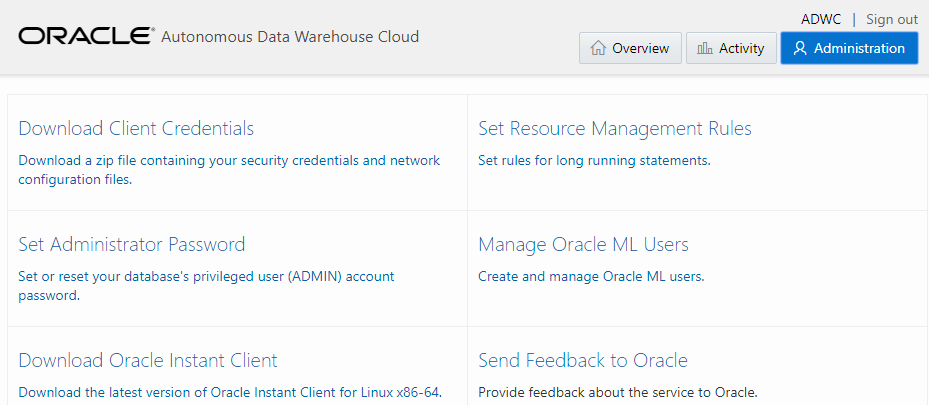
By Franck Pachot . The Autonomous Data Warehouse Cloud service is a PaaS managed service where we have a PDB and an ADMIN user which has most of the system privileges. For example, we have the privilege to change initialization parameters: SQL> select * from dba_sys_privs where grantee=user and privilege like ‘ALTER S%’;   GRANTEE PRIVILEGE ADMIN_OPTION COMMON INHERITED ——-… 

ADWC – connect from your premises

By Franck Pachot . In the previous post about the Autonomous Data Warehouse Service, I’ve run queries though the Machine Learning Notebooks. But you obviously want to connect to it from your premises, with SQL*Net. Of course the connection, going through the public internet, must be secured. If you already use a managed service like the Oracle Exadata Express Cloud… 

ADWC – the hidden gem: Zepplin Notebook

By Franck Pachot . In the previous blog posts I explained how to create, and stop/start the Autonomous Data Warehouse Cloud service. And I didn’t show yet how to connect to it. It is easy, from sqlplus or SQL Developer, or SQLcl. But there’s something more exciting to run some SQL queries: the Oracle Machine Learning Notebooks based on Apache… 

ADWC – a Docker container to start/stop Oracle Cloud services

By Franck Pachot . In the previous post, I’ve explained how to start and stop the Autonomous Data Warehouse Cloud service from PSM (PaaS Service Manager). There’s a setup phase, and a run phase starting with service-start and ending with service-stop. And the setup is specific to an Oracle Cloud account, storing information in the local user home. You may… 

ADWC: start/stop with PSM Command Line Interface

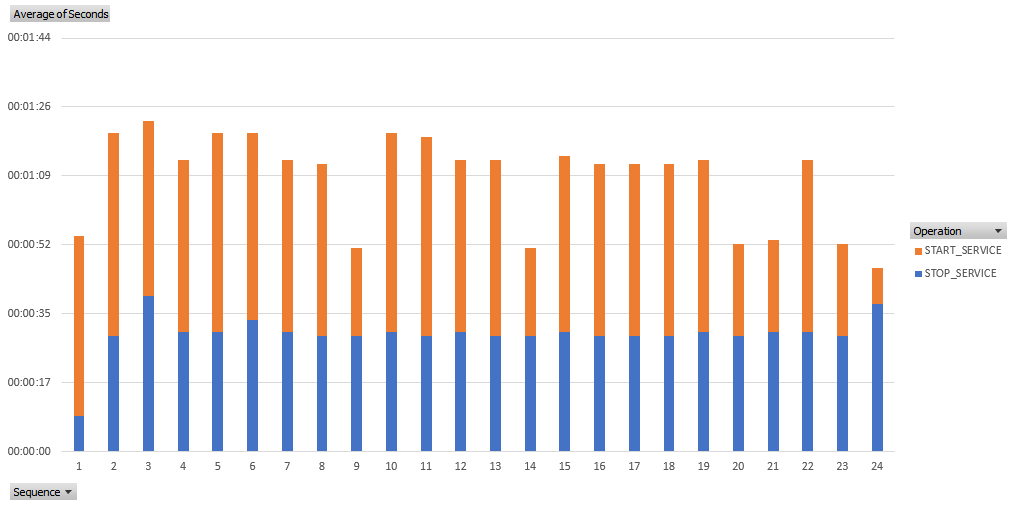
By Franck Pachot . In the previous post, I explained how to create an Autonomous Data Warehouse with PSM (PaaS Service Manager Command Line Interface). The most common operation you want to do with it is starting and stopping the service. This is the best way to save credits for hourly billed services. And PSM is the easiest: run from… 

ADWC: Creation of Autonomous Data Warehouse Cloud service

By Franck Pachot . You want to try the Autonomous Data Warehouse Cloud Service? That’s easy. Here is a Step-by-Step. Cloud Credits First, you need Cloud Credits. You may have bought them (any recent negotiation with Oracle Sales, even for on-premises, involves some Cloud Credits). You can have a free trial with 300$ Cloud Credits available for 1 month. To… 

Oracle 18c clone PDB and Transparent Data Encryption

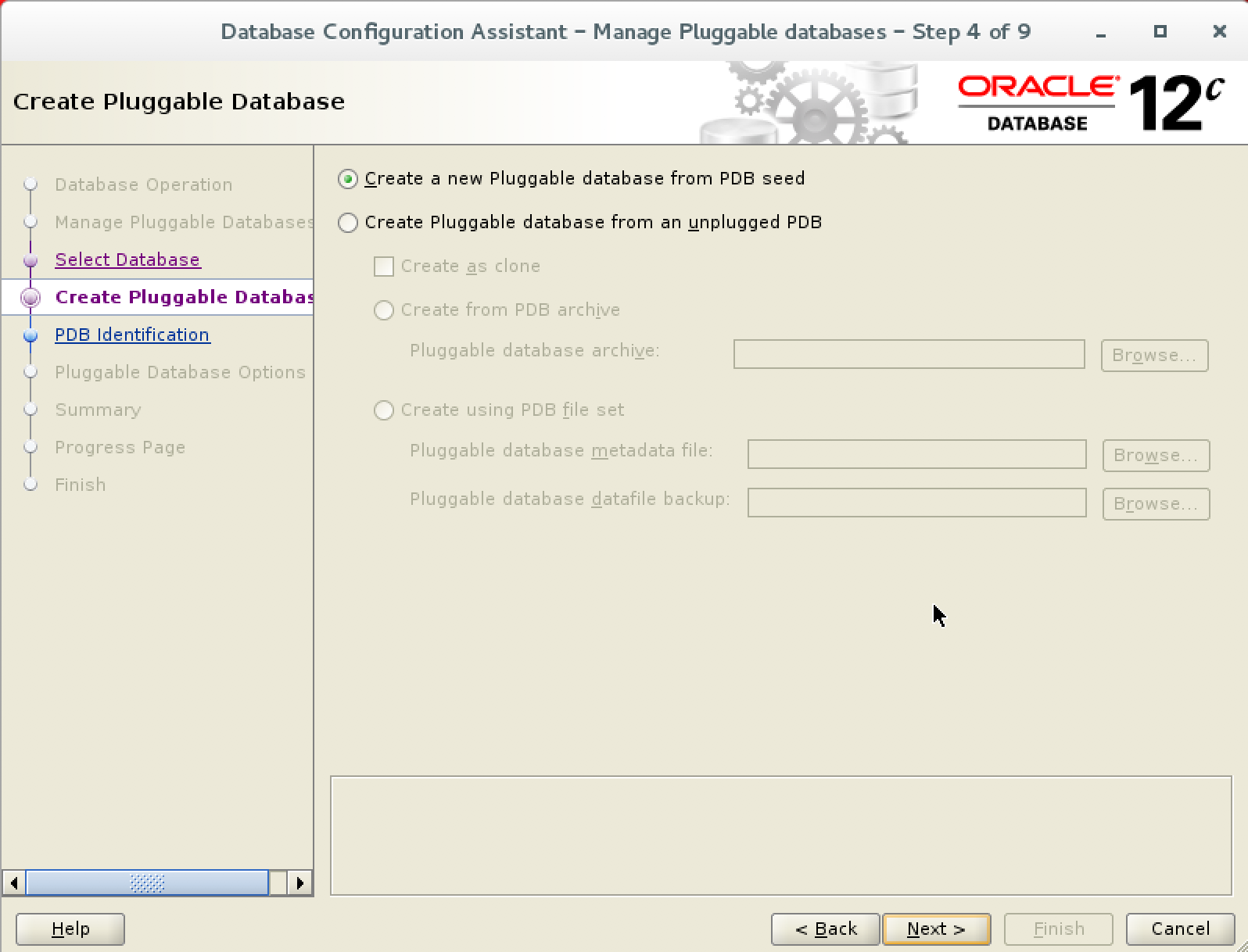
Let’s do some tests with the Oracle 18c new feature in creating PDB clone with DBCA. Unfortunately, this feature does not work when you have TDE enabled. Just to remember, with Oracle 12.2 we had the possibility to create PDBs with dbca just from PDBseed to from unplugged PDBs: Now in version 18c we can create PDBs from existing PDBs as… 

18c PDB switchover

By Franck Pachot . In multitenant, the recovery and availability are at CDB level. But customers asked for a switchover at PDB level so Oracle has done that in 18c, based on refreshable PDBs. For this test I have two multitenant database on an Oracle Cloud service in 18c: CDB1 and CDB2. The only special thing I did was disable… 

Enabled, Accepted, Fixed SQL Plan Baselines

By Franck Pachot . When the documentation is not always clear, I prefer to build a test case to be sure about the behavior in different context and different versions. Here is a test on SQL Plan Management to show which plan is chosen among the different states of SQL Plan Baselines: Enabled, Accepted, Fixed. Thanks to Oracle ACE program,… 

18c new Lost Write Protection

By Franck Pachot . There are many layers between the Oracle Database pwrite() calls and the physical sector written on disk: filesystem, logical volume, SAN or NAS, with a lot of smart software running for Virtualisation, Compression, Snapshotting, Synchronisation… Are you sure that the changes you made to your data is actually persisted on disk, completely and without any corruption?… 

18c dbms_xplan note about failed SQL Plan Baseline

By Franck Pachot . SQL Plan Baselines is a great feature for plan stability: you capture the plans that you accept. However, if the data model changes and the accepted plans cannot reproduce, the optimizer will come with a new plan. In 18c we have a note from DBMS_XPLAN when the optimization ‘failed to use SQL plan baseline for this…