Skip to content

Multitenant

RMAN in a Multitenant Environment

By Mouhamadou Diaw The Oracle Multitenant architecture came with Oracle 12c a few years ago. For people usually working with traditional Non-CDB database it might be confusing the first time to do Backup and Recovery with pluggable databases (PDBs) In this document we are trying to explain how to use RMAN backup and recovery in a multitenant environment for an… 
ATP vs ADW – the Autonomous Database lockdown profiles

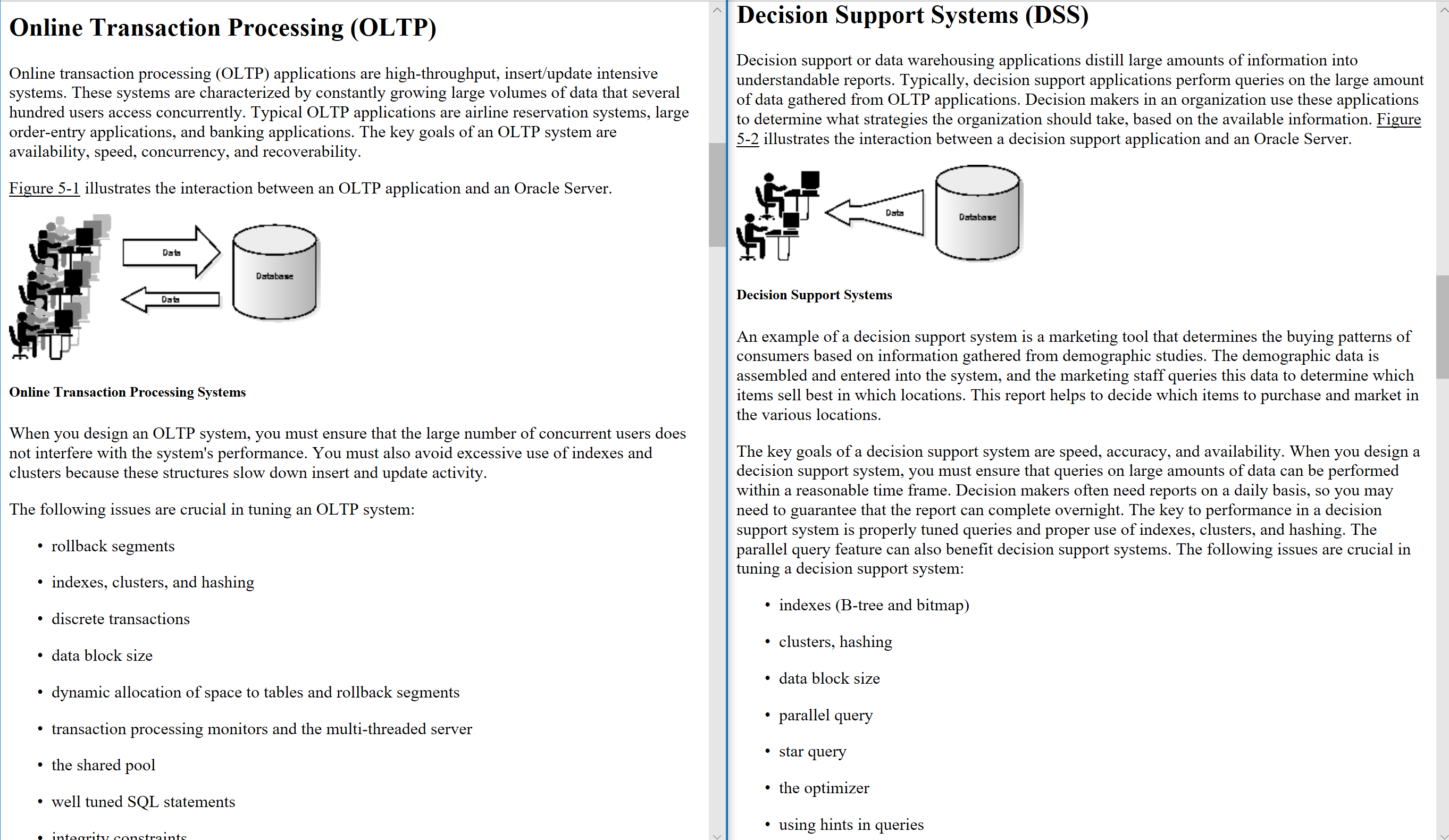
By Franck Pachot . The Oracle database has always distinguished two types of workloads: transactional (OLTP) and datawarehouse (VLDB, DWH, DSS, BI, analytics). There is the same idea in the managed Oracle Cloud with two autonomous database services. To show how this is old, here is how they were defined in the Oracle7 Tuning Book: The definition has not changed… 

Change Data Capture from Oracle with StreamSets Data Collector

By Franck Pachot . With this trend of CQRS architectures where the transactions are streamed to a bunch of heterogenous eventually consistent polyglot-persistence microservices, logical replication and Change Data Capture becomes an important component, already at the architecture design phase. This is good for existing products vendors such as Oracle GoldenGate (which must be licensed even to use only the… 

ADWC – System and session settings (DWCS lockdown profile)

By Franck Pachot . The Autonomous Data Warehouse Cloud service is a PaaS managed service where we have a PDB and an ADMIN user which has most of the system privileges. For example, we have the privilege to change initialization parameters: SQL> select * from dba_sys_privs where grantee=user and privilege like ‘ALTER S%’;   GRANTEE PRIVILEGE ADMIN_OPTION COMMON INHERITED ——-… 

18c PDB switchover

By Franck Pachot . In multitenant, the recovery and availability are at CDB level. But customers asked for a switchover at PDB level so Oracle has done that in 18c, based on refreshable PDBs. For this test I have two multitenant database on an Oracle Cloud service in 18c: CDB1 and CDB2. The only special thing I did was disable… 

18c, Cloud First and Cloud Only features: think differently

By Franck Pachot . Remember the times when the Oracle Software features were the same on all platforms? Where Oracle databases could be ported to any relevant platform? Where we were able to try any feature, freely, by downloading the latest release software? Now we need to think differently. Because: The new software is released on Cloud first The major… 

12cR2 PDB archive

By Franck Pachot . In 12.1 we had the possibility to unplug a PDB by closing it and generating a .xml file that describes the PDB metadata required to plug the datafiles into another CDB. In 12.2 we got an additional possibility to have this .xml file zipped together with the datafiles, for an easy transport. But that was not… 

Multitenant, PDB, ‘save state’, services and standby databases

By Franck Pachot . Creating – and using – your own services has always been the recommendation. You can connect to a database without a service name, though the instance SID, but this is not what you should do. Each database registers its db_unique_name as a service, and you can use it to connect, but it is always better to… 

12c Multitenant internals: PDB_PLUG_IN_VIOLATIONS

By Franck Pachot . In the previous post https://www.dbi-services.com/blog/12c-multitenant-internals-pdb-replay-ddl-for-common-users I’ve done some DDL on a common user to show how this is replayed later for PDBs that were not opened at that time. But what happens when one of the DDL fails on one PDB? PDB$LASTREPLAY In the last post, the C##USER1 common user was created and all pluggable databases… 

12c Multitenant internals: PDB replay DDL for common users

By Franck Pachot . In multitenant, you can create common Users, Roles, and Profiles. You create them in CDB$ROOT, with the CONTAINER=ALL clause (which is optional because it is the only possible value when connected to CDB$ROOT) but they are visible to all containers. As the goal of multitenant is to avoid to duplicate common metadata to all containers, You…