Skip to content

Availability groups

SQL Server 2016 AlwaysOn: distributed availability groups

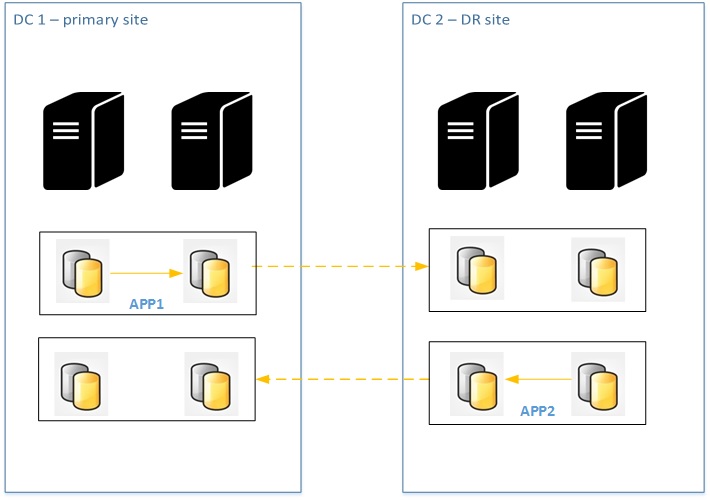
This time, I will talk about distributed availability groups. What’s that? In short, a group of availability groups. Sounds good right? But in which cases may we need such architecture? Firstly, let’s say that distributed availability groups will run on the top of two distinct availability groups meaning that they reside on two distinct WSFCs with their own quorum and… 
SQL Server 2016 AlwaysOn: Add DBs in AGs with direct seeding

In this blog I would like to talk about two new features shipped with SQL Server 2016 for AlwaysOn availability groups. The first one concerns the new direct seeding capability and the seconde one introduces distributed availability groups (DAG). I will talk about the second one in a next blog post. First of all, let’s talk about direct seeding.  At the first… 

SQL Server AlwaysOn: is my database ready for failover?

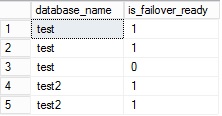
In this blog post I just want to clarify values that we may find from the is_failover_ready column of the sys.dm_hadr_database_replica_cluster_states DMV. A couple of days ago, I had an interesting discussion with one of my customers during which he explained he was not confident about the availability group state after facing some unavailability issues. The main source of uncertainty… 

SQL Server AlwaysOn: when a listener becomes the cluster and vice versa

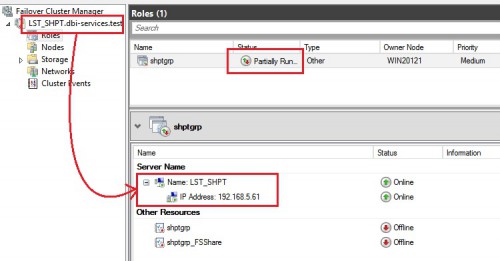
Let’s talk about a funny story that concerns an interesting issue that I faced a couple of months ago at one of my customers. Initially, the problem concerned only the creation of an availability group listener but after deleting the related availability group, he noticed quickly that the deletion failed but even more strange, he noticed that the virtual network… 

SQL Server AlwaysOn and availability groups : session timeout parameter

Have you ever faced to timeout issues with SQL Server availability groups? If you take a look at the timeout parameters for an availability group, you will find a plenty of configuration settings. Indeed, you have timeout parameters for the availability group itself, for the replicas and for cluster itself as well. Well …a lot of parameters in order to… 

SQL Server 2016 – availability groups and gMSAs

This blog post will probably not concern customers where either password policy change rules are not defined for service accounts or Kerberos authentication is not used. But I’m sure that the number of these customers has decreased over at least the last decade. By the way, this is what I can notice at different customer places. But before beginning with… 

SQL Server 2016 : availability groups with no domain dependencies

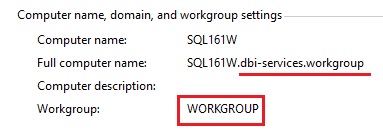
Are you aware about the new features of the next Windows version? Currently we’re in TP3 and during my investigation, I was very happy to see the new features for Windows clustering (cf. this blog post from Microsoft). By reading this article we can see: Workgroup Clusters: Clusters with nodes which are member servers / workgroup (not domain joined) If… 

SQL Server AlwaysOn : readable secondary replicas and index rebuild online vs offline

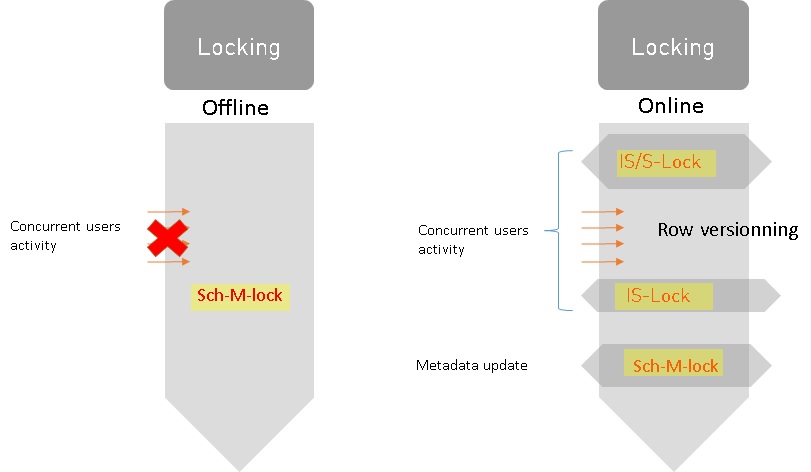
A couple of weeks ago, I was involved in a discussion on the French forum developpez.com about SQL Server AlwaysOn and availability groups, index strategies and the impact on the readable secondary replicas. During this discussion, one of the forum member stated that rebuilding an index online had less impact than rebuilding an index offline on a readable secondary replica… 

SQL Server AlwaysOn: number of databases and the hadr worker pool

Often, when I’m in charge to implement an SQL Server AlwaysOn infrastructure with availability groups, customers ask me if it exists some best practices and recommendations about the maximum number of databases in an availability group planning. In fact, we have to keep in mind the relation between databases and the SQL Server worker pool in this architecture. Remember that… 

SQL Server 2016 : availability groups and the new clustered columnstore index support

This blog post is focused on the new supportability of clustered columnstore index on the high- availability read-only replicas. Others studies are available here: New database issue level detection for automatic failover Potential features in standard edition Automatic failover enhancements New load balancing features with read-only replicas After reading some improvements from the columnstore index feature side, I was very… 

SQL Server 2016 : availability groups and load balancing features

Let’s continue with this third post about SQL Server AlwaysOn and availability groups. Others studies are available here: New database issue level detection for automatic failover Potential features in standard edition Automatic failover enhancements This time I’ll talk about read-only secondaries and the new load-balancing support that will be introduced by SQL Server 2016. First of all, SQL Server 2014… 

SQL Server 2016 : availability groups and automatic failover enhancements

Let’s continue with this study of the new availability group enhancements. Others studies are available here: New database issue level detection for automatic failover Potential features in standard edition This time we’ll talk about the possibility to enrol a third replica for automatic failover. It implies of course to configure synchronous replication between the 2 pairs of replicas and this…