Skip to content

ASM

Grid Clusterware 26ai 2 node RAC upgrade from 19c rolling forward

This is third part of 26ai migration blog. We will upgrade here 2 node Clusterware with ASM in 19c. We will use newest 23.26.1 GoldImages from oracle support. This tutorial showing main steps how to perform upgrade, its not procedure to upgrade your production environment, please checkout official documentation from oracle and do proper planning and prechecks before you do… 

Oracle DBs and ransomware attacks

By Clemens Bleile I had a discussion with a customer recently about the risk of running into an issue with ransomware encrypting data of Oracle databases. Just to quickly recap on what ransomware is: Wikipedia: Ransomware is a type of malware from cryptovirology that threatens to publish the victim’s personal data or perpetually block access to it unless a ransom… 

Important DBCA Parameter if you plan to use Storage Snapshot Cloning in ASM

I am currently working on a customer project to create database clones using storage snapshots. The advantages are obvious, because using a storage snapshot as a clone not only saves space, but is also extremely fast compared to a full clone. This post is not about explaining in detail how to implement the snapshot clone technically, but it should point… 

Creating an Oracle Snapshot Copy PDB on top of ASM

Creating a snapshopt copy Pluggable Database (PDB) on top of Automatic Storage Management (ASM) is not possible, because you need to have a filesystem which supports sparse files. According the following MOS-Note sparse files are supported on Automatic Storage Management Cluster File System (ACFS) since 12.2.: 12.2 Oracle ACFS Sparse Files Enhancements (Doc ID 2200264.1) However, I thought it is… 

ODA: Move a DB to ASM after migrating from 11g to 19c

Introduction Modern Oracle Database Appliances still support 11gR2, but there are several drawbacks using this old version: if you want/need support for your databases, you should pay for Market Driven Support (11gR2 is even no more under extended support – it ended at the end of 2020) some ODA features will not work with 11gR2 (odacli Data Guard feature for… 

Disk usage on ODA – Free MB and usable MB

Introduction Oracle Database Appliances rely on ASM to manage disk redundancy. And ASM is brilliant. Compared to RAID, redundancy is managed at the block level. For NORMAL redundancy, which is similar to RAID1, you need at least 2 disks, but it can also work with 3 disks, 4 disks, 5 disks and so on. There is no need for parity… 

6 things Oracle could do for a better ODA

Introduction With the latest ODA X8 range, at least 80% of the customers could find an ODA configuration that fits their needs. For the others, either they can’t afford it, either they are already in the Cloud, or they need extremely large storage or EXADATA performance. Among these 80% of customers, only a few choose ODA. Let’s see how Oracle… 

Migrating from ASMLIB to ASMFD

By Mouhamadou Diaw Before Oracle 12.1 the methods used to configure ASM were • udev • asmlib Oracle 12.1 comes with a new method called Oracle ASM Filter Driver (Oracle ASMFD). In Oracle documentation we can find following: Oracle ASM Filter Driver (Oracle ASMFD) is a kernel module that resides in the I/O path of the Oracle ASM disks. Oracle… 

udev rules for ASM devices on RHEL 7

Preparing the storage devices for use with ASM is one of the first tasks you should do. When you do not want to use ASMLib then udev is what you should use for this. As the order/naming of the devices in the device tree is not guaranteed (e.g. dm-1 is not guaranteed to be the same device after a reboot… 

OTN Appreciation Day : ADVM

Tim Hall had the idea that as many people as possible would write a small blog post about their favorite Oracle feature and we all post them on the same day. Here is my favorite feature: ADVM – The Oracle ASM Dynamic Volume Manager. So, what is it? The docs tell you this: “Oracle ASM Dynamic Volume Manager (Oracle ADVM)… 

ASM iostats

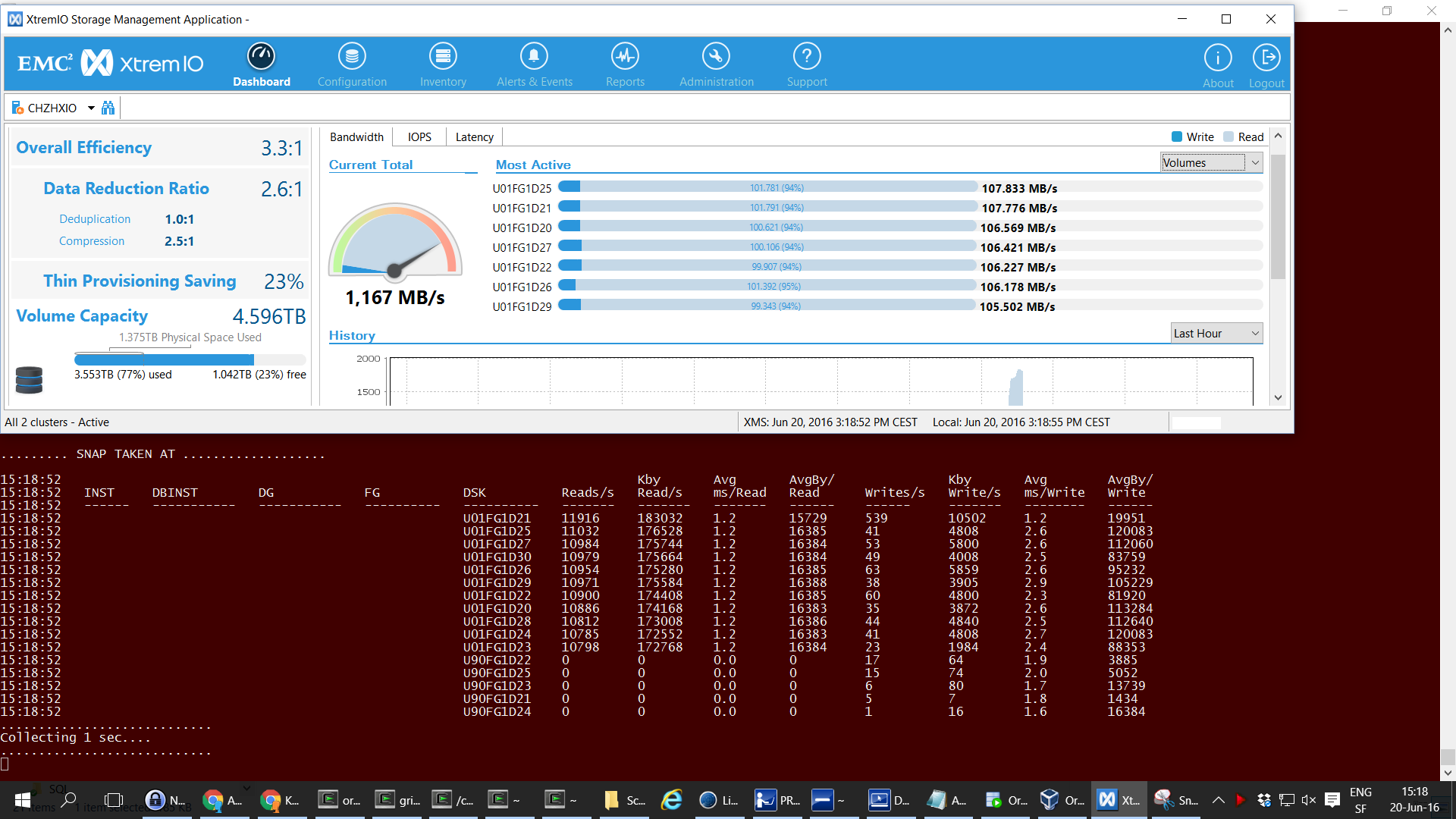
By Franck Pachot . A few screenshots and a link here. Sysadmins do not like ASM because they don’t have the tools they like to manage the disks. For example, they don’t want to run SQL queries to check performance, and asmcmd iostat is quite limited. Here is a nice way to get I/O statistics easily from command line. The… 

Where is the ASM SPFILE?

By Franck Pachot . In the previous blog post, to the question “where is the ASM SPFILE” I answered by running ‘asmcmd spget’. But this is available only if the ASM instance is started. If you have corrupted your SPFILE (and it’s easy to do it) you can start with a local PFILE and the CREATE SPFILE= FROM PFILE. But…