Skip to content

Database

Everything our consultants learn while running databases for customers: Oracle, PostgreSQL, SQL Server, MySQL, MariaDB, MongoDB and Delphix. Expect hands-on posts about installation, day-to-day administration, backup and recovery, performance tuning, replication and upgrades.

SQL Server AlwaysOn and availability groups : session timeout parameter

Have you ever faced to timeout issues with SQL Server availability groups? If you take a look at the timeout parameters for an availability group, you will find a plenty of configuration settings. Indeed, you have timeout parameters for the availability group itself, for the replicas and for cluster itself as well. Well …a lot of parameters in order to… 

DataPump ‘Processing object type’ misleading messages

By Franck Pachot . You’ve started a long DataPump and see it stuck on TABLE/STATISTICS/TABLE_STATISTICS, but you don’t expect that step to take a long time. Let’s see if we can rely on that message. I’ve a 500MB table and export it. I’ll use the 12c LOGTIME option to print a timestamp in front of each output line: 18-JAN-16 21:35:44.038:… 

About SSH keys in Oracle Public Cloud

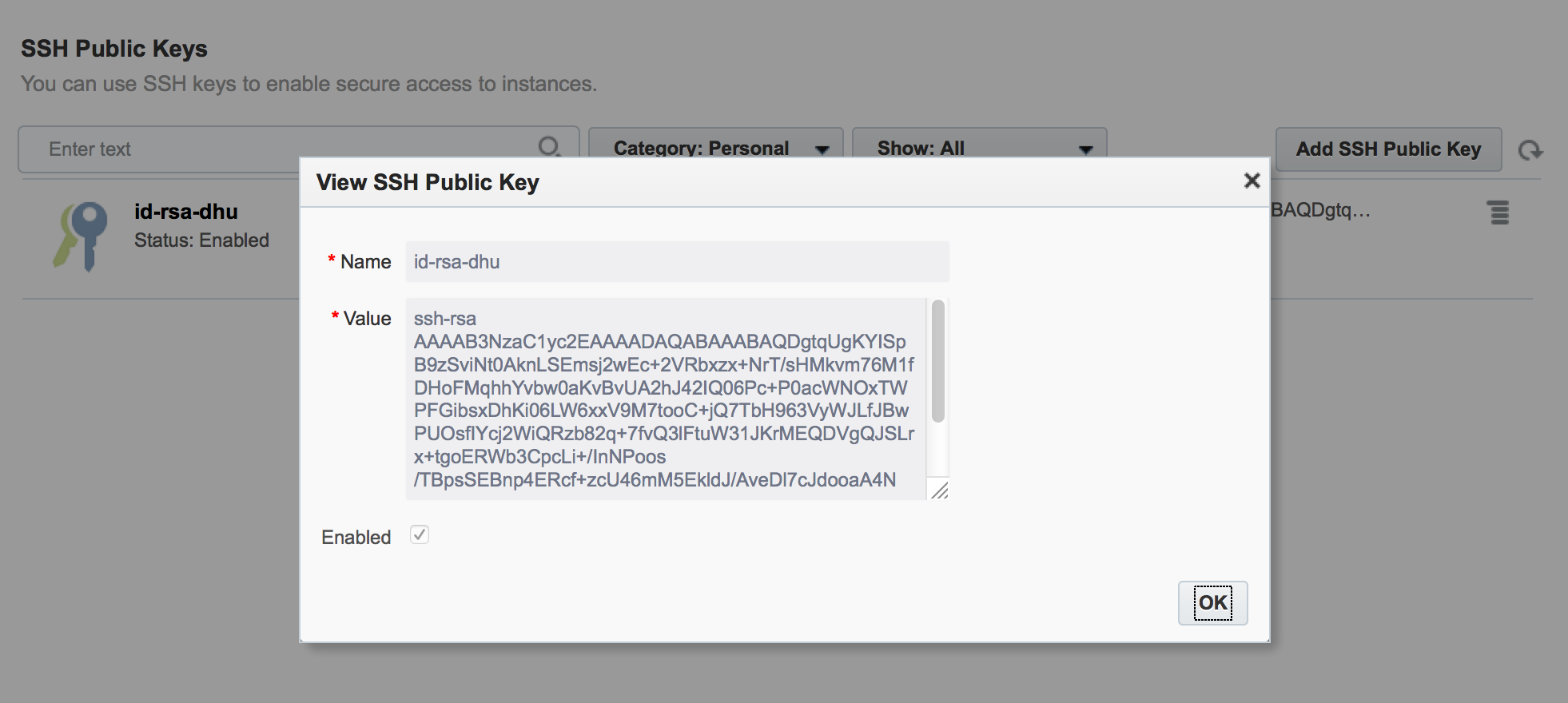
When working with resources on the Oracle public cloud, whatever it is IaaS or PaaS, the principle access method is based on SSH keys exchange. Once our instance is created this is going to be the first and only way accessing it. Of course afterward additional ports/services can be opened. However the question is how to manage these keys and… 

Launching a VM with the Amazon AWS command line tools

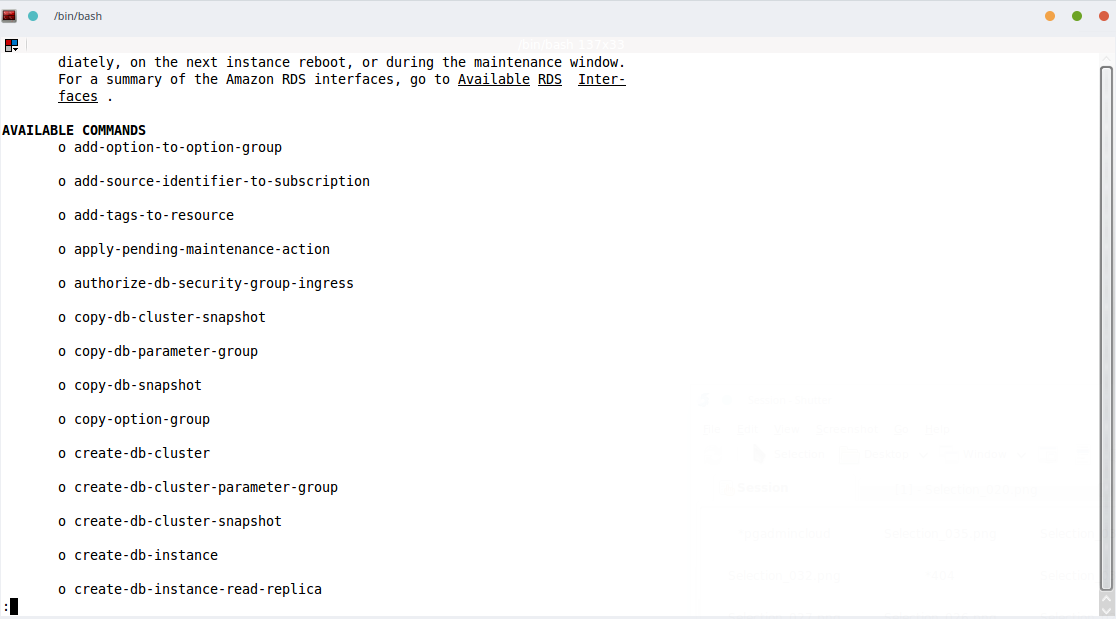
The cool thing with Amazon AWS is that you can use command line tools on your workstation to bring up and manage your services. In this post I’ll look into how you can launch a Linux VM from the command line and how you can attach a storage volume to it. Before you can use the command line tools you’ll… 

External tables in PostgreSQL?

In Oracle you can use the external table feature to load data from files into the database. The traditional way to do this in PostgreSQL is to use the copy command. But there is another option which makes use of foreign data wrappers. The foreign data wrapper for doing this is file_fdw. For creating some data here is a little… 

SQL Server Tips: Default trace enabled but no file is active…

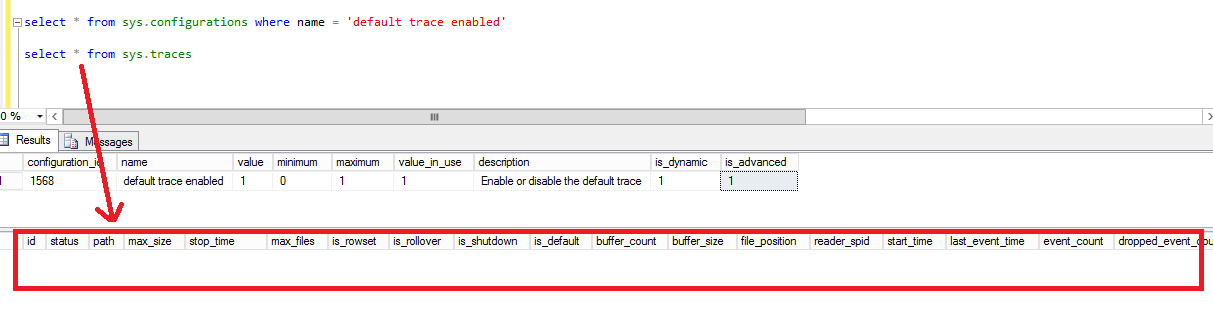
I discover a strange error with a customer about the default trace. As you know, SQL Server has a default trace with a lot of events like the data and log file growth. This trace is enabled by default and you have five .trc files located in the installation directory of SQL Server. In my case, I search through the… 

Availability groups : readable secondary replicas and impact on the storage layer

Do read-only capabilities of an availability group have a performance impact for databases? The quick response is yes but let’s see why in this blog post. First of all, when we want to use our secondary replicas as read-only, we enable and we use implicitly the SNAPSHOT isolation level regardless either the transaction isolation level or the hint used in… 

Protect your oracle password function

By Mouhamadou Diaw Every DBA knows the famous oracle password verification script $ORALE_HOME/rdbms/admin/utlpwdmg.sql This function can be used to control password complexity. This script should be protected from unauthorized users. The reason is that by adding an insert in this function, someone can get passwords of users in the database. Let’s go through an example Here is my script (I… 

PostgreSQL on Amazon RDS – Loading the beast

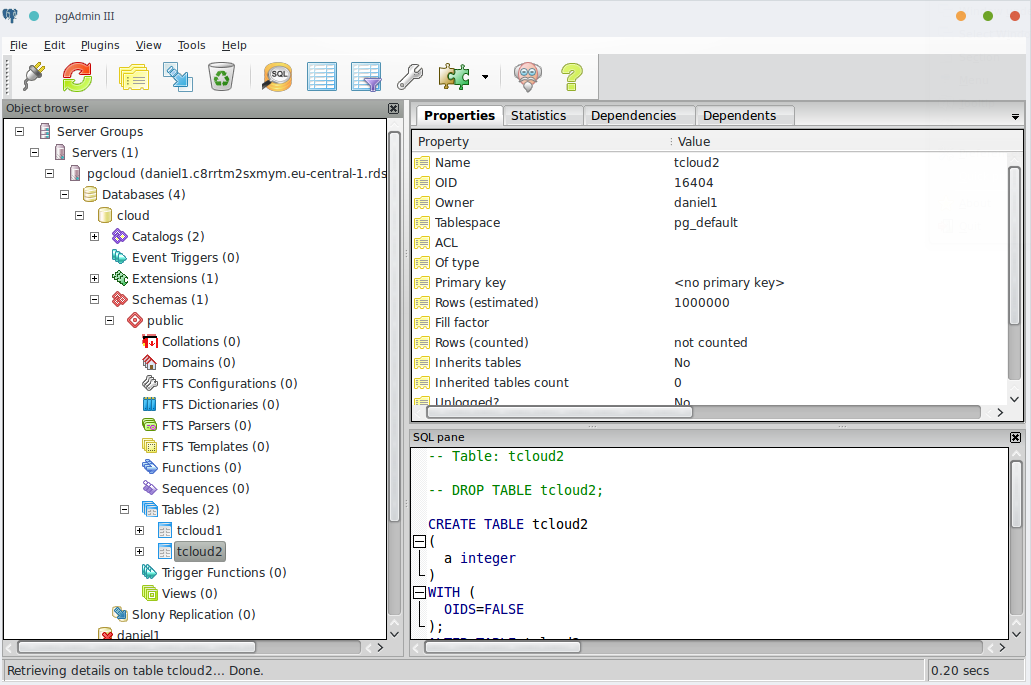
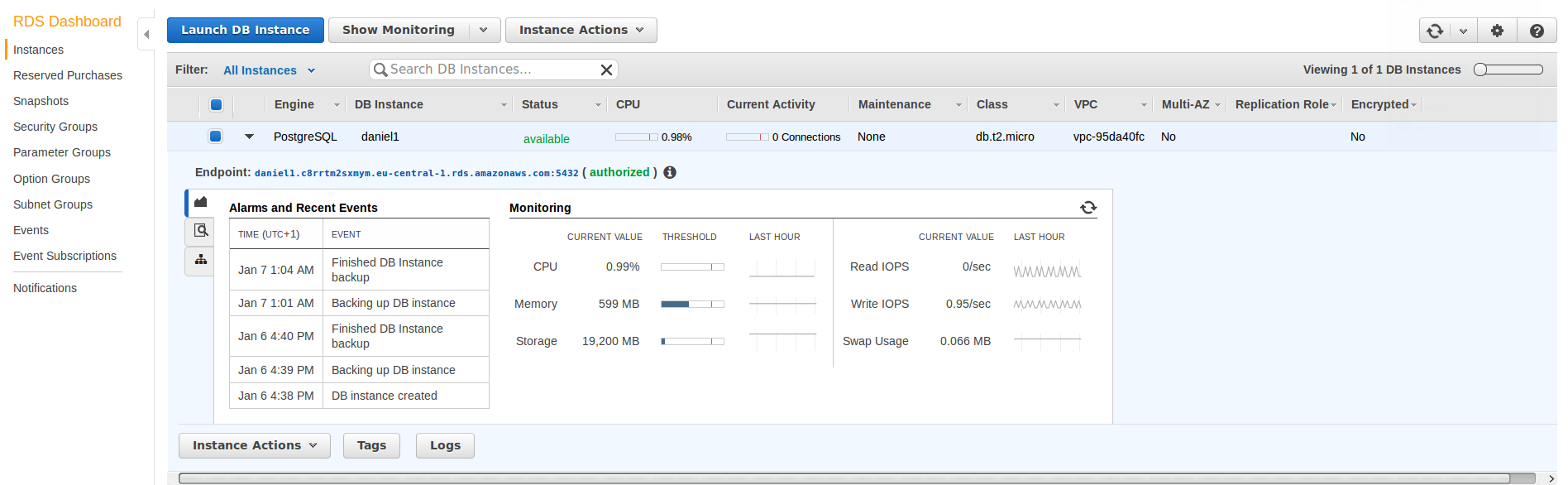
The last posts outlined how you can bring up a PostgreSQL instance in the Amazon cloud, how you can restrict access to the instance, how you can configure it and how you can add a read replica. In this post we’ll look at how you can load data to the instance. A database without data does not make much sense,… 

PostgreSQL on Amazon RDS – Adding a replica to the beast

In the last post I looked on how you can change the PostgreSQL parameters when the instance is running in the Amazon cloud. In this post we’ll look at how to add a replica to the PostgreSQL instance that is already running. Even if you push things to the cloud you want to make sure that you have a standby… 

log file sync / user commits

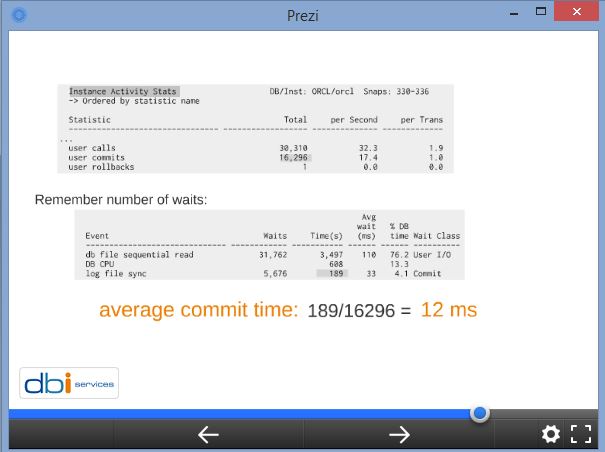
By Franck Pachot . When presenting ‘Interpreting AWR Reports – Straight to the Goal’ at UKOUG TECH15 I had a very good question about the Statspack report I read which had log file sync much smaller than user commits. I realized that this needs a longer explanation, and that my slide is very misleading because I divided log file sync… 

PostgreSQL on Amazon RDS – Configuring the beast

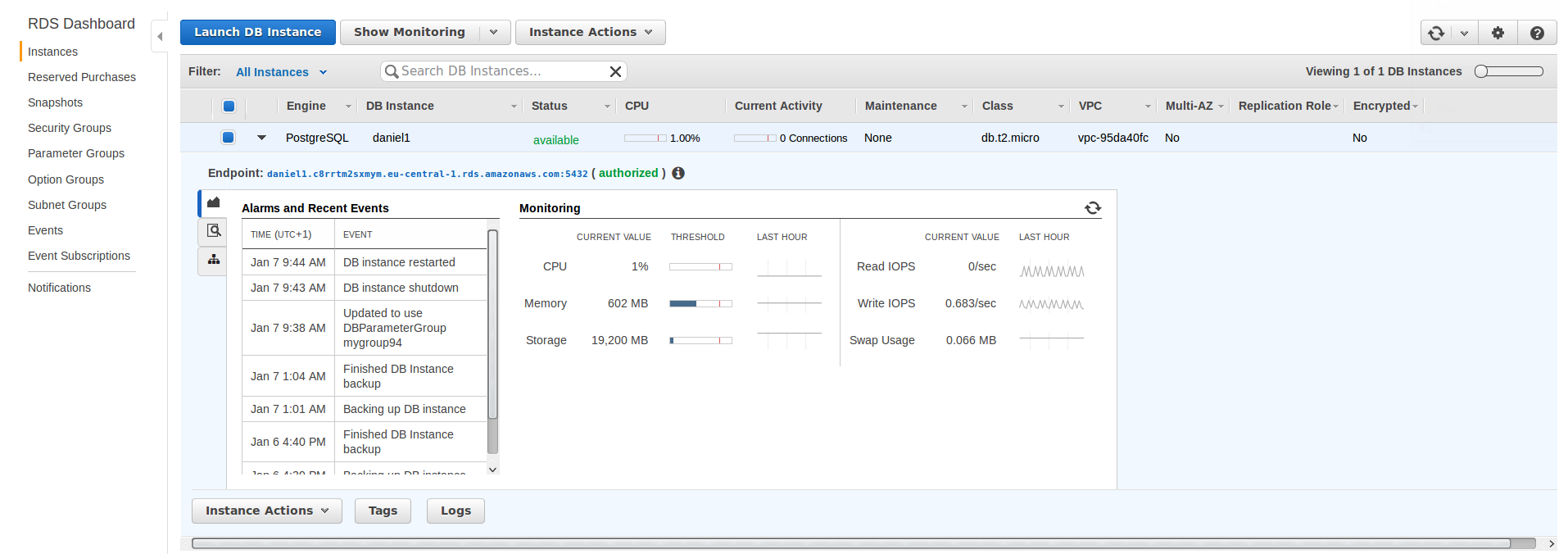
In the last post I looked at how you can strengthen the security for your PostgreSQL instance in Amazon RDS. In this post I’ll look at how you can configure your PostgreSQL instance. When you login to the Amazon console and select your running instance the screen looks like this: If you want to modify the instance there is a…