

Second day in Las Vegas for the AWS re:Invent conference. It was time to travel a little bit around the campus to attend some sessions at the Aria. The planning was still around databases and a bit AWS knowledge.
The shuttle service worked perfectly in both directions with a reasonable time travel between the 2 hotels. But with such time travels, you can’t always be in all sessions you would like to see.
I started with a session about DevOps strategy where the speaker Ajit Zadgaonkar explained some rules to succeed in the DevOps strategy. Even if you start small, moving to DevOps is a movement that all the company should be aware of. It’s about teaching not only within the DevOps team but let know other teams and businesses about your work.
Then I saw 2 different interesting sessions about Aurora running on Amazon RDS. Aurora runs on the same platform than the other proposed engines (Oracle, SQL Server, PostgreSQL, mySQL and MariaDB). It means Aurora is fully managed by AWS.
The interesting part is that Aurora supports 2 different engines: MySQL or Postgres and in both cases, AWS claims that the performance is lot better in Aurora than in the community edition because it has been designed for the Cloud. One of the 2 session was a deep dive focusing on the Postgres part and the storage part of Aurora is totally different.
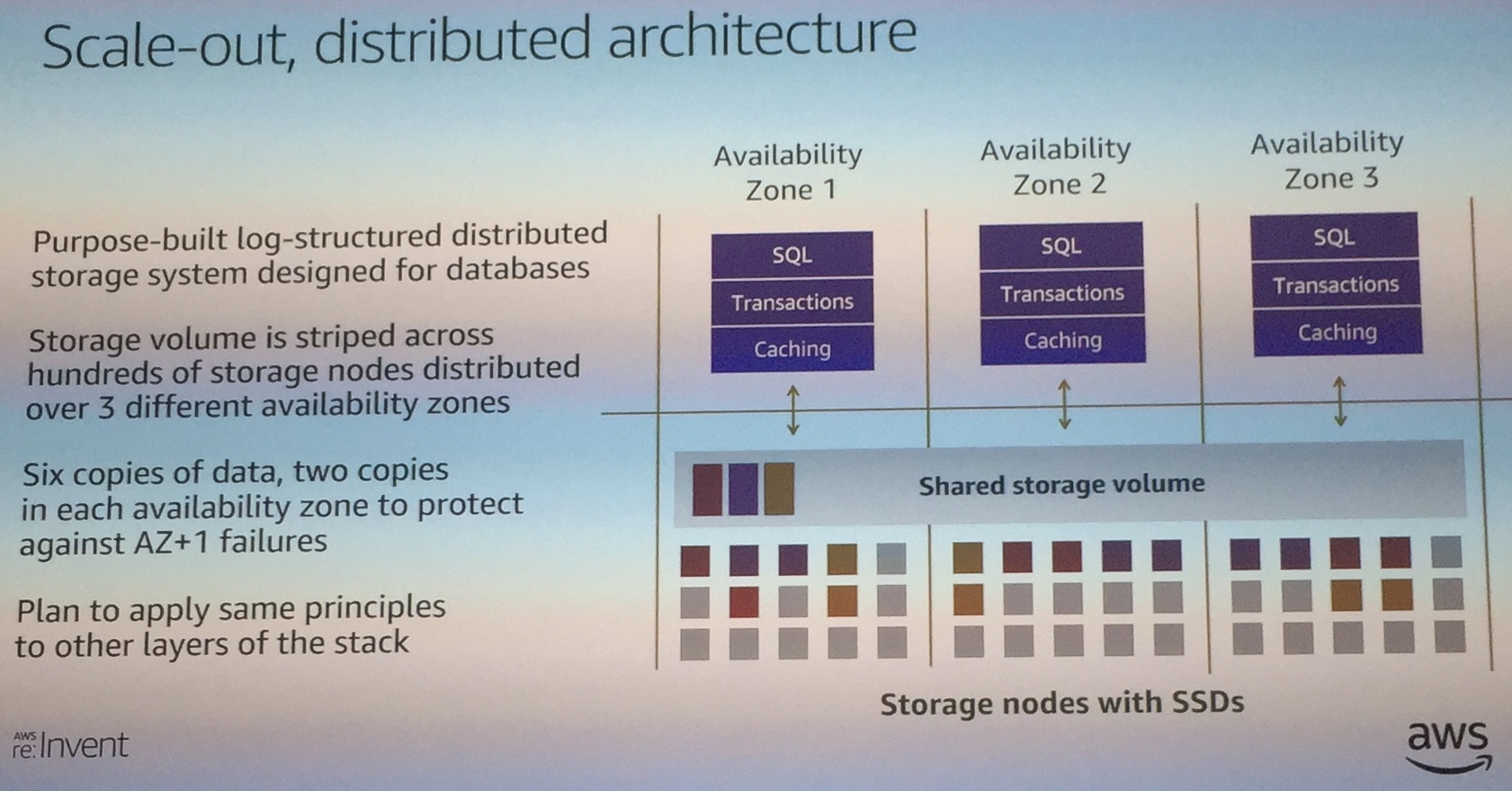
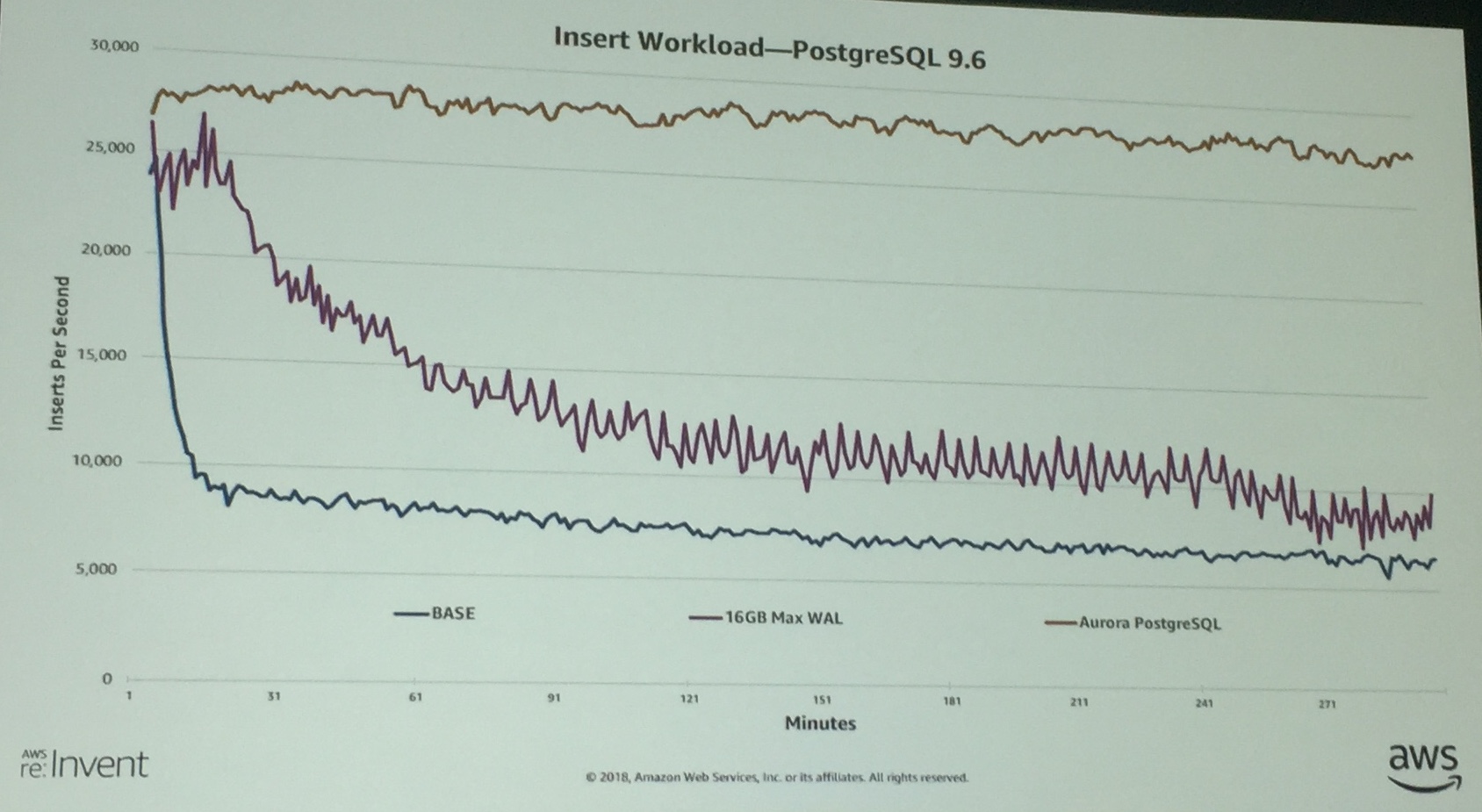
AWS is using a shared storage across a region (like Frankfurt) and “replicate” pages in 6 different locations. According to them, it provides great resilience/durability/availability. To prevent write performance bottleneck, write is valid once 4 out of the 6 blocs have been written. In addition, Aurora is kind of redo log based and doesn’t send full pages/blocs to the storage, reducing a lot the amount of written data. Below is a slides of a benchmark using pgbench.
To continue my journey, I also went to basic sessions about AWS infrastructure itself and it’s interesting to note that they think in advance how to power their datacenters, 50% of the energy used by AWS datacenters comes from renewable sources like wind or solar.followed this session remotely thanks to overflow areas where you can attend a session currently on-going in another hotel. You get a video streaming of the session with the slides and you get a headset for the sound.
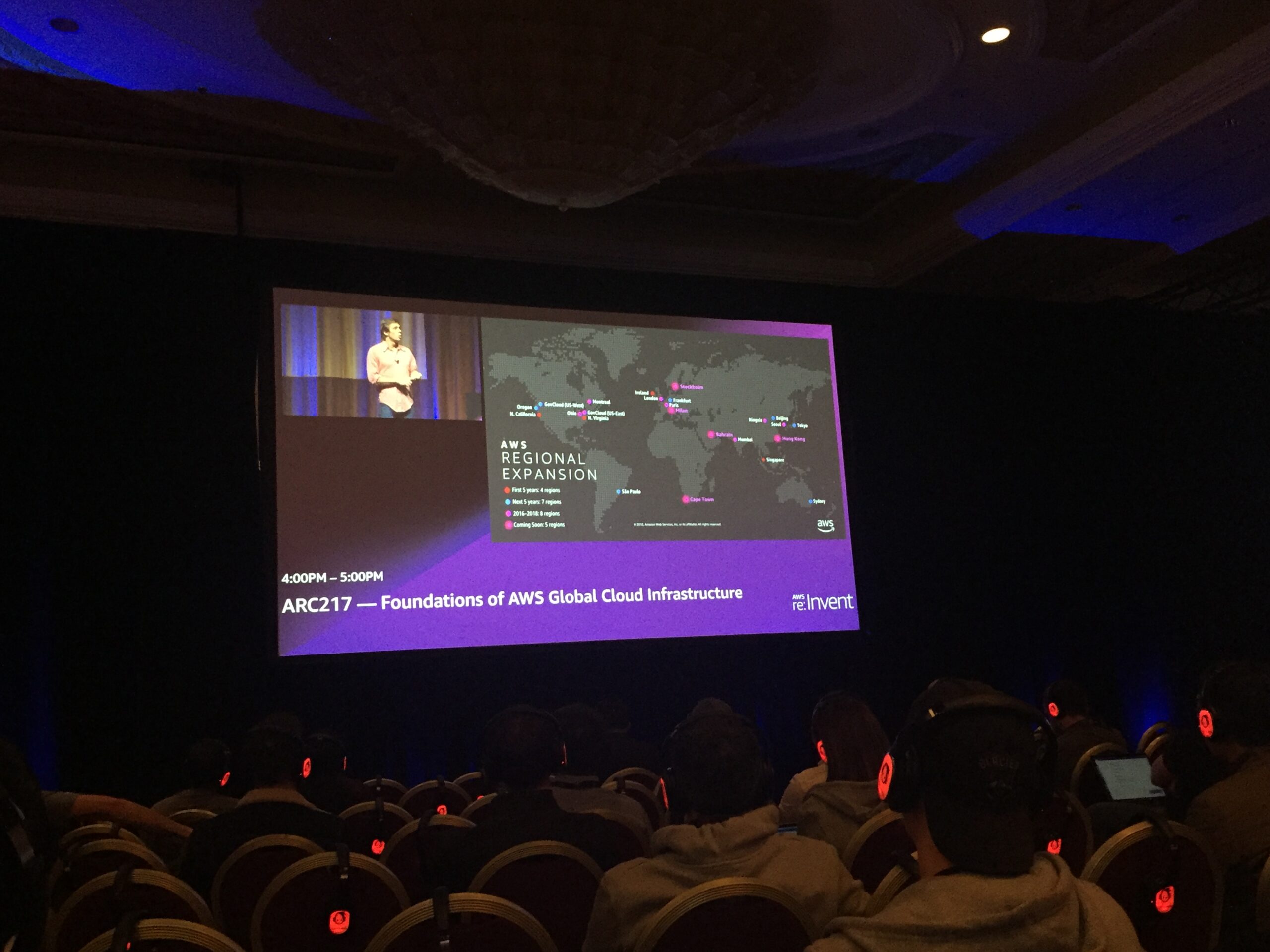
There is also 5 new regions planned in a near future including 2 new locations in Europe: Milan, Bahrein, Stockholm Hong Kong and Cape Town.
Even if there were already some announcements, on Wednesday morning we will have the keynote with Andy Jassy, CEO of AWS. I’m looking forward for this keynote.