David Hueber has ten years of experience in infrastructure operation & management, engineering, and optimization. He is specialized in Oracle technologies (engineering, backup and recovery, high availability, etc.), Service Management standards and Oracle infrastructure operation processes (Service Desk, Change Management, Capacity Planning, etc.).
David Hueber is ITILv3 Service Operation Lifecycle certified and Linux LPIC-1 certified.
He received a university degree in Informatics and Networks at the IUT Mulhouse, France. He also studied Information Systems at the Conservatoire National des Arts et Métiers in Mulhouse, France.
His branch-related experience covers Financial Services / Banking, Chemicals & Pharmaceuticals, Transport & Logistics, Retail, Food, etc.
I got an interesting question today from a customer which created a database on ODA. He selected the template odb-04 which shows 32GB Memory but got a database with a 16GB SGA… Is it due to the PGA size, a limitation in the system, the huge pages usage which is reached or even a bug? Indeed, the answer is easier…
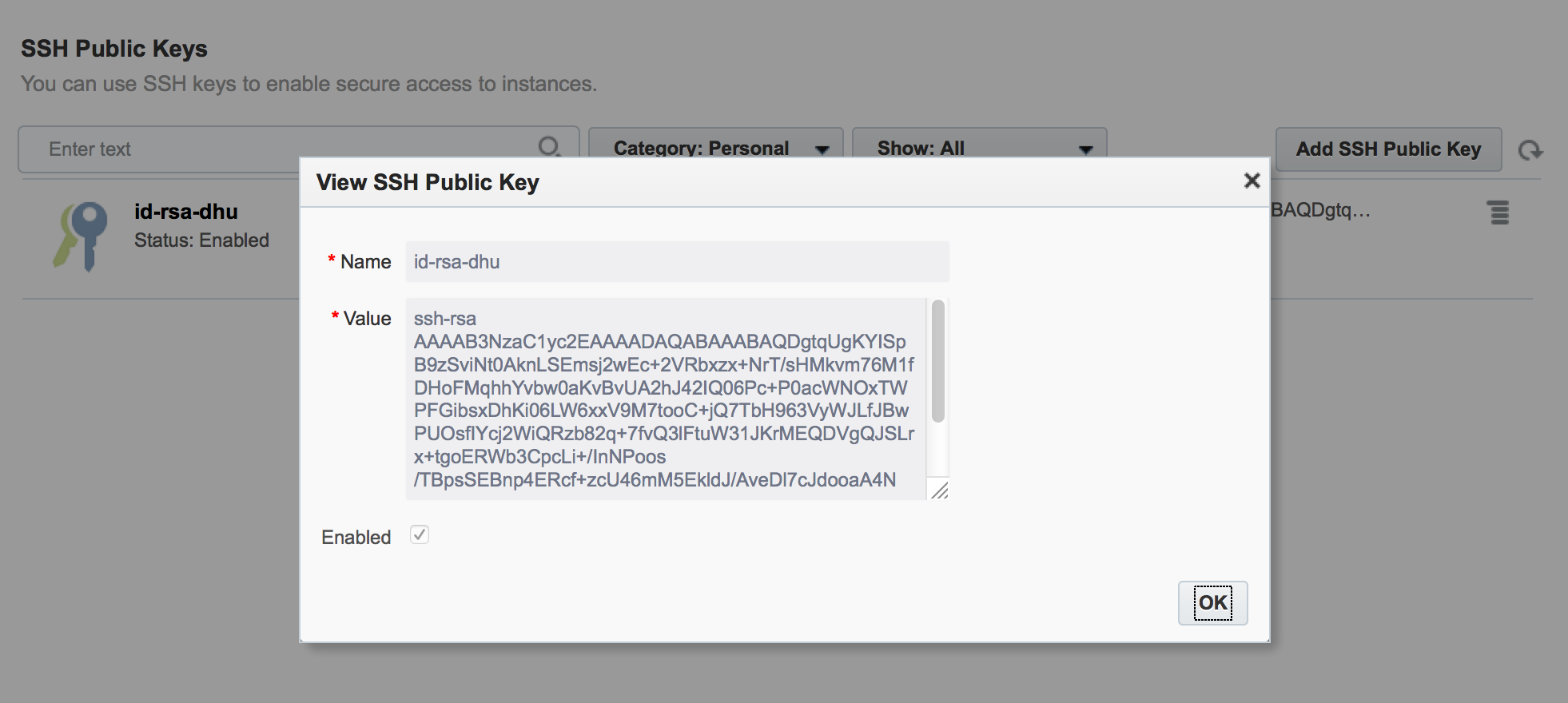
When working with resources on the Oracle public cloud, whatever it is IaaS or PaaS, the principle access method is based on SSH keys exchange. Once our instance is created this is going to be the first and only way accessing it. Of course afterward additional ports/services can be opened. However the question is how to manage these keys and…
I had to perform a duplicate database between 2 ODAs and was always facing an ORA-65500 at the begin of the RMAN operation. Looking a bit deeper in the log outputs pointed me out that it was due to some changes in the way RMAN makes the duplicate in 12c and cluster resources management. Basically up to 12c when RMAN…
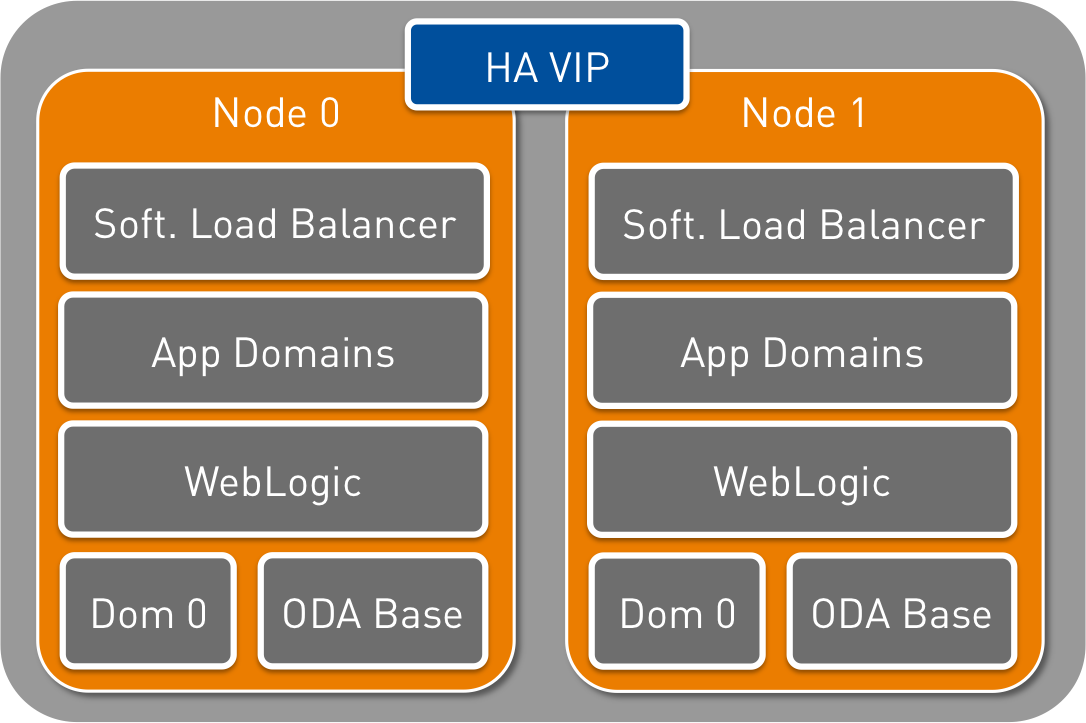
As you know it is possible to install the ODA in a virtualized mode and to take avantages from all cores not licensed with Enterprise Edition for additional VMs. The question is what could we do with it and which performances could we expect… The answer to the first question is indeed pretty simple….almost everything. If you have and ODA…
Since version 12, ODA stores databases on ACFS volumes instead of ASM directly. This slightly changed the way the files are managed and administer. This articles presents how to multiplex your control files on ACFS. At first database creation, ODA set up 3 ACFS volumes to store all non-CDB databases (CDB are managed on dedicated volumes): /dev/asm/datastore-386 62G 5.2G 57G…
After months of waiting, Oracle Database 12c is finally available. In this posting, I am going to provide a summary of the new features of Oracle 12c in terms Backup and Recovery. Pluggable, what else? For sure, the most remarkable change in this brand new version is the Pluggable Database or so called Multitenant Database concept, which is a huge…
As you probably know, the multitenant databases is the new feature of Oracle 12c to solve the dilema of applications segregation. Thanks to a multitenant container database, it allows to manage many databases as one taking advantage of resources consolidation. A perfect way to manage several applications in a single container. However are these plugglable databases that isolated as expected?…
Facing disk issues such as corruption or block defect is thankfully not happening frequently. However when it does, the diagnose may look sometimes like a real struggle. This is forgetting that disks integrate since years the S.M.A.R.T technology. Good point, it can easily be adressed in Linux command line through smartctl What is S.M.A.R.T. exactly? S.M.A.R.T., which stands for Self-Monitoring,…
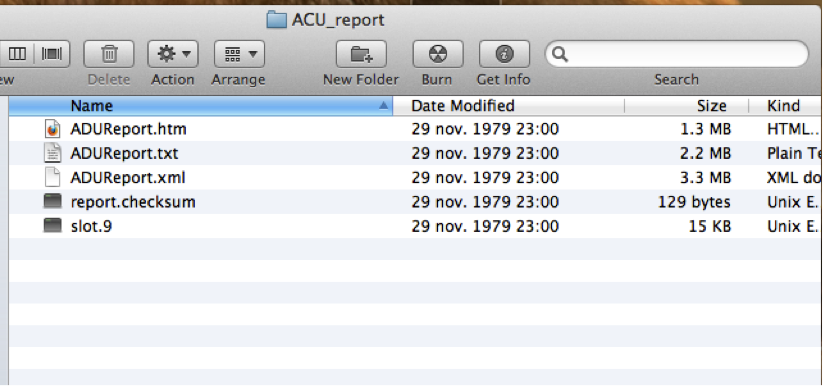
For sure you already used, or at least heard about, the HP Smartstart Kit. This especially includes the storage management part ACU: Array Configuration Utility. This tool is pretty straightforward to configure the storage and RAID volumes before installing an HP server.
However did you know that these features are also available in command line? This is what hpacucli does…
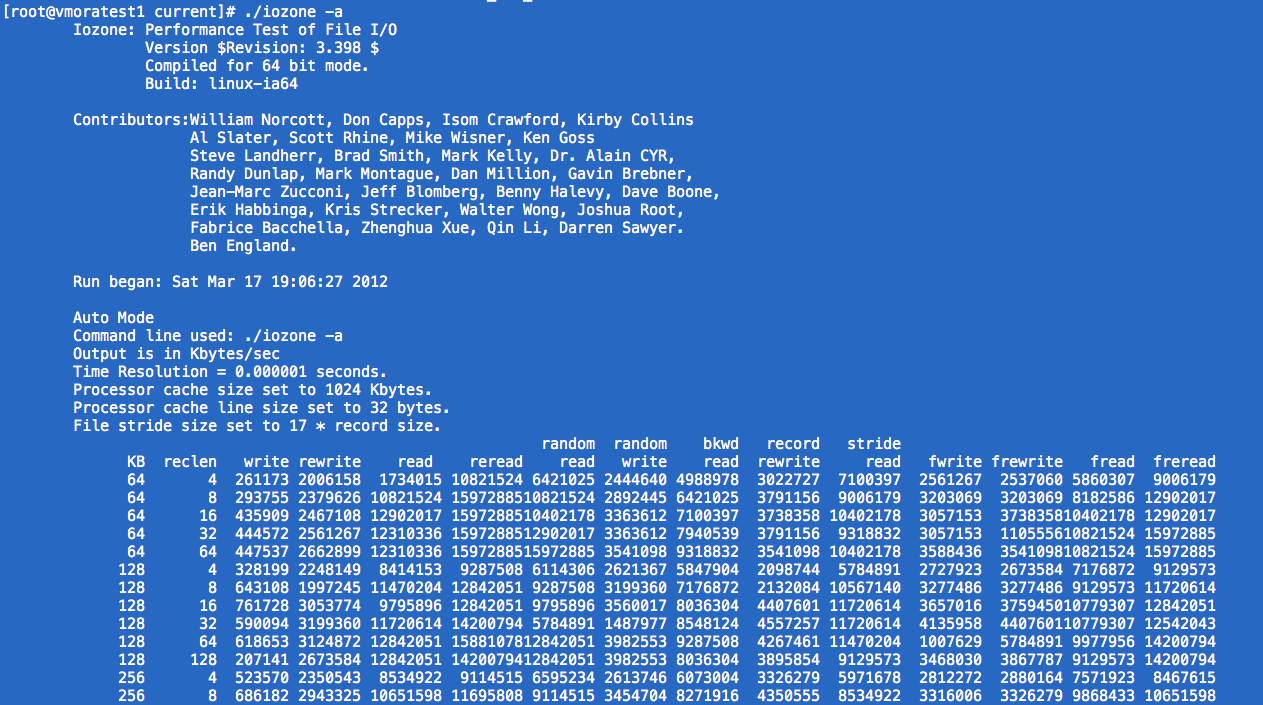
Who never had to measure the disk performances on a system?
Speaking about Linux performance monitoring includes a significant part on disk performances. If you are facing applications or databases running slower than expected or than on other environments, you may take a look on the I/O performances. This blog aims to provide to introduction to a pretty interesting tool,
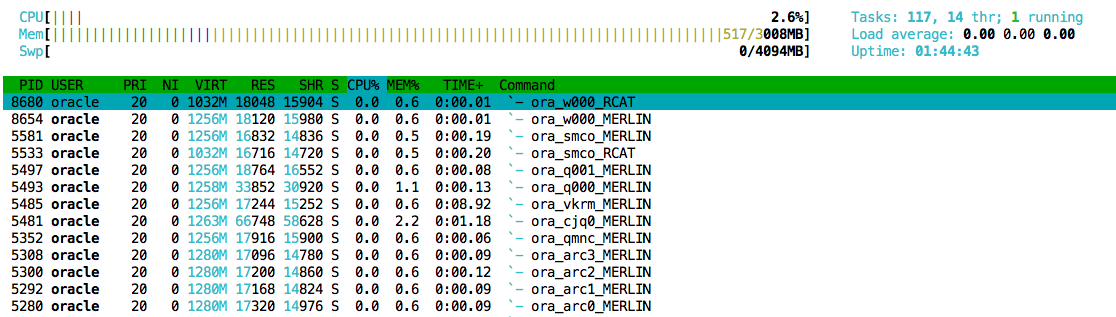
I’m pretty sure that most of you already struggled with some low performance systems. In order to analyse such cases several tools and utilities, like top, nmon, fuse or lsof are available under Linux. However trying to dig in processes analysis and looking for files and processes relations may be quite painful.
To get started with performance checks and analysis,
It’s already quite a while that I posted my last article on the Oracle basis, so I decided to take some times in the train to continue this small serie. This time, I’m going to speak about one of the root of Oracle administration, starting and shutting down a database.
Startup and shutdown processes within oracle databases are splitted in